The “room feels smaller” problem: how overhead light changes perceived space in Auckland homes
Some rooms are not actually small. They just feel small.
You can have a decent-sized lounge, a generous entry, even an open-plan kitchen, and yet the space still feels compressed. The ceiling feels low. The corners feel heavy. The room does not “open up” the way you expect it to.
In Auckland, this often happens because of the way daylight behaves. We get plenty of light overall, but a lot of it is diffuse, filtered, and directional. If a room relies mainly on side windows, it can be bright near the glass and still feel enclosed deeper in.
The fix is not always furniture. It is often light distribution.
This article explains why rooms feel smaller than they are, and how overhead daylight, used well, can change perceived space in a very practical way.
The two kinds of “small”
Before you choose any solution, identify which kind of small you are dealing with.
Type 1: True small
Low square metres. Limited layout flexibility. Tight dimensions.
Type 2: Perceived small
The room has enough size, but it feels constrained because:
- the ceiling reads darker than it should
- the corners have no lift
- the middle of the room is underlit
- contrast is high (bright window zone, dim interior zone)
Most Auckland homes that “feel smaller” are Type 2.
That is good news, because perceived small can often be changed without changing the floor plan.
Why light affects how big a room feels
Humans read space by looking for cues:
- Where is the brightest area?
- Where does the ceiling “disappear” into light?
- Are there dark corners suggesting boundaries?
- Is the room evenly readable, or does it fade into shadow?
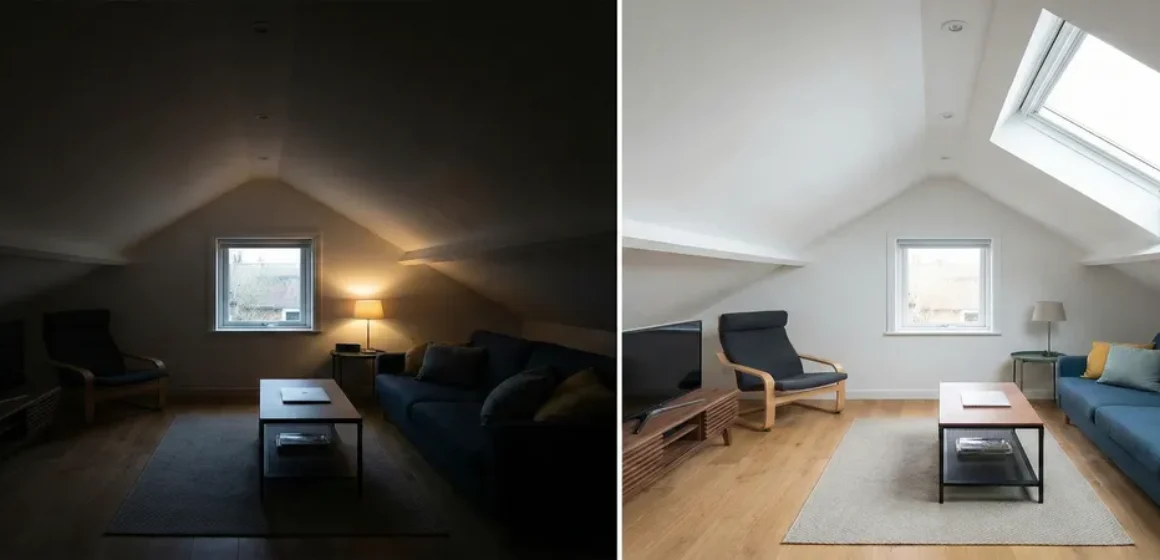
When a ceiling is dim and corners are dark, the brain reads the room as tighter and more enclosed. When the ceiling is lifted with light and the space is evenly legible, the room feels larger, even if nothing has physically changed.
A simple line that captures it:
A bright ceiling makes the room feel taller. A bright centre makes the room feel wider.
Auckland’s common pattern: “bright edges, dull centre”
Auckland daylight often comes from one or two sides of a room. That creates:
- a bright strip near windows and doors
- a dull centre zone where you actually live
- a ceiling that never gets fully lifted, especially in overcast conditions
This is why people turn on lights during the day even in summer.
Not because the home is dark, but because the light is poorly distributed.
The overhead light effect: what changes when light comes from above
Overhead daylight works differently from window light.
Window light is directional and often low-angle. It creates contrast. Overhead light tends to:
- wash the ceiling more evenly
- reduce the “cave” feeling in corners
- bring usable light into the centre of the room
- make the room feel more balanced, not just brighter
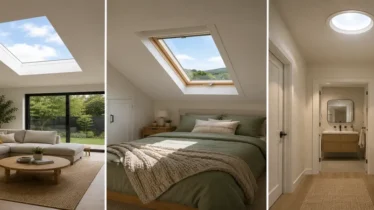
This is why the right skylight plan can make a space feel larger without making it glaring.
If you want a plain-English overview of skylight types and how they behave:
https://www.skylights.co.nz/types-of-skylights/
A practical self-check: what is making your room feel small?
Stand in the room at midday and do this simple scan.
Step 1: Look at the ceiling first
Is it darker than you expect? Does it feel flat or slightly grey even in daylight?
If yes, your room is likely “ceiling-limited”.
Step 2: Look into the corners
Are corners visually heavy or shadowed?
If yes, your room is “boundary-limited”.
Step 3: Look at the centre zone
Is the centre usable without artificial lights?
If no, your room is “centre-limited”.
A skylight plan often performs best when it targets centre-limited and ceiling-limited spaces.
Where overhead daylight makes the biggest difference (Auckland edition)
Entryways and internal corridors
These spaces often have no side light. Overhead light makes the home feel more open immediately.
Open-plan living areas
Especially when the centre zone sits away from windows. Overhead light can pull the room together and reduce that “bright edge, dull middle” effect.
Kitchens with a deep work zone
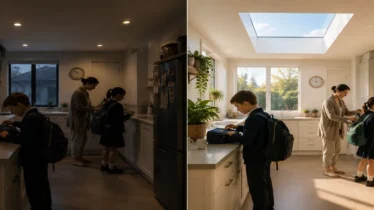
A brighter ceiling and central light improves the feeling of space, even before you change a single finish.
Bathrooms without usable daylight
Overhead daylight can make a small bathroom feel less boxed-in and more breathable.
For Auckland coverage and guidance:
https://www.skylights.co.nz/skylights-auckland/
Illustrative Example Only: the lounge that felt “low” until it didn’t
A homeowner described a living room that was not small on paper, but felt tight in daily use. The room had decent windows, yet the centre stayed dull and the ceiling felt heavy.
The turning point was not adding more side light. It was introducing overhead daylight that lifted the ceiling and made the centre zone legible during the day.
Their reflection afterwards:
“It didn’t get bigger. It just stopped feeling smaller.”
That is the power of perceived space.
Design notes that keep overhead light looking natural
A skylight that makes a room feel bigger is usually one that feels like it belongs.
A few practical principles:
Aim for evenness, not spotlighting
You want the room to feel open, not like one bright circle is shouting from the ceiling.
Avoid direct glare over screens
If the lounge has a TV zone, plan daylight to support the room without washing out screens.
Consider how light will bounce
Light surfaces (ceilings, matte walls) help spread daylight. Dark feature walls can increase contrast. This does not mean you need to repaint, but it helps to understand how the room will respond.
Choose the skylight type that suits the scale
Tubular options can be powerful for small internal zones. Fixed skylights can create broader ceiling lift in larger rooms. The right choice depends on the room shape and roof constraints.
If your room feels smaller than it is, here is a good next step
The best advice is always room-specific, because roof type, framing, and room layout change what is possible.
If you want a tailored recommendation, start an enquiry here:
https://inquiry.skylights.co.nz/inquiry
When you enquire, include:
- the room type (lounge, kitchen, entry, etc.)
- what it feels like now (“bright near windows, dull in middle” is perfect)
- roof type if you know it
That helps your assessment focus on distribution, not just brightness.
FAQs (unique to this topic)
Can a skylight really make a room feel bigger?
It can make the room feel larger by lifting the ceiling and brightening the centre zone, which reduces shadow boundaries and improves how the space is perceived.
Why does my room feel small even though it has windows?
Windows often brighten the edges of a room but leave the centre and ceiling underlit. High contrast between bright window zones and darker interior zones can make a space feel enclosed.
Is overhead light better than more windows for perceived space?
Not always, but overhead light is often more effective for central zones and ceilings, especially in Auckland homes where corridors and middle areas are far from windows.
What rooms benefit most from overhead daylight?
Internal hallways, entryways, open-plan centre zones, kitchens with deep work areas, and bathrooms with limited daylight typically see the most noticeable improvement.
Will a skylight create glare and make the room uncomfortable?
Glare risk depends on placement, skylight type, and room surfaces. A good plan aims for even, comfortable light rather than direct sun patches.