Late-summer sun and kids’ rooms: keeping light calming, not harsh
Kids’ rooms have a different kind of daylight requirement.
You want the space bright enough for play, calm enough for reading, and gentle enough for naps or early bedtimes. In Auckland’s late summer, that balance can be tricky. One day is “grey bright” and soft. The next has sharp sun breaks that turn a corner of the room into a bright square, right where the toys sit or where a child lies down.
If you are considering a skylight for a kids’ room, the goal is not just “more daylight”.
It is better daylight: light that feels steady, safe, and comfortable, without harsh glare or a hot sun patch that makes the room feel intense.
This article is a practical guide to planning a kids’ room skylight in the Auckland climate.
A kid-friendly way to think about good light
Here is the simplest definition:
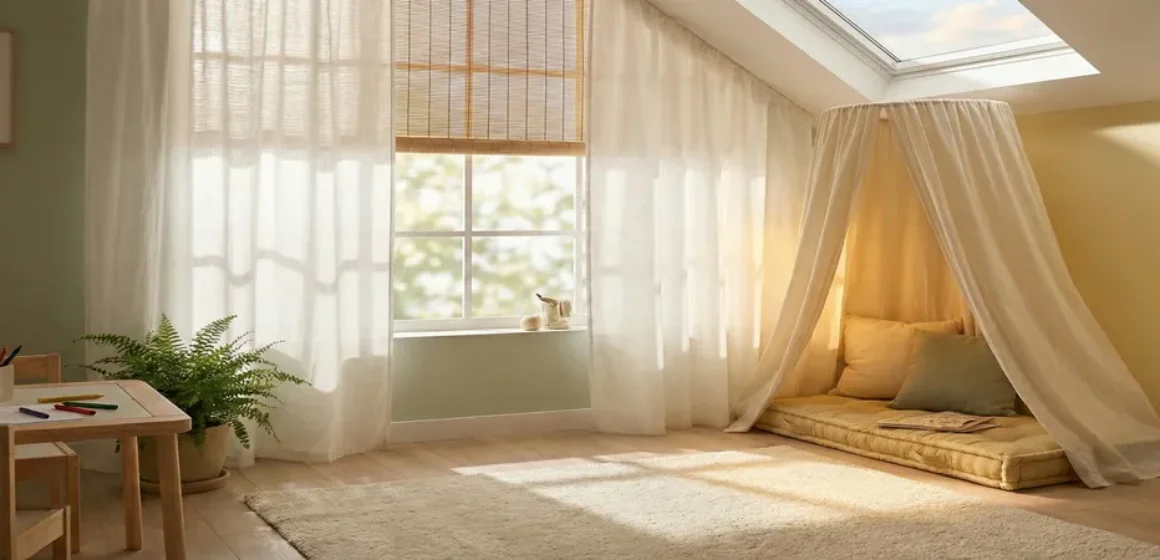
Calming light is light that spreads. Harsh light is light that lands.
- Spreading light lifts the whole room gently.
- Landing light creates a bright patch with strong contrast.
Kids notice contrast more than adults sometimes, because they play on the floor, they look up, and they move through the light zones constantly. A harsh patch can be uncomfortable even if the room is not “too bright” overall.
Why late summer is a special case in Auckland
Auckland’s weather can swing between cloud cover and sudden sun breaks. That creates two different light personalities in the same room:
- Diffuse daylight (soft, even, ideal for kids’ spaces)
- Direct sun bursts (strong, contrasty, can create glare and hot spots)
A skylight plan that works beautifully on overcast days can feel too intense on clear days if placement and specification are not considered properly.
The “kids’ room calmness checklist” (use this before choosing anything)
Answer these honestly:
- Does the room get harsh sun patches at any time of day already?
- Where does your child spend time: floor, bed, desk, reading corner?
- Are there screens in the room (tablet, TV, computer)?
- Is the room used for naps or early bedtimes?
- Does the room feel stuffy in late summer evenings?
- Are you trying to solve darkness, or are you trying to improve how the room feels?
This checklist matters because kids’ rooms are less forgiving than living rooms. Comfort is the priority.
What usually creates “harsh” light in kids’ rooms
1) A skylight positioned to spotlight the play zone
If the skylight lands a bright patch on the rug or toy area, it can create:
- squinting
- heat on the floor
- “too bright here, too dark there” contrast
2) A skylight placed over the bed or pillow zone
Overhead sun patches near where a child rests can feel intrusive, especially in late afternoon sun.
3) High contrast between bright skylight light and darker surfaces
Dark feature walls, dark carpet, or heavy curtains can increase contrast, making bright patches feel harsher.
4) Screen glare
If the room has a desk or screen corner, overhead light needs to be planned so it supports focus rather than creating reflection issues.
What makes skylights feel calming instead
1) Placement that lifts the room, not one spot
A calm kids’ room outcome often comes from skylights positioned to:
- brighten the ceiling and upper walls
- support the centre of the room without spotlighting the floor
- avoid direct alignment with beds, desks, and screens
2) Diffused light behaviour
Many Auckland days naturally provide soft overhead light. A skylight plan should work with that, not fight it.
3) Control options when needed
Some families prefer having control for late-summer intensity:
- blinds or diffusing options in rooms that get strong sun
- planning for comfort through all seasons, not only winter
If you want a plain-English overview of skylight options:
https://www.skylights.co.nz/types-of-skylights/
A practical planning approach for kids’ rooms
Instead of “which skylight should I buy”, use this sequence.
Step 1: Identify the calm zone
Where do you want the room to feel calmest?
- bed area
- reading nook
- floor play zone
This zone should not be the place where direct sun lands repeatedly.
Step 2: Identify the activity zone
Where do you want functional brightness?
- desk
- storage and dressing area
- play shelves
Functional brightness can handle more daylight, but it should still be comfortable.
Step 3: Plan skylight placement to support both
A well-planned skylight can:
- lift overall light for calmness
- improve functional brightness without creating harsh glare
This is where a site assessment helps. Roof framing, pitch, and ceiling layout affect what is possible.
Illustrative Example Only: the room that became “too intense” at the wrong time
A family wanted a brighter kids’ room for reading and calmer mornings. The first instinct was to place the skylight above the main play rug.
It worked beautifully on overcast days, but on clear afternoons it created a strong bright patch right where their child played, making the room feel intense and uncomfortable.
The better outcome came from adjusting the plan so the skylight lifted the room more evenly and avoided spotlighting the play zone.
A line they shared afterwards:
“It feels brighter, but not sharper.”
That is the goal for kids’ spaces.
What to ask in a kids’ room skylight consult
These questions keep the advice specific and comfort-led:
- At what time of day could direct sun hit this skylight area in summer?
- Will the skylight create a repeated bright patch on the floor or bed?
- What glazing or diffusing options help keep the light gentle?
- How do we avoid glare if there is a desk or screen in the room?
- If the room gets stuffy, should ventilation be part of the plan?
If you want tailored guidance for your Auckland home and the specific room use, start here:
https://inquiry.skylights.co.nz/inquiry
For Auckland coverage:
https://www.skylights.co.nz/skylights-auckland/
FAQs (unique to this topic)
Is a skylight a good idea for a kids’ room?
It can be, especially if the room is dim or has limited window access. The key is planning for calm, even light and avoiding harsh sun patches on play and sleep zones.
How do I avoid a bright sun patch on the floor?
Placement is the first lever. A skylight positioned to lift the room rather than spotlight the floor reduces harsh patches. Glazing and control options can also help.
Can skylights cause glare in kids’ rooms?
They can if placed over screens or reflective surfaces. Planning the skylight around desks, screens, and reading corners helps keep the room comfortable.
Should I choose a blind for a kids’ room skylight?
In sun-exposed rooms, a blind or diffusing option can be helpful for late-summer comfort and naps. It depends on roof orientation and how direct sun behaves in that room.
Will a skylight make the kids’ room hotter?
Not automatically. Heat outcomes depend on placement, glazing, roof orientation, and the room’s existing ventilation. Comfort-led planning prevents most issues.