The ‘we should have done this earlier’ rooms: how to spot high-value skylight opportunities
Some skylight decisions feel obvious only after the work is done.
The hallway no longer needs lights on all day. The kitchen bench finally feels usable in the morning. The bathroom feels less enclosed. A spare room becomes a proper office instead of a storage space. The laundry still does the same job, but it no longer feels like the forgotten corner of the home.
That is when homeowners often say the same thing:
“We should have done this earlier.”
The best skylight opportunity is not always the biggest room, the most expensive room or the room guests see first. It is the room where better daylight changes how the home is used every day.
This guide helps New Zealand homeowners identify the best room for skylight installation by looking at daily value, not just visual impact. It is designed to help you spot the rooms where a fixed skylight, vented skylight or sky tube may make the strongest difference before you request advice.
What makes a skylight opportunity high value?
A high-value skylight opportunity usually has three qualities.
1. The room is used often
A skylight delivers more everyday value in a room people use regularly.
A hallway walked through 20 times a day may benefit more than a formal room used once a week. A kitchen used every morning may be a stronger candidate than a guest bedroom that only needs occasional improvement.
Frequency matters.
2. The room has a clear daylight problem
The room should have a genuine natural light issue, not just a desire for a nicer ceiling feature.
Look for spaces that:
- Need artificial lighting during the day
- Feel dull even when clean and tidy
- Have shaded or poorly placed windows
- Feel closed in through winter
- Are used less because they feel unpleasant
- Sit in the centre of the home away from exterior walls
3. Better daylight would change behaviour
This is the most important factor.
A skylight is high value when it changes how people live in the room. It makes the kitchen easier to use. It makes the hallway feel safer and more connected. It makes the bathroom feel less enclosed. It turns the spare room into a space someone actually wants to work in.
The strongest skylight opportunities are not only brighter. They are more useful.
The high-value room test
Before choosing a skylight, run each possible room through this test.
Ask:
- Do we use this room most days?
- Does it need lights on during daylight hours?
- Does the room feel worse in winter?
- Is the room avoided, rushed through or underused?
- Would daylight from above reach the part that needs help?
- Is privacy limiting the use of normal windows?
- Does the room need ventilation as well as light?
- Would this change improve daily life, not just appearance?
If a room answers yes to several of these questions, it may be a high-value skylight opportunity.
The test is deliberately practical. It moves the decision away from “Where would a skylight look nice?” and towards “Where would daylight make the home work better?”
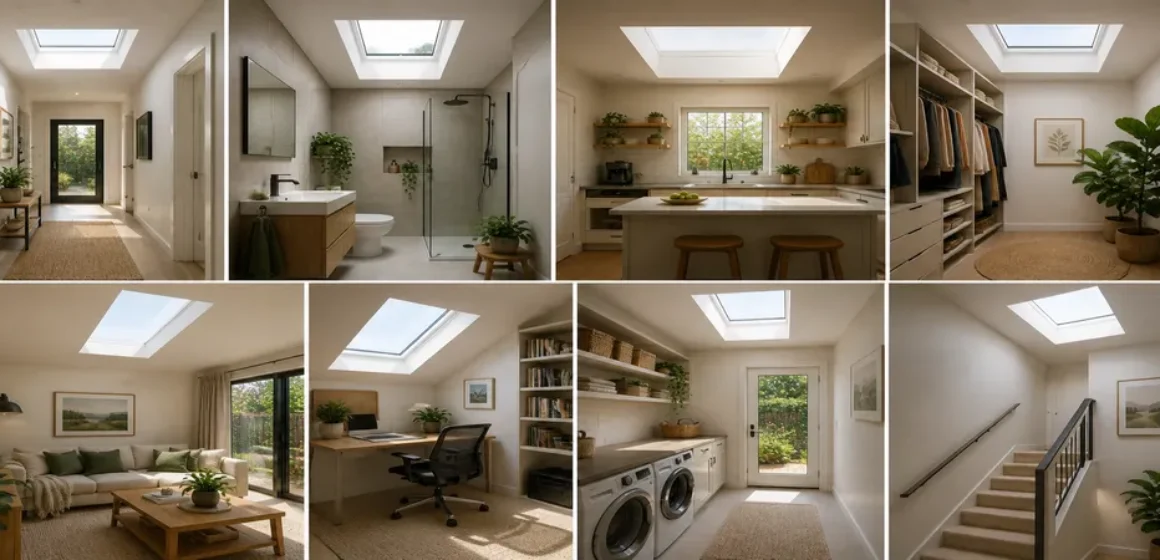
Room 1: the hallway that shapes the whole home
A dark hallway can quietly affect the feel of the entire house.
It may not be a room where people sit, but it is the space that connects bedrooms, bathrooms, living areas and entries. When the hallway is dim, the home can feel narrower, older and more closed in than it really is.
In many NZ homes, hallways rely on borrowed light from nearby rooms. In winter, that borrowed light weakens. Doors close. Curtains stay drawn. The centre of the home becomes the darkest area.
Why it can be high value
A hallway is used constantly. If it needs lights on during the day, the problem is repeated many times.
A sky tube can often be a practical option because the hallway usually needs daylight, not a large roof-window feature. The right diffuser placement can make the central spine of the home feel more alive.
Signs this room deserves attention
- The hallway light is used during the day
- The corridor feels narrow or enclosed
- Bedrooms feel disconnected from living areas
- There is roof space above or near the hallway
- The hallway makes the home feel darker than it is
A hallway skylight or sky tube may not be the most glamorous upgrade. But it can be one of the most frequently appreciated.
Room 2: the kitchen bench where the day begins
The kitchen is one of the most valuable rooms to improve because it is used early, often and practically.
A kitchen can have windows and still be under-lit where it matters most. The sink may receive daylight while the main preparation bench, island or pantry side remains in shadow. This is common in older homes, extended homes and kitchens shaded by deep eaves, covered decks or neighbouring structures.
Why it can be high value
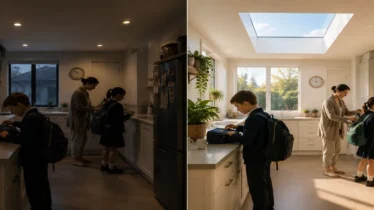
The kitchen is part of the daily rhythm. Breakfast, coffee, lunchboxes, cooking, cleaning and family movement all pass through it.
If the kitchen lights are on before the day has properly started, better natural light can change the mood and function of the room.
Signs this room deserves attention
- The bench or island is dark in the morning
- Side windows do not light the work area
- A covered deck or eave blocks daylight
- The kitchen feels dull on cloudy days
- The room is being renovated or repainted soon
A fixed skylight may suit a kitchen where stronger overhead daylight is desired. A sky tube may suit a smaller kitchen, scullery or darker transition zone. A vented skylight may be considered where airflow is also important.
The best option depends on where the daylight needs to land.
Room 3: the bathroom that never feels fresh
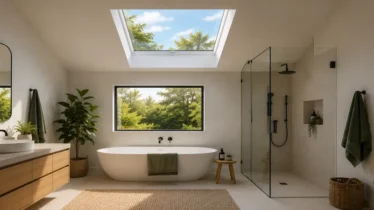
Bathrooms often become high-value skylight opportunities because they combine privacy, moisture, daylight and daily use.
Many bathrooms have small frosted windows, shaded side walls or no meaningful natural light. In winter, this can combine with steam and condensation to make the room feel closed in.
Why it can be high value
Bathrooms are used every day, often at the darkest times: early morning and evening. A brighter bathroom can make the home feel cleaner, calmer and more comfortable.
Overhead daylight also helps with privacy. A skylight or sky tube can bring natural light from above without relying on a larger wall window.
Signs this room deserves attention
- The bathroom light is needed during the day
- The window is small, frosted or shaded
- The room feels steamy and enclosed
- Privacy limits the wall-window options
- The bathroom is part of an upcoming renovation
A sky tube may suit small bathrooms where daylight is the main issue. A vented skylight may suit some bathrooms where airflow is also part of the brief. Extraction and moisture control still need to be considered separately.
A bathroom skylight should be chosen for the room’s real behaviour, not just its appearance.
Room 4: the laundry that affects the household more than expected
The laundry is rarely treated as a priority room, but it is used often and can feel especially unpleasant in winter.
It may sit beside a garage, bathroom, back door or internal corridor. It may have poor daylight, limited airflow and a constant association with washing, drying and household chores.
Why it can be high value
A laundry does not need to become beautiful to become better.
Practical daylight can make it easier to sort clothes, check stains, move around safely and complete everyday tasks without switching on a light every time.
Signs this room deserves attention
- The light is needed every time the room is used
- The room feels dull even during the day
- It connects to other dark service spaces
- Indoor drying or moisture is part of the winter routine
- The room is compact and internal
A sky tube can often be a good fit for laundries because the goal is usually useful daylight rather than a large skylight feature. If moisture is an issue, ventilation should be reviewed separately.
Small rooms can still create high-value improvements when they are used often.
Room 5: the spare room that has become a storage room
Many homes have a room that never quite became what it was meant to be.
It may have been intended as an office, guest room, hobby space, study or children’s room. Instead, it slowly becomes a storage area because the room feels dull, cold, disconnected or unpleasant.
A skylight may not be the only answer, but daylight is often part of the reason the room is underused.
Why it can be high value
Recovering an underused room can change the way a home functions.
If a spare room becomes a proper office, reading room, guest space or study area, the value is not only brighter walls. It is usable floor area returned to the household.
Signs this room deserves attention
- The room has no clear purpose anymore
- It needs lights on during the day
- It faces a shaded side of the property
- It is avoided in winter
- It could support work, study or family life if it felt better
A fixed skylight may suit rooms where a stronger sense of openness is desired. A smaller skylight or sky tube may suit compact rooms where subtle daylight is enough.
The question is whether better natural light would help the room earn its place again.
Room 6: the home office that drains energy by mid-afternoon
Work-from-home spaces have changed how many people view spare rooms.
A room that was once used occasionally may now be occupied for hours each day. If it relies on artificial lighting or has poor natural light, it can feel tiring, especially through winter.
Why it can be high value
A home office is used for concentration. Light quality matters.
Natural light can make the room feel more pleasant and less shut in, but it must be planned carefully to avoid screen glare or uncomfortable summer exposure.
Signs this room deserves attention
- The office needs lights on for much of the day
- The room feels flat or enclosed after lunch
- The window light is uneven or poorly placed
- Screen glare is already a concern
- The room is used several days a week
A skylight may be useful where it brings balanced daylight into the room. Placement, blinds, roof orientation and summer comfort should all be considered.
The goal is not just brightness. It is a room that supports better working hours at home.
Room 7: the living area corner nobody uses
Some living rooms have one section that feels forgotten.
It may be a reading chair that never gets used, a dining corner that feels too dim, or part of an open-plan room that always sits in shadow. The main room may appear bright near the windows, but light does not reach the deeper zone.
Why it can be high value
Living areas are meant to be used, not just arranged.
When one part of the room is avoided, the layout becomes less flexible and the home can feel smaller than it is.
Signs this room deserves attention
- One corner feels darker than the rest of the room
- Furniture is arranged around the light rather than the best layout
- The room feels smaller in winter
- The deeper part of the open-plan space is underused
- Window light does not reach the centre of the room
A fixed skylight may help bring daylight deeper into the living area. In some cases, a smaller targeted skylight may be enough. The best placement depends on the room layout and how people actually use the space.
A high-value living-room skylight should improve the way the room works, not just create a feature ceiling.
Room 8: the internal toilet or wardrobe that always needs a switch
Some rooms are used briefly, but very frequently.
Separate toilets, walk-in wardrobes and small internal service spaces often have no natural light at all. The light switch becomes automatic.
These rooms may not seem important at first, but they are exactly where a small daylight solution can feel surprisingly useful.
Why it can be high value
The value comes from removing a small daily frustration.
A sky tube diffuser can make a toilet, wardrobe or small internal space feel less enclosed during the day. It is not a dramatic change, but it is the kind of improvement people notice because it fits into daily routines.
Signs this room deserves attention
- The room has no window
- The light is switched on every time
- It sits under or near roof space
- It is compact enough for a subtle solution
- It does not need ventilation as the main feature
A sky tube is often the first option to consider for these rooms.
The room-value scoring method
To identify the best room for a skylight, score each candidate room from 1 to 5 across five areas.
Daily use
1 = Rarely used
3 = Used most days
5 = Used many times daily
Daylight problem
1 = Slightly dull
3 = Often dark in winter
5 = Needs artificial lighting during the day
Behaviour change
1 = Would mainly look nicer
3 = Would improve comfort or routine
5 = Would change how the room is used
Suitability for overhead daylight
1 = Unclear or unlikely
3 = Possibly suitable
5 = Strong candidate based on room position and roof access
Household priority
1 = Low priority
3 = Would be appreciated
5 = A room the household regularly complains about
Add the score.
- 5 to 10: Lower priority
- 11 to 15: Worth reviewing
- 16 to 20: Strong candidate
- 21 to 25: High-value skylight opportunity
This is not a technical assessment. It is a decision filter. It helps you decide where to begin before seeking professional advice.
When the obvious room is not the best room
Homeowners often assume the living room or kitchen should be the first skylight location because these rooms are the most visible.
Sometimes that is true. But not always.
The best first skylight may be:
- A hallway that affects the whole home
- A bathroom used by everyone every morning
- A laundry that is unpleasant through winter
- A home office used five days a week
- A spare room that could become valuable again
- A kitchen zone that genuinely needs daylight
- A small internal room where a sky tube would solve a daily frustration
Visibility and value are not the same.
A skylight in a showpiece room may look impressive. A skylight in the right everyday room may improve life more.
Light, ventilation or both?
Once you identify a high-value room, separate the need into categories.
If the room mainly needs daylight
A fixed skylight or sky tube may be suitable.
This is common for hallways, wardrobes, toilets, laundries, home offices and dark kitchen zones.
If the room needs daylight and airflow
A vented skylight may be worth considering.
This is more common for bathrooms, kitchens, upper-level rooms and spaces that feel stuffy.
If the room mainly has moisture or air-quality problems
Ventilation, extraction, heating, insulation or other building improvements may need attention. A skylight may still help with daylight, but it should not be expected to solve every issue.
This distinction prevents disappointment and leads to better recommendations.
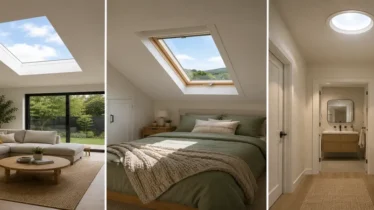
Fixed skylight, vented skylight or sky tube?
The best product depends on the room’s purpose.
Fixed skylight
Often suited to:
- Kitchens
- Living rooms
- Bedrooms
- Home offices
- Dining areas
- Larger rooms needing stronger daylight
Best when the goal is natural light and a more visible design result.
Vented skylight
Often suited to:
- Bathrooms
- Kitchens
- Upper-level rooms
- Raked-ceiling spaces
- Rooms where high-level airflow may be useful
Best when the room needs both daylight and controlled opening.
Sky tube
Often suited to:
- Hallways
- Laundries
- Toilets
- Walk-in wardrobes
- Small bathrooms
- Pantries
- Internal rooms
Best when the goal is practical daylight in a compact or internal space.
The smartest choice is the one that solves the room’s actual problem with the least unnecessary complexity.
Local NZ factors that change the decision
New Zealand homes vary widely, so the best room for a skylight can change by region and building type.
In Auckland and Northland, shaded boundaries, humidity and covered outdoor spaces can make kitchens, bathrooms and hallways strong candidates. In Wellington and coastal regions, wind exposure and roof access may influence product and timing decisions. In Canterbury, Otago and Southland, low winter sun and colder mornings can make internal rooms feel especially flat. In rural homes, long rooflines and deeper floor plans often create dark central spaces. In compact townhouses, privacy and boundary shading can limit wall-window options.
Building style matters too.
Older villas and bungalows often have central hallways and altered rear additions. Mid-century homes may have small bathrooms and service rooms. Newer homes may have open-plan living but still contain dark pantries, ensuites, wardrobes and internal corridors.
A high-value skylight decision should respect the home’s region, layout and daily use.
Illustrative example only
A homeowner wants to add a skylight to the living room because it is the most visible space. During a room review, they realise the living room already receives reasonable afternoon light. The real problem is the central hallway and adjoining laundry, which need artificial lighting almost every day.
A sky tube in the hallway may create more everyday value than a larger skylight in the living room.
It may not be the room guests notice first. But it is the room the household uses constantly.
After the installation, the improvement feels obvious because it changes a repeated daily experience.
That is the kind of room that often earns the “we should have done this earlier” response.
What to check before requesting advice
Before making an enquiry, narrow your list to one or two high-value rooms.
For each room, note:
- What the room is used for
- When it feels darkest
- Whether lights are needed during the day
- Whether ventilation is also a concern
- Whether privacy limits window options
- Whether the room is underused because of poor light
- Whether any renovation, roofing or painting work is planned
- Whether you want a subtle daylight source or a visible skylight feature
Photos are useful too.
Take:
- A wide photo of the room
- A photo of the ceiling area
- A photo of the darkest zone
- A photo of the roof above or near the room if possible
- Photos of any nearby obstructions, vents or roof features
This makes it easier to recommend whether a fixed skylight, vented skylight or sky tube may be suitable.
The best room is the one with the clearest outcome
A skylight should have a purpose.
Not just “more light”.
A clearer purpose sounds like:
- Make the hallway usable without daytime lights
- Bring natural light to the kitchen bench
- Make the bathroom feel less enclosed
- Turn the spare room into a proper office
- Make the laundry easier to use
- Brighten the internal toilet without changing the layout
- Bring daylight deeper into the living area
When the purpose is clear, the product decision becomes easier.
The best room for a skylight is the room where the outcome is most specific, most useful and most likely to be noticed every day.
Planning your next step
If there is a room in your home that feels dark, underused or less comfortable than it should, it may be worth identifying whether it is a high-value skylight opportunity.
Skylights.co.nz can help you explore whether a fixed skylight, vented skylight or tubular skylight may suit your room, roof type and desired outcome.
To start planning your options, use the Skylights.co.nz enquiry form:
https://inquiry.skylights.co.nz/inquiry
You may also find these useful:
FAQs
What is the best room for a skylight?
The best room for a skylight is usually the room where better daylight will improve daily use the most. Common high-value rooms include hallways, kitchens, bathrooms, laundries, home offices, living areas and internal rooms.
Should I put a skylight in the darkest room first?
Not always. The darkest room may not be the highest-value room if it is rarely used. A better first choice is often a room that is both dark and used frequently, such as a hallway, kitchen, bathroom or home office.
Is a sky tube better for small rooms?
A sky tube can be a smart option for small or internal rooms such as hallways, laundries, toilets, wardrobes and compact bathrooms. It provides practical daylight through a ceiling diffuser without needing a large skylight feature.
Which rooms benefit most from a vented skylight?
Vented skylights are often considered for bathrooms, kitchens and upper-level rooms where both daylight and airflow may be useful. Suitability depends on the roof, room layout, moisture behaviour and ventilation needs.
Can a skylight make an underused room more usable?
Yes, in the right room. Better natural light can help a spare room, office, living area or internal space feel more inviting and practical. The result depends on placement, roof suitability and how the room is used.
What should I send when asking which room suits a skylight?
Send photos of the room, ceiling and roof area if possible. Also explain when the room feels darkest, how often it is used, whether ventilation is a concern, and what you want the skylight to change.