The ceiling diffuser test: when a sky tube may be the smarter answer
Not every dark room needs a large skylight.
Sometimes the room does not need a view of the sky. It does not need a dramatic ceiling feature. It does not need a major change to the way the space looks. It simply needs daylight where there has only ever been a light switch.
That is where a sky tube can be the smarter answer.
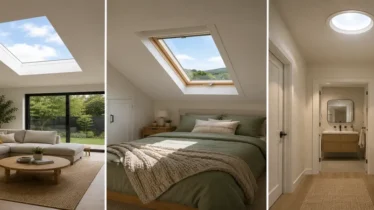
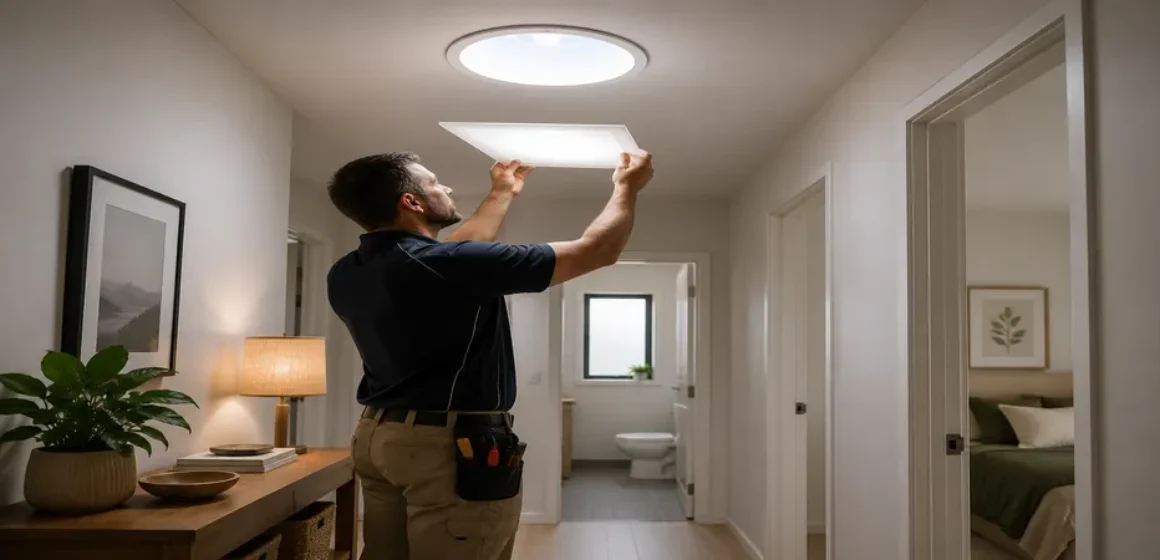
A sky tube, also known as a tubular skylight, brings daylight from the roof through a reflective tube and spreads it into the room through a ceiling diffuser. From inside, the visible part is usually subtle: a clean round or square diffuser fitted into the ceiling, designed to distribute natural light into the space below.
For many New Zealand homes, the sky tube diffuser is the part that makes the whole solution make sense. It gives practical daylight to hallways, laundries, toilets, wardrobes, small bathrooms and compact internal rooms without the visual presence or installation complexity of a larger skylight.
This guide introduces the ceiling diffuser test: a simple way to decide whether a sky tube may be a better fit than a fixed or vented skylight.
What is a sky tube diffuser?
A sky tube has three main parts:
- A roof-mounted collector or dome that captures daylight
- A reflective tube that carries the light through the roof space
- A ceiling diffuser that spreads the light into the room
The diffuser is the part you see from inside the home.
A helpful way to picture it is as a natural light fitting. Instead of using electricity during the day, it spreads daylight from above into the room. The effect is usually softer and more practical than a large skylight. It is designed to make a dark space easier to use, not necessarily to create a dramatic architectural feature.
This is why sky tubes often work well in rooms where homeowners say:
“We do not need a big skylight. We just want this room to stop feeling dark.”
That distinction matters.
The ceiling diffuser test
Before deciding on a skylight type, stand in the room and imagine a clean ceiling diffuser in the area where daylight is needed.
Then ask five questions.
1. Would daylight from a ceiling diffuser solve most of the problem?
If the room mainly feels dark because it has little or no natural light, a sky tube may be enough.
This is often true for hallways, toilets, laundries, wardrobes and small bathrooms.
2. Does the room need daylight more than a view?
If you want to see the sky, create a design feature or transform a larger living area, a fixed skylight may be better.
If the goal is practical daylight rather than a view, a sky tube may be the smarter choice.
3. Is the room compact or internal?
sky tubes often work best in smaller spaces where a larger skylight would feel unnecessary or visually heavy.
Internal rooms are especially strong candidates because they often have no wall window option.
4. Would a subtle ceiling finish suit the room better?
Some spaces do not need a statement.
A hallway, laundry or toilet may benefit more from a clean diffuser than from a large ceiling opening. The right solution should match the room’s role in the home.
5. Is ventilation a separate issue?
A standard sky tube brings daylight. It does not replace ventilation.
If the room also has steam, moisture or airflow concerns, those need to be assessed separately. In some cases, a vented skylight or separate extractor may be more suitable.
If you answer yes to the first four questions, and ventilation is not the main issue, a sky tube may deserve serious consideration.
When a sky tube may be smarter than a larger skylight
A larger skylight can be excellent in the right room, but it is not always the most practical answer.
A sky tube may be smarter when:
- The room is small
- The space is internal
- You want practical daylight rather than a design feature
- The ceiling needs to stay visually simple
- A large skylight would feel out of proportion
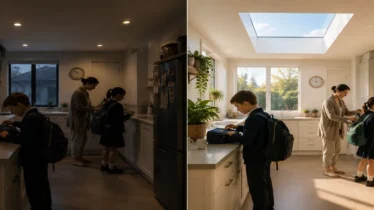
- The main goal is to reduce daytime lighting dependence
- The room is used briefly but often
- The budget or disruption level needs to stay controlled
- The roof and ceiling layout suit a tubular daylight path
This does not make sky tubes a lesser option. It makes them a more precise option.
A well-chosen sky tube can solve a very specific problem: bringing daylight to a space that does not need the size, appearance or opening function of a larger skylight.
Rooms where the ceiling diffuser test works especially well
Hallways
Hallways are one of the strongest sky tube candidates in New Zealand homes.
They often sit in the middle of the house, away from exterior walls. They rely on borrowed light from bedrooms, living areas or glass doors. In winter, that borrowed light often disappears when doors are closed, curtains are drawn or daylight weakens.
A sky tube diffuser placed in the right part of the hallway can make the centre of the home feel less closed in.
The change is usually practical rather than dramatic. You walk through the hallway and it simply feels like daytime.
Separate toilets
Many separate toilets have either a tiny window, frosted glass or no natural light at all.
A large skylight may feel unnecessary in a small toilet, but a sky tube diffuser can provide enough daylight to make the room feel cleaner, brighter and less enclosed during the day.
This is a simple example of using the right-sized solution for the right-sized room.
Laundries
Laundries are often placed at the back of the home, beside garages, bathrooms or internal service areas. They can feel dim, cold and purely functional, especially in winter.
A sky tube can make the room easier to use for sorting, washing and small household tasks.
If indoor drying or moisture is part of the issue, ventilation should also be reviewed. The sky tube improves daylight, but moisture needs its own solution.
Walk-in wardrobes
A walk-in wardrobe does not usually need a full skylight. It needs enough natural light to help the space feel usable without switching on a light every time.
A sky tube diffuser can be a practical fit, provided the roof and ceiling layout allow it.
It can be especially useful in homes where the wardrobe is internal and has no window.
Small bathrooms and ensuites
A sky tube may be suitable for bathrooms and ensuites where the main concern is poor daylight rather than airflow.
It can brighten a vanity area, central floor zone or compact bathroom without creating privacy concerns from a wall-facing window.
However, bathrooms need careful thought. If steam, condensation or moisture are significant issues, extraction and ventilation must be addressed separately. A sky tube is not a ventilation system.
Pantries and sculleries
Modern homes often include walk-in pantries or sculleries that sit away from exterior walls. These spaces can need artificial lighting every time they are used.
A sky tube diffuser can bring natural light into a service space that is used often but does not need a large skylight.
For homeowners who value practical day-to-day function, this can be a small upgrade that changes the feel of a busy kitchen zone.
When a fixed skylight may be the better answer
A sky tube is not always the right choice.
A fixed skylight may be better when:
- The room is larger
- You want a stronger architectural effect
- You want to see sky or changing daylight
- The space is a kitchen, living room or dining area
- The daylight needs to spread more broadly
- The skylight is part of a renovation design
- The ceiling design can support a larger feature
- The room would benefit from a more visible daylight source
For example, a kitchen island or living area may feel more complete with a fixed skylight than with a small diffuser. The larger skylight may influence how the whole room feels, not just how easily you can see.
The question is not whether fixed skylights are better than sky tubes.
The question is which solution matches the room’s job.
When a vented skylight may be the better answer
A vented skylight may be better where airflow is a meaningful part of the problem.
This can apply to:
- Bathrooms with steam concerns
- Kitchens where warm air gathers
- Upper-level rooms that feel stuffy
- Raked-ceiling spaces
- Rooms where high-level ventilation would be useful
A sky tube can brighten a bathroom or compact room, but it does not open. If the homeowner expects airflow, that expectation needs to be corrected early.
In some rooms, the best solution may be a vented skylight. In others, the best solution may be a sky tube plus separate extraction.
A good recommendation should separate light, ventilation and moisture control before choosing a product.
What the diffuser changes inside the room
The ceiling diffuser affects how the sky tube feels from inside.
A well-placed diffuser can:
- Bring daylight into a room with no window
- Reduce reliance on artificial lighting during daylight hours
- Make a hallway feel more connected
- Make a small bathroom feel less enclosed
- Help a laundry or wardrobe feel easier to use
- Keep the ceiling appearance relatively simple
- Avoid the visual weight of a larger skylight
The diffuser does not create the same experience as looking through a skylight. It does not open to the sky. It does not provide a view. It is more functional than expressive.
That is exactly why it works so well in the right rooms.
Not every space needs a feature. Some spaces need quiet improvement.
Placement matters more than people think
A sky tube diffuser should not be placed randomly.
Its location affects how useful the daylight feels.
In a hallway, the diffuser may need to sit where the corridor feels darkest, not simply where roof access is easiest. In a laundry, it may need to light the bench or appliance area. In a bathroom, it may work best near the vanity or centre of the room. In a walk-in wardrobe, it may need to avoid awkward shadows over shelving.
Good placement considers:
- The darkest part of the room
- How people move through the space
- Where tasks happen
- Ceiling framing and services
- Roof access above
- Tube path and length
- Existing lights, fans and vents
- Visual balance on the ceiling
A sky tube may be subtle, but it still deserves careful planning.
Roof and ceiling factors that affect suitability
A sky tube needs a workable path from roof to ceiling.
Before recommending one, the roof and ceiling conditions need to be checked.
Important factors include:
- Roof type
- Roof pitch
- Roof cavity depth
- Framing direction
- Trusses or rafters
- Wiring or ducting
- Insulation
- Existing downlights
- Ceiling type
- Distance between roof collector and ceiling diffuser
- Whether the tube path can remain efficient
A short, direct tube path may perform better than a long or awkward path. Some bends may be possible, but excessive distance or obstruction can reduce effectiveness.
This is why photos and site assessment matter. A sky tube may look simple from the room below, but it still needs the roof and ceiling to cooperate.
Local NZ home situations where sky tubes often make sense
sky tubes are particularly useful in many New Zealand home layouts.
Older homes with central hallways
Villas, bungalows and older weatherboard homes often have hallways that rely on light from front or rear rooms. A sky tube can help brighten the centre without changing the home’s character heavily.
Renovated homes with new internal zones
Extensions can unintentionally darken the original part of the home. A new covered deck, garage addition or rear extension may reduce side light to areas that were once brighter.
A sky tube can help recover daylight in the affected internal zones.
Townhouses and compact sections
Homes built closer to boundaries often have shaded side windows and internal service areas. sky tubes can be useful where wall windows are limited by privacy or neighbouring structures.
Coastal and wet-climate homes
In coastal or wetter regions, hallways, laundries and bathrooms can feel especially dull through winter. The roof installation still needs careful flashing and exposure consideration, but the daylight benefit can be strong.
Rural homes with long floor plans
Rural homes may have larger footprints, long corridors and internal rooms set far from exterior windows. A sky tube can bring daylight into the deeper parts of the plan.
The common thread is simple: the room is useful, but natural light is not reaching it.
The ceiling diffuser test in practice
Walk through your home and look for rooms where a ceiling diffuser would make sense.
Use these prompts:
- Is the room used during the day?
- Does it need the light switched on almost every time?
- Is the room small, narrow or internal?
- Would a large skylight feel unnecessary?
- Is the desired result practical rather than dramatic?
- Would overhead daylight reach the part of the room that needs it?
- Is ventilation already handled, or not a major issue?
- Is there roof space above or near the room?
If the answer is yes to most of these, the room may be a sky tube candidate.
If the room is large, visually important, used for long periods, or needs a stronger design transformation, a fixed skylight may be worth exploring instead.
If airflow is part of the issue, a vented skylight or separate ventilation strategy should be considered.
Illustrative example only
A homeowner has a hallway between three bedrooms and a bathroom. The living room receives good afternoon light, and the kitchen has a window, but the hallway is dark through most of winter. The light is switched on several times a day, even at midday.
The homeowner first asks about a skylight, imagining a larger roof window. After looking at the room, the better option may be a sky tube with a ceiling diffuser positioned near the centre of the hallway.
The room does not need a view. It does not need ventilation. It does not need a large design feature.
It needs enough daylight to make the centre of the home feel less forgotten.
That is exactly the type of problem a sky tube can solve well.
Common mistakes to avoid
Choosing a sky tube when the room needs ventilation
A sky tube improves daylight. It does not remove steam, odours or moist air. Bathrooms, kitchens and laundries may need separate ventilation considered.
Choosing a large skylight when a diffuser would do the job
A larger skylight may be unnecessary for small rooms where practical daylight is the only goal. More product is not always a better solution.
Ignoring the tube path
The distance and path between the roof collector and ceiling diffuser affect performance. Roof cavity conditions need to be checked.
Placing the diffuser in the easiest spot instead of the best spot
The diffuser should support how the room is used. Placement should consider movement, tasks and the darkest area.
Expecting the same effect as a roof window
A sky tube does not provide a sky view. Its value is subtle, useful daylight.
What to send when asking about a sky tube
A good enquiry helps identify whether a sky tube is likely to suit.
Send or note:
- Photos of the room from several angles
- A photo of the ceiling area
- Photos of the roof above or near the room if possible
- The room type and approximate size
- When the room feels darkest
- Whether the room needs ventilation
- Roof type if known
- Ceiling type if known
- Whether there is roof space above
- Any existing lights, vents or fans in the ceiling
You do not need to know the technical answer. The goal is to give enough context for the right recommendation.
A quiet upgrade can still be a high-value upgrade
Some of the best daylight improvements are not dramatic.
A hallway that no longer needs lights all day. A laundry that feels cleaner. A toilet that does not feel closed in. A wardrobe that is easier to use. A bathroom that feels brighter without losing privacy.
These upgrades may not look like magazine features, but they affect the home every day.
A sky tube is often valuable because it respects the scale of the problem. It does not try to turn every room into a feature space. It brings daylight where daylight has been missing.
That is why the ceiling diffuser test matters.
It helps homeowners choose the right level of solution.
Planning your next step
If you have a dark hallway, laundry, toilet, wardrobe, small bathroom or internal room, a sky tube may be worth considering before choosing a larger skylight.
Skylights.co.nz can help you explore whether a tubular skylight, fixed skylight or vented skylight may suit your room, roof type and desired outcome.
To start planning your options, use the Skylights.co.nz enquiry form:
https://inquiry.skylights.co.nz/inquiry
You may also find these useful:
FAQs
What is a sky tube diffuser?
A sky tube diffuser is the visible ceiling component of a tubular skylight. It spreads daylight carried from the roof through the reflective tube into the room below, similar to a natural light fitting during the day.
Is a sky tube better than a skylight?
A sky tube is not universally better than a skylight. It is often better for small, internal or practical spaces such as hallways, toilets, laundries and wardrobes. A fixed skylight may be better for larger rooms or where a stronger visual effect is desired.
Does a sky tube provide ventilation?
A standard sky tube provides daylight, not ventilation. If the room has steam, moisture or airflow problems, those need to be assessed separately. A vented skylight or extractor may be more suitable in some rooms.
Which rooms suit a sky tube diffuser best?
Sky tube diffusers often suit hallways, laundries, separate toilets, walk-in wardrobes, compact bathrooms, pantries and internal transition spaces where practical daylight is needed without a large skylight feature.
Can a sky tube reduce the need for daytime lights?
In suitable rooms, a sky tube can reduce the need to switch on artificial lights during daylight hours. The result depends on roof position, tube path, room layout, weather and how the space is used.
What information helps when asking about a sky tube?
Photos of the room, ceiling and roof area are useful. It also helps to describe when the room feels darkest, whether ventilation is a concern, the roof type if known, and whether there is roof space above the room.