Dark Hamilton Hallways: Why Winter Shows the Problem Clearly
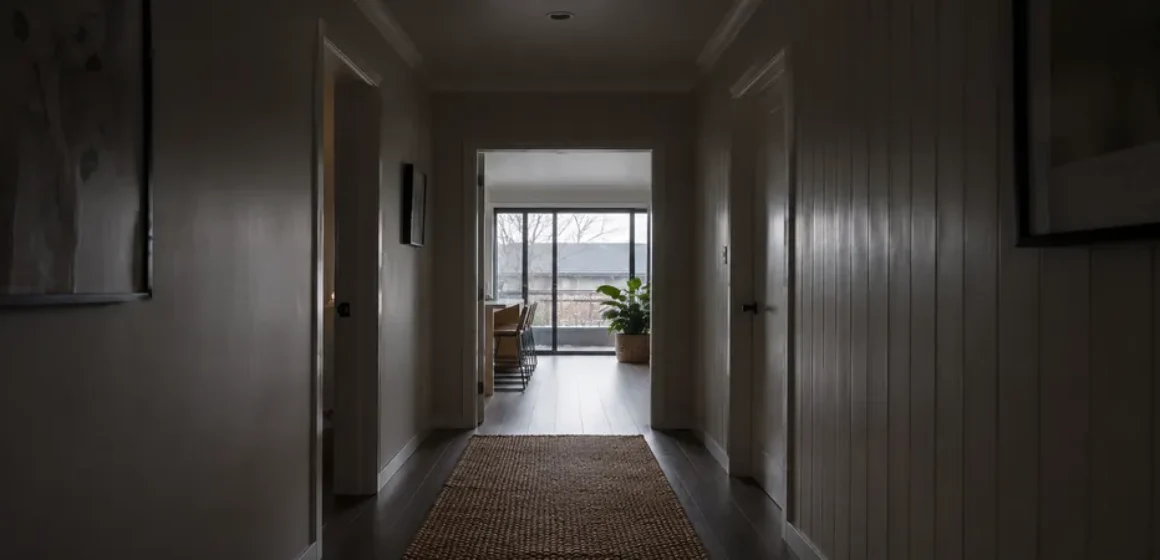
A dark hallway can change how the whole home feels.
It may not be the room where people sit, cook, work or sleep, but it is the space everyone passes through. It connects the bedrooms, bathroom, laundry, living room, front entrance and garage. When the hallway feels gloomy, the home can feel less welcoming before you even reach the main rooms.
This becomes especially noticeable in winter.
In Hamilton homes, a hallway that feels acceptable in summer can feel dull and closed-in from June onwards. The lights go on earlier. Bedroom doors stay closed more often. Morning daylight is weaker. The middle of the home feels flatter. A passage that was once just practical starts to feel like a problem.
For homeowners searching for a hallway skylight Hamilton solution, the answer is not always a large skylight. In many hallways, a tubular skylight or Sky tube may be more suitable because the space needs useful daylight, not necessarily a full sky view.
This guide explains why Hamilton hallways often feel darker in winter, when a skylight may help, when a tubular skylight may be the better option, and what homeowners should consider before making an enquiry.
Why hallways feel worse in winter
Hallways are often the first areas to expose a home’s daylight weakness.
Most hallways do not have their own large windows. They rely on borrowed light from bedrooms, living areas, entrance doors or nearby rooms. In summer, this borrowed light may be enough. In winter, it often falls short.
Several things change at the same time:
- The sun sits lower
- Daylight hours are shorter
- Mornings can feel grey or slow to brighten
- Internal doors are closed more often
- Curtains or blinds stay drawn for warmth and privacy
- Outdoor light may not reach deep into the floor plan
- Ceiling lights are used earlier and for longer periods
A hallway is usually not dark because of one single issue. It is often dark because it sits in the centre of the home and receives whatever daylight is left over after the main rooms have taken theirs.
That is why winter makes the problem clearer.
The hallway is not just a passage. It becomes a daily reminder that the centre of the home lacks natural light.
The Hamilton hallway problem
Hamilton homes vary widely.
Some older homes have long central hallways with bedrooms running off each side. Some mid-century homes have practical layouts where the hallway sits between living spaces and bedrooms. Newer homes may have internal corridors leading to bedrooms, bathrooms, garages or second living areas. Townhouses and compact sections can also create hallways where side light is limited.
The result is often similar: the hallway becomes dependent on artificial lighting.
Common signs include:
- The hallway light is on during the day
- The middle section feels darker than both ends
- The entrance feels dull rather than welcoming
- Bedroom doors reduce borrowed light
- The hallway feels colder because it looks shadowed
- The walls or flooring make the passage feel narrow
- The space feels flat after lunch in winter
- Visitors enter into a dim transition space
- The hallway feels disconnected from the brighter rooms nearby
This is not always a major renovation problem. Sometimes the hallway simply needs a better source of daylight from above.
Why a hallway is different from other rooms
A hallway does not need daylight in the same way a kitchen, office or living room does.
A kitchen needs daylight where people prepare food.
A home office needs daylight that avoids screen glare.
A bathroom needs privacy, brightness and sometimes airflow.
A living room needs comfort, balance and light control.
A hallway needs something simpler.
It needs enough daylight to make movement through the home feel natural, safe and pleasant during the day.
That means the best hallway skylight solution is often not the largest or most dramatic option. It is the option that brings the right amount of light to the right part of the passage.
This is why hallway projects should start with function, not product size.
Ask:
- Where is the darkest section?
- Is the hallway long or short?
- Does it have bends or doorways?
- Is there borrowed light from nearby rooms?
- Is the ceiling flat, raked or stepped?
- Is there roof space above the hallway?
- Are there existing lights, vents, access hatches or wiring?
- Does the hallway need one daylight point or more than one?
A hallway should feel naturally usable, not over-lit or visually awkward.
The middle-section issue
Many Hamilton hallways are not evenly dark.
One end may receive daylight from the front door. Another end may borrow light from the living area. The problem often sits in the middle, where daylight fades before reaching the passage properly.
This middle-section issue is important because it affects placement.
A skylight or tubular skylight placed too close to an already bright end may not solve the real problem. A daylight point placed in the central section may make the whole passage feel more balanced.
This is where a hallway assessment becomes practical.
The question is not, “Where can we fit a skylight?”
The better question is:
Where does daylight need to land so the hallway works better?
In some homes, one well-positioned tubular skylight may be enough. In a longer hallway, two smaller daylight points may make more sense than one larger one. In a hallway with a bend, the darker side may need separate consideration.
Good placement prevents wasted light.
When a tubular skylight or Sky tube may suit a Hamilton hallway
For many dark hallways, a tubular skylight or Sky tube can be a strong option.
A tubular skylight brings daylight from the roof through a reflective tube and delivers it into the ceiling through a diffuser. This makes it useful for hallways because the goal is usually practical brightness rather than a large architectural feature.
It may suit:
- Long internal hallways
- Narrow passages
- Hallways between bedrooms
- Entries without enough daylight
- Corridors leading from garages
- Hallways with flat ceilings
- Homes where a large skylight would feel too visually heavy
- Areas where soft, general daylight is enough
A tubular skylight can help a hallway feel less dependent on electric lights during the day. It can also make the transition between rooms feel more natural.
However, it still needs proper planning.
The roof position, tube length, roof pitch, ceiling location and possible obstructions all matter. A straight tube path is often simpler, while bends or longer tube runs may affect the final result.
A tubular skylight is practical, but it should not be treated as a one-size-fits-all product.
When a fixed skylight may be worth considering
A fixed skylight may suit some hallways, but it is not always the default answer.
It may be worth considering when:
- The hallway is wider than usual
- The entrance area needs a stronger daylight feature
- The ceiling height or shape can support it
- A sense of openness is wanted
- The hallway connects to a living area or stairwell
- The homeowner wants visible sky as part of the result
- The roof and ceiling layout are suitable
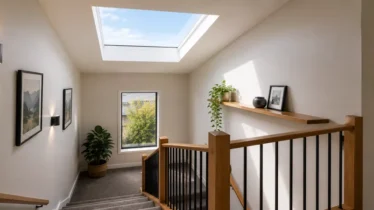
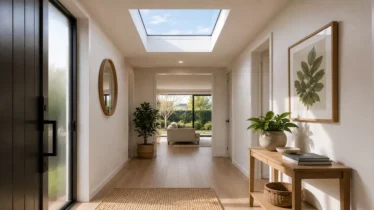
A fixed skylight can make a hallway feel more open and visually connected to daylight. It may be especially effective in an entry or transitional space where the homeowner wants the home to feel brighter as soon as the front door opens.
But a fixed skylight also has more visual impact than a tubular skylight.
It may require more consideration around:
- Size
- Placement
- Internal lining
- Roof pitch
- Flashing
- Glare
- Heat gain in warmer months
- How the skylight sits with the ceiling and hallway proportions
For a narrow hallway, a large fixed skylight may not always feel balanced. It could create a bright patch rather than an even daylight improvement.
The product should suit the passage, not dominate it.
When more than one daylight point may be better
Long hallways need careful thinking.
A single skylight or tubular skylight may improve one section, but leave another part still feeling dull. This is especially true where the hallway is long, has a bend, or includes several doorways.
In some cases, two smaller daylight points may create a better result than one larger one.
This can help:
- Spread daylight more evenly
- Reduce harsh contrast
- Light both ends of a passage
- Support a hallway with a bend
- Avoid making one spot too bright
- Improve the way the hallway feels from multiple rooms
This does not mean every long hallway needs multiple units. It means placement should be planned around the actual shape and use of the space.
A simple hallway may only need one well-positioned tubular skylight. A larger passage may need a more layered approach.
The entrance hallway: first impressions matter
The entrance hallway has a different role from a back hallway or bedroom passage.
It is the first internal space people see. It shapes the feeling of arrival.
In Hamilton homes, some entrances are naturally bright because they have glazed doors or nearby windows. Others open into a darker passage, especially if the door faces a shaded side, covered porch or south-facing orientation.
An entrance that feels dark can make the home feel less welcoming, even if the living areas are bright.
A skylight or tubular skylight may help when:
- The entrance relies on artificial light during the day
- The front door glazing is limited
- Privacy reduces side-window daylight
- The hallway feels narrow or enclosed
- The entry has no natural light source of its own
- The home feels darker immediately upon entering
For some entries, a fixed skylight may create a stronger sense of openness. For others, a tubular skylight may provide enough brightness without changing the character of the space too much.
The right choice depends on the entry size, ceiling layout and roof access.
Hallways outside bathrooms and bedrooms
Many dark hallways sit outside bedrooms and bathrooms.
This matters because doors can change the daylight conditions throughout the day. When bedroom doors are open, the hallway may borrow some light. When doors are closed, the hallway can become much darker.
In winter, doors are often closed for warmth, privacy or routine. This means the hallway cannot rely on borrowed light as much.
A daylight point in the ceiling can help make the hallway less dependent on nearby rooms.
This is particularly useful where:
- Children’s bedrooms sit off a central hallway
- The bathroom has limited window light
- Bedroom doors are often closed
- The passage has no external wall
- The hallway light is used repeatedly during the day
- The space feels darker after school or late afternoon
A hallway skylight is not only about appearance. It can improve how the home is used day to day.
Hallways near garages and internal access areas
Many Hamilton homes have internal access garages or utility zones that connect into the main hallway.
These areas can feel especially dark because they often sit away from the main living windows. The transition from garage to hallway may feel flat or enclosed, particularly in winter.
A tubular skylight or Sky tube may help in areas such as:
- Garage entry passages
- Internal access hallways
- Laundry-to-hallway transitions
- Back corridors
- Utility zones
- Small circulation spaces near storage cupboards
These spaces do not usually need a dramatic skylight. They need practical daylight that makes the area easier to use without turning lights on throughout the day.
This is where subtle overhead daylight can be valuable.
Ceiling height and hallway width
Hallway proportions affect the skylight choice.
A narrow hallway with a low ceiling may not suit a large skylight visually. A wide hallway with a higher ceiling may handle a more prominent daylight feature. A raked or sloped ceiling may open up different possibilities, while a standard flat ceiling may be better suited to a tubular skylight or carefully positioned fixed skylight.
Before choosing a product, consider:
- Is the hallway narrow or wide?
- Is the ceiling low, standard or high?
- Is the ceiling flat or angled?
- Would a larger skylight feel balanced?
- Would a diffuser-style daylight point look more appropriate?
- Are there existing downlights or ceiling fittings?
- Is the hallway used as a gallery, entry or simple passage?
The best choice should feel natural within the home’s proportions.
A skylight should not look like an afterthought.
Roof access and roof layout above the hallway
The hallway may look simple from inside, but the roof space above can be more complex.
Important considerations include:
- Roof type
- Roof pitch
- Roof profile
- Roof framing
- Trusses or rafters
- Wiring
- Plumbing
- Ducting
- Insulation
- Existing downlights
- Ceiling access
- Nearby valleys or ridges
- Gutter and water-flow direction
- Flashing requirements
For tubular skylights, the tube path matters. A shorter and straighter path is usually preferable. If the roof position and ceiling position do not line up, bends may be needed, which can affect the outcome.
For fixed skylights, the roof opening, framing, flashing and internal finishing need careful planning.
This is why a hallway skylight enquiry should include both interior and roof photos where possible.
The ceiling shows the problem. The roof helps determine the solution.
The artificial lighting trap
Many homeowners live with dark hallways for years because the solution seems simple: turn the lights on.
That works, but it does not always solve how the home feels.
A hallway lit only by artificial light can still feel flat during the day. It may be bright enough to walk through, but not naturally bright enough to feel connected to the rest of the home.
This difference matters.
Daylight changes the feeling of a hallway in a way artificial lighting often does not. It can soften the passage, make wall colours read more naturally, and reduce the sense that the central part of the home is switched off.
That said, skylights and artificial lighting should work together.
A hallway still needs proper night lighting. A skylight supports daytime use. It does not replace all lighting needs.
The aim is not to remove artificial lighting completely. The aim is to reduce unnecessary daytime dependence on it where practical.
Common mistakes with hallway skylights
Hallway skylight decisions can go wrong when the focus is too narrow.
Common mistakes include:
Choosing the biggest option first
A hallway often needs balanced daylight, not maximum brightness.
Ignoring the darkest section
The skylight should help the area that actually needs light.
Forgetting about hallway length
One daylight point may not suit every long or segmented hallway.
Treating all hallways the same
An entrance hallway, bedroom passage and garage access corridor may need different approaches.
Ignoring roof constraints
The best ceiling position may not always match the easiest roof position.
Expecting daylight to solve ventilation or dampness
A hallway skylight can improve daylight, but it does not solve wider moisture or airflow issues by itself.
Overlooking visual balance
The skylight or diffuser should suit the hallway’s size, ceiling and style.
A good hallway result comes from careful placement and realistic expectations.
Daylight without overdoing it
A hallway should feel clearer and more welcoming, not harsh.
Too much brightness in one spot can create contrast. The lit section may look strong, while the surrounding parts still feel dull. This can make the hallway feel uneven rather than naturally improved.
The better outcome is a daylight level that suits the passage.
For many Hamilton hallways, that means:
- Soft daylight through the central section
- Less reliance on lights during the day
- Better visibility between rooms
- A more inviting entrance or passage
- Daylight that feels natural rather than forced
- A product that suits the ceiling and home style
This is why tubular skylights and Sky tubes often make sense in hallways. They can provide practical daylight without overwhelming the space.
Fixed skylights can also work well, especially in wider or more prominent hallways, but they need more careful visual planning.
Illustrative example only
A Hamilton homeowner has a long hallway running from the entrance to the bedrooms. In summer, the front door and living room provide enough borrowed light for much of the day. In winter, the hallway feels darker by late morning. Bedroom doors are often closed, and the central section needs the ceiling light on.
The homeowner first asks about a large skylight. After reviewing the hallway, a tubular skylight may be more suitable because the passage is narrow and does not need a large visual feature. The main goal is useful daytime brightness through the central part of the hallway.
If the hallway were wider, or if the entry needed a stronger design feature, a fixed skylight might also be considered. If the hallway had a bend or a longer run, more than one daylight point might be worth assessing.
The best solution depends on the hallway’s shape, the roof above and where the daylight needs to land.
The problem is simple: the hallway feels dark.
The solution still needs proper planning.
How to assess your Hamilton hallway before enquiring
Before asking for advice, walk through the hallway during the day with the lights off.
Look carefully at how the space behaves.
Ask:
- Which part of the hallway is darkest?
- Is the darkness worse in winter?
- Does the hallway rely on borrowed light from bedrooms or living rooms?
- Are doors usually open or closed?
- Is the hallway long, narrow, bent or broken into sections?
- Is the entrance also dark?
- Is the hallway near a garage, laundry or bathroom?
- Does the ceiling have existing lights, vents or access panels?
- Is there roof space above the hallway?
- Would you prefer a subtle diffuser or a visible skylight?
- Is the goal practical brightness or a stronger design feature?
These answers will help shape a better recommendation.
They also help avoid the common mistake of choosing the product before understanding the space.
What photos to send for a hallway skylight enquiry
Good photos make it much easier to assess a hallway.
For a Hamilton hallway skylight enquiry, send:
- A photo from one end of the hallway
- A photo from the opposite end
- A photo of the darkest section
- A photo showing the ceiling
- A photo showing existing lights or ceiling fittings
- A photo of the entrance area, if relevant
- A photo of the roof above or near the hallway, if possible
- The approximate hallway length and width
- The roof type, if known
- A note explaining when the hallway feels darkest
- Whether you prefer a tubular skylight, Sky tube or visible skylight
- Whether the hallway is part of a renovation or repainting plan
These details help determine whether one daylight point may be enough, whether multiple points should be considered, and whether the roof layout is likely to support the preferred option.
When a hallway skylight may not be the first answer
A skylight or tubular skylight may not be the best first step in every hallway.
It may be worth reviewing other options first if:
- The hallway is only dark at night
- The main issue is poor paint colour or very dark finishes
- Better artificial lighting would solve the practical problem
- The roof above is unsuitable
- The hallway is about to be redesigned
- Storage or furniture is making the passage feel cramped
- The home has a broader moisture or ventilation issue
- The desired ceiling position is blocked by services or framing
Sometimes a hallway needs better lighting design, lighter finishes or layout changes. Sometimes it needs overhead daylight. Sometimes it needs a combination.
The right answer depends on the actual cause of the problem.
Why winter is the right time to notice the problem
Winter is useful because it shows the hallway under pressure.
If the passage feels dark during June, July and August, that tells you more than assessing it on a bright summer afternoon. Winter reveals how much daylight the hallway really receives when the home is closed up and natural light is weaker.
This does not mean every dark winter hallway needs immediate work.
It means winter is a good time to assess the space honestly.
By identifying the problem now, homeowners can plan ahead for spring improvements, renovation work, painting, roofing or other home upgrades.
A hallway skylight decision made during winter is often based on the room’s most challenging conditions, which can lead to clearer expectations.
The best hallway skylight outcome
The best outcome is not a hallway that feels dramatically different from the rest of the home.
It is a hallway that feels naturally usable.
A good result may mean:
- The hallway light is needed less during the day
- The entrance feels more welcoming
- The middle of the home feels less closed in
- Bedrooms and bathrooms feel better connected
- The passage feels safer and clearer
- Wall colours and flooring look more natural
- The home feels more balanced in winter
For many Hamilton homes, the hallway is not asking for a showpiece.
It is asking for daylight in the place where daylight has always struggled to reach.
Planning your next step
If your Hamilton hallway feels dark through winter, start by identifying the exact part of the hallway that needs daylight.
A tubular skylight or Sky tube may suit narrow passages, central hallways, entries, separate toilet corridors and garage access areas. A fixed skylight may suit wider hallways, entrances or spaces where a visible daylight feature is wanted.
Skylights NZ can help you consider which option may suit your hallway, roof type and desired result.
To start planning your options, use the Skylights NZ enquiry form:
https://inquiry.skylights.co.nz/inquiry
You may also find these useful:
- Skylight installation services
- Request a skylight quote
- Skylight options for NZ homes
- Why Waikato Homes Feel Darker in Winter, and When a Skylight Can Help
FAQs
Is a skylight a good option for a dark hallway in Hamilton?
A skylight may be a good option if the hallway lacks useful natural daylight and has a suitable roof and ceiling layout. In many hallways, a tubular skylight or Sky tube may be more suitable than a large fixed skylight because the goal is practical daytime brightness.
What is best for a hallway, a skylight or tubular skylight?
A tubular skylight often suits narrow or internal hallways because it provides daylight through a ceiling diffuser without needing a large visible skylight opening. A fixed skylight may suit wider hallways, entries or spaces where a stronger daylight feature is wanted.
How many skylights does a long hallway need?
It depends on the hallway length, shape and where the darkest sections are. One well-positioned tubular skylight may suit a shorter hallway. A longer or bent hallway may need more than one daylight point for a more balanced result.
Can a hallway skylight reduce the need for lights during the day?
A well-placed skylight, tubular skylight or Sky tube may reduce reliance on artificial lighting during daylight hours in suitable hallways. The result depends on roof position, tube path, hallway size, ceiling layout and surrounding room conditions.
Is a hallway skylight suitable for older Hamilton homes?
A hallway skylight may suit some older Hamilton homes, especially where central hallways rely on borrowed light. Suitability depends on roof type, roof pitch, ceiling space, framing, wiring and the preferred daylight location.
What should I send for a hallway skylight quote?
Send photos from both ends of the hallway, the darkest section, the ceiling, existing lights or vents, and the roof above the hallway if possible. Include the hallway size, roof type if known, and when the hallway feels darkest.