What photos should you send before asking for a skylight quote?
A good skylight quote starts before the quote is written.
It starts with the right information.
Homeowners often know the room feels dark, but a skylight specialist needs to understand more than that. The room layout, ceiling, roof type, roof access, roof pitch, existing lights, vents, moisture concerns and desired daylight result can all affect what may be suitable.
Clear photos can make the early conversation much more useful.
They can help identify whether the room may suit a fixed skylight, vented skylight, tubular skylight or Sky tube. They can show whether the daylight needs to land over a kitchen bench, hallway centre, bathroom vanity, laundry work area, bedroom desk or darker living-room zone. They can also highlight practical constraints before anyone makes assumptions.
This skylight quote checklist explains what photos to send, what details to include, and how to help your skylight enquiry move from “I want more light” to “this is the room, this is the problem, and this is the outcome I want”.
Why photos matter for a skylight quote
A skylight is not chosen from the room alone.
It is chosen by looking at the relationship between the room and the roof.
A photo of a dark hallway shows the daylight problem. A photo of the ceiling shows where a diffuser or skylight may be considered. A photo of the roof helps indicate the roof type, roof profile, nearby obstructions and potential flashing requirements. A photo of the outside of the home can help with access and roof location.
Photos can help clarify:
- Which room needs daylight
- Where the daylight should land
- Whether the room is compact or open
- Whether the ceiling is flat, sloped or raked
- Whether there are existing lights, vents or fans
- Whether a tubular skylight or larger skylight may be more suitable
- Whether moisture or ventilation may also need discussion
- What roof type may be involved
- Whether the roof area has nearby obstructions
- Whether further site assessment is likely to be needed
Photos do not replace a proper assessment where one is needed, but they make the first conversation much more productive.
The most important photo: the room from a wide angle
Start with one clear wide photo of the room.
Stand in a corner or doorway and capture as much of the room as possible. This helps show the room’s size, layout, ceiling, windows, floor area and how people move through the space.
A wide room photo helps answer questions such as:
- Is this a compact room or larger space?
- Where are the windows?
- Where is the darkest area?
- How does the ceiling relate to the room?
- Is the room a kitchen, bathroom, hallway, bedroom, office, laundry or living area?
- Does the room need a subtle daylight solution or a stronger skylight feature?
Try to take the photo during the day with the artificial lights off, if safe and practical. This gives a more honest view of the natural daylight problem.
If the room is very dark, take one photo with the lights off and one with the lights on. The comparison can be useful.
Photo 2: the ceiling area where daylight is wanted
The ceiling photo is essential.
It helps show where a fixed skylight, vented skylight, tubular skylight or Sky tube might be considered from inside the room.
Take a clear photo of the ceiling area where you would like the daylight to arrive.
Include nearby features such as:
- Downlights
- Extractor fans
- Heat lamps
- Smoke alarms
- Air vents
- Access panels
- Ceiling speakers
- Beams
- Sloped or raked sections
- Existing damage or staining
This matters because skylight placement must work around the ceiling layout and what may sit above it.
For example, a bathroom ceiling with an extractor fan, heat lamp and downlights may need more careful planning. A kitchen ceiling with pendant lights above an island may influence placement. A hallway ceiling with a smoke alarm or manhole may affect where a tubular skylight diffuser can sit.
The ceiling photo helps avoid guesswork.
Photo 3: the darkest part of the room
Do not only photograph the room from its best angle.
Show the problem.
Take a photo of the darkest part of the room, especially the area you want improved.
This may be:
- The kitchen bench
- The island
- The hallway centre
- The bathroom vanity
- The shower approach
- The laundry work area
- The bedroom desk
- The wardrobe side of the room
- The living-room corner
- The stair landing
- The internal toilet or pantry
A skylight should not simply brighten the ceiling. It should improve the part of the room that matters.
By showing the darkest zone, you help the skylight specialist understand the daylight landing point.
The question becomes clearer:
Where should the daylight land for this room to feel better?
Photo 4: the room’s windows and what they face
If the room has windows, photograph them.
Also take a photo showing what is outside those windows, if practical.
This helps explain why the room may still feel dark despite having a window.
Common daylight blockers include:
- Boundary fences
- Neighbouring walls
- Garages
- Trees or dense planting
- Deep eaves
- Covered decks
- Verandas
- Retaining walls
- Small side yards
- South-facing outlooks
- Frosted or privacy glass
A bedroom may have a window, but if it faces a fence, the daylight may be weak. A kitchen may have a window, but a covered outdoor area may block useful light. A bathroom may have frosted glass that protects privacy but reduces brightness.
This photo helps separate the existence of a window from the usefulness of the daylight.
Photo 5: the roof above or near the room
If it is safe and practical, send photos of the roof area above or near the room.
You do not need to climb onto the roof. In most cases, ground-level photos from outside the home are enough to start the conversation.
Try to capture:
- The roof section above the room
- The roof material
- The roof profile
- The general roof slope
- Nearby vents, pipes or flues
- Solar panels
- Chimneys
- Valleys, ridges or gutters
- Existing skylights or roof penetrations
- The wider roof area around the proposed location
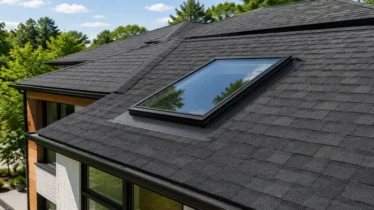
Roof photos help identify whether the home has metal roofing, tile roofing, asphalt shingles or another system. They may also show whether there are obstructions that could affect placement.
Do not take unsafe photos. If the roof cannot be photographed safely, mention that in the enquiry.
A professional assessment can deal with the rest.
Photo 6: the outside view of the house near that room
A wider exterior photo can help connect the room to the roof.
Stand outside and take a photo that shows the wall, window and roof section near the room. This helps the skylight specialist understand where the room sits in the house.
This is especially useful for:
- Additions
- Split-level homes
- Two-storey homes
- Homes with complex rooflines
- Rooms beside garages
- Bathrooms or laundries at the back of the home
- Bedrooms under a roof valley or eave
- Homes with covered decks or pergolas
The goal is not to provide a full site survey.
It is to help connect the interior room to the exterior roof conditions.
Photo 7: any moisture, staining or ceiling damage
If there are signs of moisture, include clear photos.
This may include:
- Ceiling stains
- Peeling paint
- Mould marks
- Damp corners
- Bubbling plaster
- Cracked paint around vents
- Water marks near existing skylights
- Staining near bathroom fans
- Condensation-prone windows
These signs matter because they may affect the advice.
A dark bathroom with steam needs a different conversation from a dark bathroom with roof leak staining. A ceiling stain may relate to an old leak, condensation, poor extraction or another building issue.
A skylight can improve daylight. A vented skylight may support airflow in some rooms. But moisture problems need to be understood properly.
Do not hide these details. They help protect the home and improve the recommendation.
Photo 8: access around the home
Access photos are useful when the roof may be difficult to reach.
Take photos showing:
- Driveway access
- Side paths
- Decks or pergolas
- Narrow access points
- Sloped ground
- Retaining walls
- Fences
- Multi-level areas
- Areas where a ladder might need to be placed
This helps identify whether access may affect the installation approach, timing, safety or quote.
Not every enquiry needs detailed access photos, but they are helpful for homes with difficult roof access, tight sections, steep slopes, multiple levels or obstacles around the roofline.
Safe access is part of responsible skylight work.
Room-specific photo guidance
Different rooms need slightly different photos.
Kitchen
Send:
- Wide photo of the kitchen
- Photo of the bench, island or preparation area that feels dark
- Ceiling photo above the desired daylight area
- Photo showing windows and any covered deck or eave outside
- Roof photo above or near the kitchen
- Photo of existing rangehood or ventilation if airflow is a concern
The key kitchen question is where the daylight should land.
Bathroom
Send:
- Wide photo of the bathroom
- Ceiling photo showing fan, heat lamp and lights
- Photo of the vanity, shower and darkest area
- Photo of the bathroom window and what it faces
- Any condensation, mould or peeling paint photos
- Roof photo above or near the bathroom
The key bathroom question is whether the issue is daylight, ventilation or both.
Hallway
Send:
- Photo looking down the hallway from each end
- Ceiling photo of the darkest section
- Photos showing connected rooms or doorways
- Photo of existing lights, smoke alarms or access panels
- Roof photo above or near the hallway if possible
The key hallway question is where the diffuser or skylight would improve movement through the home.
Bedroom
Send:
- Wide bedroom photo
- Ceiling photo
- Photo of the bed, wardrobe and desk if relevant
- Photo of the window and what it faces
- Roof photo above or near the room
- Notes on privacy, glare, sleep or summer comfort concerns
The key bedroom question is where daylight is useful without disrupting rest.
Home office
Send:
- Wide office photo
- Photo showing desk and screen position
- Ceiling photo
- Window photo and outside view
- Roof photo above or near the room
- Notes on glare and work hours
The key office question is how daylight can improve the room without creating screen glare.
Laundry
Send:
- Wide laundry photo
- Ceiling photo
- Photo of appliances, bench or work area
- Photo of any window or ventilation
- Moisture photos if relevant
- Roof photo above or near the room
The key laundry question is whether daylight alone is needed, or whether moisture and airflow also need review.
What details to include with the photos
Photos are most useful when paired with a short explanation.
Include:
- Your suburb or town
- The room you want improved
- What feels wrong with the room
- When the room feels darkest
- Whether lights are used during the day
- Whether the room needs daylight, ventilation or both
- Whether the room is being renovated or painted
- Roof type if known
- Ceiling type if known
- Whether the room is below roof space or another level
- Whether privacy, glare, heat or moisture are concerns
- Whether you prefer a subtle daylight source or a larger skylight feature
You do not need technical wording.
Plain English is better.
For example:
“Our hallway is dark all day and we use the light even at lunchtime. We would prefer a subtle daylight option if possible.”
That is more useful than simply saying, “Please quote a skylight.”
What not to do when sending photos
Do not send only close-ups
Close-ups can be useful, but they do not show the room context. Include wide photos too.
Do not photograph only the best-looking angle
Show the problem area honestly.
Do not climb onto the roof for photos
Safety comes first. Ground-level photos are usually enough to begin.
Do not hide stains or moisture concerns
These details help identify whether daylight, ventilation, roofing or moisture control need discussion.
Do not assume the product type before sending photos
The room and roof may suggest a different option. A fixed skylight, vented skylight, tubular skylight or Sky tube all suit different situations.
Do not worry if you cannot provide every photo
Send what you can. A good enquiry can still begin with limited information.
What a quote team can usually assess from photos
Photos may help the team understand:
- The room type and layout
- The likely daylight problem
- The preferred daylight landing area
- Whether a subtle or stronger skylight solution may suit
- Whether ventilation needs discussion
- Whether roof photos suggest a particular roof type
- Whether access may need consideration
- Whether a site visit may be required
- Whether further information is needed before quoting
Photos may not be enough to confirm everything.
Some details need site assessment, especially roof pitch, structural framing, ceiling cavity, services, flashing requirements, roof condition and installation access.
A photo-based review is a starting point, not a guarantee.
That distinction protects both the homeowner and the installer.
Why better photos can reduce back-and-forth
A clear photo set can reduce the number of follow-up questions.
Instead of asking:
- Which room is it?
- Where is the ceiling?
- What roof type do you have?
- Is there a fan in the bathroom?
- Where does the window face?
- Is the hallway long or short?
- Is the kitchen bench the dark area?
- Is the roof accessible?
The team can begin with a stronger understanding of the home.
This does not always make the quote instant. But it can make the process smoother, more accurate and more useful.
Good information helps avoid assumptions.
And skylight quotes should not be built on assumptions where roof and weatherproofing are involved.
The quick skylight quote photo checklist
If you want the shortest version, send these five photos first:
- Wide photo of the room
- Photo of the ceiling area
- Photo of the darkest part of the room
- Photo of the roof above or near the room, if safe from ground level
- Photo of any window, moisture issue, fan, vent or access concern relevant to the room
Then add a short note explaining:
- Which room it is
- What you want to improve
- When it feels darkest
- Whether ventilation is also a concern
- Whether you prefer a subtle daylight source or a larger skylight feature
That is enough to start a much better conversation.
The detailed skylight quote checklist
For the most helpful enquiry, include:
Interior photos
- Wide room photo
- Ceiling area photo
- Darkest zone photo
- Window photo
- Key furniture or fixture photo
- Existing lights, fans or vents
- Any moisture or ceiling damage
Exterior photos
- Roof above or near the room
- Wider roof area
- Outside wall and room location
- Access around the home
- Nearby roof obstructions
Notes
- Room type
- Location
- Desired outcome
- Time of day the problem is worst
- Daylight, ventilation or both
- Roof type if known
- Ceiling type if known
- Renovation plans
- Privacy, glare, heat or moisture concerns
This is the ideal starting package for a quote enquiry.
Illustrative example only
A homeowner wants a skylight for a dark hallway. They send one close-up photo of the hallway ceiling.
That helps a little, but it does not show the hallway length, connected rooms, darkest zone, roof location or existing lights.
A better enquiry includes:
- One photo looking down the hallway from each end
- A ceiling photo of the darkest section
- A photo showing nearby rooms or doorways
- A ground-level roof photo above that part of the home
- A short note saying the hallway light is used during the day
With this information, the team can better assess whether a tubular skylight, Sky tube or another option may suit.
The homeowner has not solved the technical question. They have simply made the first assessment more accurate.
That is the purpose of good photos.
A better enquiry creates a better recommendation
A skylight quote is not just about product and price.
It is about matching the right daylight solution to the right room and roof.
The more clearly you show the room, ceiling, roof and problem area, the better the early advice can be.
This is especially important when deciding between fixed skylight, vented skylight, tubular skylight and Sky tube. Each option has a different purpose, and photos help show which direction may be most suitable.
Good photos do not need to be professional.
They need to be honest, clear and useful.
Planning your next step
If you are considering a skylight, start by gathering a clear set of room, ceiling and roof photos before requesting a quote.
Skylights.co.nz can help you consider whether a fixed skylight, vented skylight, tubular skylight or Sky tube may suit your room, roof type and desired outcome.
To start planning your options, use the Skylights.co.nz enquiry form:
https://inquiry.skylights.co.nz/inquiry
You may also find these useful:
FAQs
What photos should I send for a skylight quote?
Send a wide photo of the room, a ceiling photo, a photo of the darkest area, a ground-level roof photo if safe, and photos of any windows, fans, vents, moisture marks or access issues relevant to the room.
Do I need to climb onto the roof to take photos?
No. Do not climb onto the roof for photos. Ground-level roof photos are usually enough to begin the enquiry. If more roof detail is needed, this can be assessed safely by a professional.
Why does the ceiling photo matter for a skylight quote?
The ceiling photo shows where a skylight, tubular skylight diffuser or Sky tube diffuser may be considered. It also shows existing lights, fans, vents, access panels or other features that may affect placement.
Should I send photos of the darkest part of the room?
Yes. The darkest part of the room helps show where daylight is needed most. This can guide skylight placement and help avoid brightening the wrong area.
What details should I include with skylight photos?
Include the room type, suburb or town, when the room feels darkest, whether lights are used during the day, whether ventilation is a concern, roof type if known, and what outcome you want from the skylight.
Can I get a skylight quote without roof photos?
You can usually start the enquiry without roof photos, but roof photos help. They may show roof type, profile, access and nearby obstructions. A proper assessment may still be needed before final recommendations are confirmed.