Skylights for older NZ homes: what villas and bungalows need considered first
Older New Zealand homes often have beautiful bones.
High ceilings, timber floors, central hallways, character trims, deep rooms, verandas, bay windows, lean-to additions and the kind of layout that gives each home its own personality. Villas, bungalows and older cottages can feel warm, familiar and full of character.
They can also be dark.
A central hallway may need lights on during the day. A bathroom may have been added in a shaded rear section. A kitchen may sit under a covered veranda or later extension. A bedroom may face a fence or side path. A laundry may feel like an afterthought. In winter, these daylight problems can become much more noticeable.
A skylight can be a strong way to improve natural light in an older home, but it needs to be planned carefully.
A skylight older homes NZ project should respect the room, roof, ceiling, structure, character and long-term weatherproofing of the home. The goal is not to force a modern product into an older building. The goal is to add daylight in a way that feels considered, practical and appropriate.
This guide explains what homeowners should check before adding a fixed skylight, vented skylight, tubular skylight or Sky tube to an older villa, bungalow or character home.
Why older homes often feel dark
Older homes were not always designed around the way people live today.
Many were built with separate rooms, central corridors and deep layouts. Daylight often came from windows along the sides or front of the home. Later changes, additions and renovations may have altered the way light moves through the house.
Common reasons older homes feel dark include:
- Long central hallways
- Deep rooms away from windows
- Verandas or eaves shading windows
- Small or privacy-limited bathroom windows
- Later rear additions blocking light
- Bedrooms facing side fences or neighbouring homes
- Original layouts with separate rooms rather than open-plan flow
- Dark timber trims, floors or wall colours
- South-facing rooms
- Older laundries, toilets or service areas with limited daylight
- Covered decks added over former window light
- Internalised rooms created through renovations
The darkness is not always a flaw.
It is often part of how the home was built and later adapted.
A good skylight plan works with that history rather than ignoring it.
Start with the room, not the age of the house
The fact that a home is old does not automatically mean it needs a skylight.
Start by identifying the room problem.
Ask:
- Which room needs natural light most?
- Does it need lights on during the day?
- Is the room used often?
- Is the issue daylight, ventilation, privacy, moisture or a combination?
- Where should the daylight land?
- Is the room part of the original house or a later addition?
- Has the room been renovated before?
- Does the room’s character need to be preserved visually?
- Would a subtle daylight solution be better than a larger skylight feature?
An older home may have several dark spaces, but not all of them deserve equal priority.
The best first skylight location is usually the room where better daylight would create the strongest daily value.
Central hallways: often the highest-impact opportunity
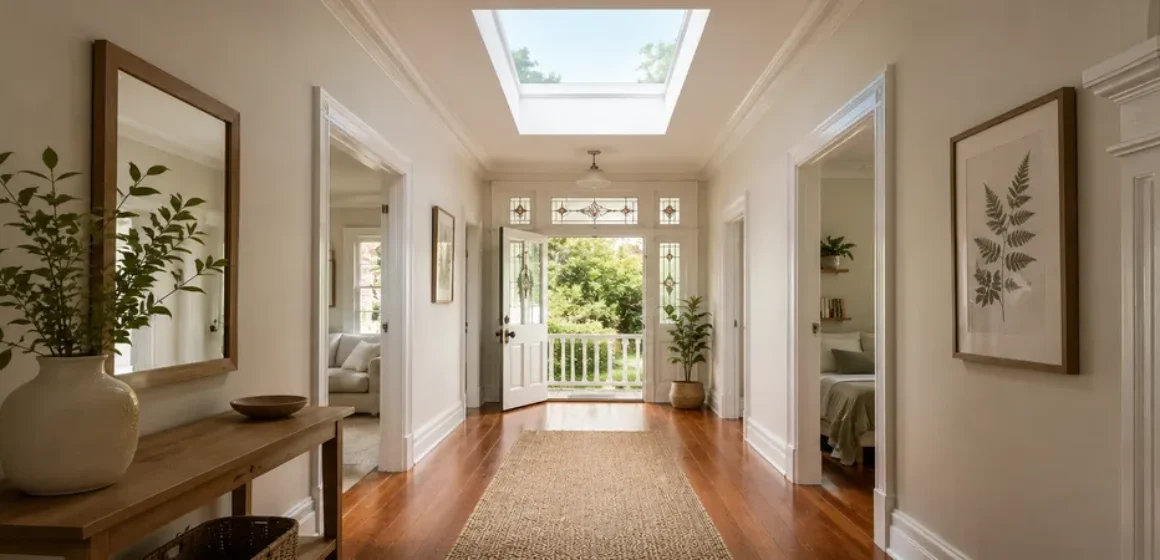
Central hallways are one of the most common daylight challenges in older NZ villas and bungalows.
They may run from the front entry through the centre of the home, with bedrooms or living rooms on either side. Doors are often closed for privacy, warmth or noise control. The hallway may rely on borrowed light from the front door or nearby rooms, which can be weak in winter.
A hallway may be a strong skylight candidate if:
- It needs lights on during the day
- It feels gloomy through the centre of the home
- It connects multiple bedrooms or living areas
- It has no direct window
- It makes the home feel darker than it really is
- It is used constantly throughout the day
A tubular skylight or Sky tube is often worth considering for older home hallways because it can bring practical daylight through a subtle ceiling diffuser.
In wider entry halls or feature corridors, a fixed skylight may also be considered, depending on the roof, ceiling and desired appearance.
The key is placement. The daylight should land where the hallway feels darkest, not simply where the ceiling looks most symmetrical.
Bathrooms in older homes need daylight and ventilation considered separately
Older bathrooms are often created or altered over time.
They may sit at the rear of the home, beside a laundry, in a lean-to addition, or along a shaded side wall. Many have frosted windows for privacy, limited natural light and older extraction systems.
A bathroom may need a skylight if:
- It feels dull during the day
- The window is small, frosted or shaded
- Privacy limits wall-window light
- The vanity or shower area is dark
- It is being renovated or repainted
But older bathrooms may also need ventilation review if:
- Steam lingers after showers
- The mirror fogs heavily
- Paint peels near the ceiling
- Mould marks appear
- The room smells damp or stale
- The extractor fan is weak, old or poorly ducted
A fixed skylight can improve daylight. A tubular skylight or Sky tube may suit a compact bathroom. A vented skylight may support airflow in some suitable bathrooms.
However, a skylight should not be expected to solve moisture by itself.
In older bathrooms, daylight and ventilation must be planned as separate parts of the room’s performance.
Kitchens and rear additions
Many older homes have kitchens that have changed over time.
A kitchen may have been moved, opened up, extended, connected to a dining space or placed under a covered outdoor area. The result can be a room that is practical but not well lit.
A kitchen skylight may be worth considering if:
- The bench or island is dark
- A covered veranda or deck blocks side light
- The kitchen sits in a rear extension
- The window lights the sink but not the preparation zone
- The kitchen is being renovated
- The room feels dull in winter mornings
A fixed skylight may suit a kitchen where stronger daylight is wanted over a working area. A tubular skylight or Sky tube may suit a pantry, scullery or compact service zone connected to the kitchen.
Placement matters more than symmetry.
A skylight should improve the working part of the kitchen, not simply sit in the centre of the ceiling.
Bedrooms and privacy in older suburbs
Older suburbs often have homes close to boundaries, side paths, fences and neighbouring windows.
Bedrooms may have windows, but privacy limits how much light they can bring in. Curtains or blinds may stay partly closed. A room may be technically windowed but still dull through most of the day.
A bedroom skylight may be worth considering if:
- The room feels dull during the day
- It is used as a bedroom-office or study
- Privacy limits side-window use
- The wardrobe or desk area is dark
- The room is south-facing or shaded
- A subtle daylight improvement would make the room more usable
For bedrooms, comfort matters.
Placement should consider:
- Bed location
- Morning light
- Sleep routines
- Blinds
- Summer comfort
- Glare
- Desk or wardrobe position
- Privacy
A fixed skylight may suit a larger bedroom or bedroom-office. A tubular skylight or Sky tube may suit a smaller bedroom, guest room or dressing area where practical daylight is enough.
A bedroom skylight should support the room’s use without disrupting rest.
Respecting character does not mean accepting darkness
Some homeowners worry that adding a skylight will compromise the character of an older home.
That concern is understandable.
Villas and bungalows often have ceilings, trims, proportions and interior details that feel important to preserve. A skylight should not look like it was forced into the room without thought.
Respectful skylight planning considers:
- Ceiling height
- Cornices and trims
- Original ceiling features
- Timber details
- Room proportions
- Hallway symmetry
- Interior finish
- Light well design
- Diffuser style
- Placement relative to doors and features
- Whether the skylight should be subtle or visible
In some rooms, a tubular skylight or Sky tube may be less visually intrusive. In other rooms, a fixed skylight may be appropriate if the room can carry a stronger daylight feature.
The goal is not to hide the daylight upgrade.
It is to make it feel intentional.
Roof structure can be less predictable in older homes
Older homes can have roof structures that are less straightforward than expected.
There may be original framing, later additions, repaired areas, altered rooflines, old chimneys, removed fireplaces, lean-to roofs, different roof pitches, old wiring or irregular ceiling cavities.
A skylight plan may need to consider:
- Rafters or older framing methods
- Later roof additions
- Previous renovations
- Multiple roof pitches
- Chimney or flue history
- Roof valleys and junctions
- Old ceiling repairs
- Limited access to roof spaces
- Structural changes from previous work
- Existing roof condition
This does not mean skylights are unsuitable for older homes.
It means assessment matters.
A room may look simple from inside, but the roof above may tell a more complicated story.
Roof condition should be checked early
Older homes may have roofs that have been repaired, patched or altered over time.
Before installing a skylight, roof condition should be considered.
Potential concerns include:
- Corroded metal roofing
- Loose or ageing fixings
- Cracked or brittle tiles
- Worn flashings
- Previous leak repairs
- Moss or debris build-up
- Blocked valleys or gutters
- Older underlay
- Sagging or uneven roof sections
- Ceiling stains inside the home
- Roof areas due for replacement
A skylight should ideally be installed into a roof that is suitable for the work.
If the roof is due for replacement, it may be better to coordinate skylight planning with the re-roof rather than installing into a roof that will soon be disturbed again.
Roof condition is not a minor detail.
It affects long-term confidence.
Roof pitch and flashing matter in character homes
Many older homes have multiple roof pitches because of original design and later additions.
A front villa roof may be steep, while a rear lean-to roof may be much lower pitch. A bungalow may have complex hips or gables. A bathroom or laundry may sit under a flatter extension.
Roof pitch affects water movement, product suitability and flashing.
Flashing must suit:
- Roof type
- Roof pitch
- Roof profile
- Product type
- Skylight size
- Placement
- Water flow
- Local weather exposure
A skylight should not be placed only where it looks right inside the room. It must also sit in a roof location where water can be managed properly.
This is especially important in older homes where rooflines may have been changed over time.
Ceiling cavities and light wells
Older homes often have high ceilings, which can be an advantage visually.
But ceiling cavity depth still needs to be understood.
For a fixed skylight installed above a flat ceiling, a light well may be required to connect the roof skylight to the room below. The shape and finish of that light well can affect how the skylight looks inside the character room.
A light well may influence:
- Room proportions
- Ceiling appearance
- Light spread
- Plastering
- Painting
- Cornice treatment
- Internal finishing cost
- How well the skylight suits the home’s character
A tubular skylight or Sky tube may be simpler internally because it uses a ceiling diffuser, but the tube path through the roof space still needs to be workable.
The internal finish should be considered before the quote is approved.
Wiring, ducting and older services
Older homes may contain a mix of old and newer services.
Ceilings and roof spaces may include:
- Older electrical wiring
- Newer electrical upgrades
- Bathroom extractor ducts
- Rangehood ducts
- Plumbing runs
- Heat transfer ducting
- Insulation added later
- Downlights installed during renovations
- Disused vents or former chimneys
These can affect skylight placement.
A hallway that looks clear from below may have wiring above it. A bathroom may have fan ducting in the preferred skylight location. A kitchen may have rangehood ducting or structural elements from an addition.
A skylight recommendation should allow for the reality of the home, not an idealised version of it.
Moisture and older building fabric
Older homes may be more sensitive to moisture problems because of age, alterations, ventilation patterns and previous repairs.
Before adding a skylight, note any signs of moisture such as:
- Ceiling stains
- Peeling paint
- Mould marks
- Damp smells
- Condensation
- Soft or damaged linings
- Previous leak repairs
- Bathroom steam problems
- Poor roof ventilation
A skylight can improve daylight, but it does not solve moisture issues by itself.
If a bathroom, laundry or roof space has existing moisture concerns, those should be identified before installation decisions are finalised.
The aim is not only to add light.
It is to avoid covering up a building issue that deserves attention.
Fixed skylight, vented skylight, tubular skylight or Sky tube?
Older homes can suit different daylight options depending on the room.
Fixed skylight
May suit:
- Kitchens
- Living rooms
- Bedrooms
- Home offices
- Larger bathrooms
- Dining areas
- Wider entries or feature hallways
Best when stronger daylight and a more visible skylight feature are wanted.
Vented skylight
May suit:
- Bathrooms
- Kitchens
- Upper-level rooms
- Rooms where warm air gathers
- Raked-ceiling spaces
Best when daylight and airflow both have a clear purpose.
Tubular skylight
May suit:
- Central hallways
- Laundries
- Toilets
- Walk-in wardrobes
- Pantries
- Compact bathrooms
- Internal rooms
Best when practical daylight is needed with a subtle ceiling diffuser.
Sky tube
May suit similar compact or internal spaces where targeted daylight is wanted without a large roof-window feature.
The product should follow the room.
Older homes do not need one standard skylight solution.
Heritage and consent considerations
Some older homes may have heritage, character or planning considerations depending on the property, council rules, location and the nature of the work.
Not every older home is heritage-listed, and not every skylight requires the same approval path. However, if the home is protected, in a special character area, part of a body corporate or subject to specific planning controls, homeowners should check before proceeding.
Questions to consider include:
- Is the property heritage-listed?
- Is it in a special character area?
- Are there restrictions on visible roof changes?
- Does the skylight face the street or a visible elevation?
- Is council guidance needed?
- Is the project part of a larger renovation?
- Are building consent or compliance questions relevant?
A skylight provider may help identify practical installation considerations, but homeowners should also confirm any property-specific obligations where needed.
For character homes, it is better to check early than discover a restriction late.
When a site visit is especially useful
Older homes often benefit from a site visit before finalising a skylight recommendation.
A site visit may be useful if:
- The roof structure is complex
- The home has had additions
- The roof condition is uncertain
- The room is a bathroom, kitchen or hallway
- Moisture or ceiling stains are present
- A fixed or vented skylight is being considered
- Heritage or character visibility matters
- The roof pitch or roof type is unclear
- The ceiling has original features
- Internal finishing needs careful planning
- The homeowner is choosing between product types
Photos can start the conversation, but older homes often reveal important details in person.
A site visit helps reduce assumptions.
What to send before asking for advice
To help assess an older home skylight enquiry, send clear photos and context.
Useful photos include:
- Wide photo of the room
- Ceiling photo
- Photo of the darkest part of the room
- Photos of original ceiling features if present
- Photos of windows and what they face
- Ground-level roof photos
- Wider exterior photos showing roof shape
- Photos of any additions or rear roof sections
- Photos of moisture marks or ceiling stains
- Photos of existing skylights, vents or roof penetrations
Also include:
- Approximate age or style of the home if known
- Whether it is a villa, bungalow, cottage or other character home
- Whether the room is original or part of an addition
- Whether renovation or re-roofing work is planned
- Whether the property has heritage or character restrictions if known
- Roof type if known
- What outcome you want from the skylight
This helps the recommendation respect both the room and the building.
Questions to ask before approving the quote
Before approving skylight work on an older home, ask:
- Why is this product recommended for this room?
- Will the skylight respect the character of the room?
- Where will the daylight land?
- Is the roof condition suitable?
- What roof type and pitch are involved?
- What flashing system will be used?
- Is the roof structure straightforward or complex?
- Is a light well needed?
- Is internal finishing included?
- Will plastering and painting be required?
- Are ventilation or moisture issues being addressed separately?
- Are there heritage or character considerations?
- Is a site visit needed before final confirmation?
A good quote should not only name the product.
It should show that the home has been considered properly.
Common mistakes in older-home skylight planning
Mistake 1: Treating an older home like a new build
Older homes may have additions, altered rooflines, old services and character details that need care.
Mistake 2: Choosing the product before understanding the room
The room’s daylight problem should guide the skylight type.
Mistake 3: Ignoring internal finishing
A light well or ceiling diffuser should be planned to suit the room’s character and proportions.
Mistake 4: Forgetting roof condition
Old roofs may need repair, replacement or closer assessment before skylight work proceeds.
Mistake 5: Assuming a tubular skylight can go anywhere
A tubular skylight or Sky tube still needs a workable roof collector, tube path and diffuser location.
Mistake 6: Confusing daylight with ventilation
Bathrooms, kitchens and laundries may need ventilation addressed separately.
Mistake 7: Overlooking heritage or character restrictions
Some homes may need extra checks before visible roof changes are made.
Illustrative example only
A homeowner has a 1920s bungalow with a dark central hallway and a rear bathroom that feels dull and steamy.
The hallway may be a strong candidate for a tubular skylight or Sky tube because it is used constantly and needs practical daylight through the centre of the home. The bathroom may also benefit from a daylight solution, but its steam issue suggests extraction and ventilation should be reviewed separately.
The roof above the hallway may be original, while the bathroom sits under a later rear addition with a different pitch. That means the two skylight options may require different product and flashing approaches.
The right plan does not treat the whole house as one simple roof.
It treats each room and roof section properly.
The practical takeaway
Older homes can be excellent candidates for skylights.
But they deserve careful planning.
A villa, bungalow or character home may have dark rooms that would benefit strongly from overhead daylight. A tubular skylight may transform a central hallway. A fixed skylight may improve a kitchen or bedroom-office. A vented skylight may suit some bathrooms where airflow has a clear purpose.
The key is to respect the home’s structure, roof condition, room character and daylight need.
A good skylight decision for an older home asks:
- What room needs daylight most?
- What product suits that room?
- What does the roof and ceiling allow?
- How can the result feel natural to the home?
When those questions are answered carefully, daylight can be added without losing the character that made the home worth improving in the first place.
Planning your next step
If you own an older NZ home and are considering a skylight, start by identifying the room where better daylight would create the strongest daily improvement.
Skylights.co.nz can help you consider whether a fixed skylight, vented skylight, tubular skylight or Sky tube may suit your villa, bungalow, cottage or character home.
To start the process, use the Skylights.co.nz enquiry form:
https://inquiry.skylights.co.nz/inquiry
You may also find these useful:
FAQs
Are skylights suitable for older NZ homes?
Skylights can be suitable for many older NZ homes, including villas and bungalows, if the room, roof structure, roof condition, flashing, placement and internal finishing are properly assessed.
What skylight is best for an older villa hallway?
A tubular skylight or Sky tube may be a strong option for an older villa hallway because it can bring practical daylight into the centre of the home through a subtle ceiling diffuser.
Can a skylight affect the character of an older home?
It can if poorly planned. Placement, product choice, light well design, ceiling details and internal finishing should respect the room’s proportions and character.
Do older homes need a site visit before skylight installation?
A site visit is often useful for older homes because roof structure, additions, services, moisture issues and ceiling details may not be clear from photos alone.
Can a skylight be installed in an older bathroom?
A skylight may improve daylight in an older bathroom, but steam and condensation need ventilation assessed separately. A fixed skylight, vented skylight, tubular skylight or Sky tube may suit depending on the room and roof.
What photos should I send for an older home skylight enquiry?
Send room photos, ceiling photos, the darkest area, roof photos, any original ceiling details, existing roof penetrations and any moisture marks or ceiling stains. Also mention whether the room is original or part of an addition.