Tubular skylight myths: what they can and cannot do
Tubular skylights are often misunderstood.
Some homeowners expect them to perform like a large fixed skylight. Others assume they are only a minor lighting product. Some think they can go anywhere. Some think they will ventilate a bathroom. Some worry they will look too obvious on the ceiling. Others underestimate how useful they can be in the right room.
The truth sits in the middle.
A tubular skylight or Sky tube can be an excellent daylight solution for many New Zealand homes, especially in hallways, laundries, toilets, wardrobes, pantries, compact bathrooms and internal rooms. It can bring natural light into spaces that otherwise rely heavily on artificial lighting during the day.
But it is not the right answer for every room, and it should not be expected to do jobs it was not designed to do.
This guide explains the most common tubular skylight myths, what these products can do well, what they cannot do, and how homeowners can decide whether a tubular skylight or Sky tube is the right fit for their room.
First, what is a tubular skylight?
A tubular skylight is a daylighting system that brings natural light from the roof into the room below through a reflective tube.
It usually includes:
- A roof-mounted daylight collector
- Flashing to integrate the collector with the roof
- A reflective tube through the roof space
- A ceiling diffuser inside the room
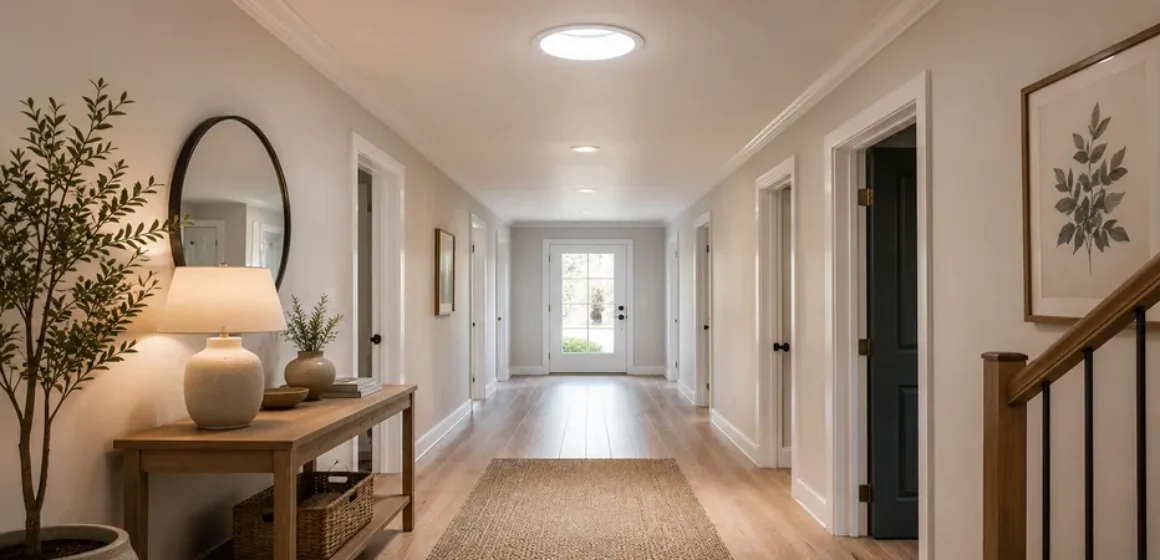
From inside the home, the most visible part is usually the ceiling diffuser. This spreads daylight into the room, often with a subtle appearance compared with a larger fixed skylight.
A Sky tube works on a similar practical idea: daylight is collected from the roof and delivered to the room through a compact ceiling diffuser.
These systems are often used where a room needs useful daylight, not necessarily a view of the sky or a major architectural feature.
Myth 1: A tubular skylight is only for very small rooms
This is partly true, but too narrow.
Tubular skylights are commonly used in compact rooms because they suit spaces where a large skylight would be unnecessary or out of proportion. But they can also work well in larger homes as targeted daylight points.
A tubular skylight may suit:
- Hallways
- Laundries
- Toilets
- Walk-in wardrobes
- Pantries
- Compact bathrooms
- Small offices
- Internal rooms
- Dark corners or transition areas
- Service zones between rooms
The question is not only room size.
The better question is whether the room needs practical daylight rather than a large skylight feature.
A small bathroom may be a good candidate. A long hallway may need more than one daylight point. A pantry connected to a kitchen may be ideal. A larger living room may need a fixed skylight instead.
Tubular skylights are not limited to tiny rooms, but they are most effective when used for the right type of daylight problem.
Myth 2: A tubular skylight works the same as a fixed skylight
A tubular skylight and a fixed skylight are different products with different purposes.
A fixed skylight usually creates a larger daylight opening and can provide a stronger visual connection to the sky. It may suit kitchens, living rooms, bedrooms, home offices and larger bathrooms where the homeowner wants a more visible skylight feature.
A tubular skylight brings daylight through a reflective tube and spreads it through a ceiling diffuser. It is often more subtle and practical.
A fixed skylight may be better when:
- The room is larger
- A strong daylight feature is wanted
- A sky view or more open feeling is desired
- The room is a kitchen, living room, bedroom or office
- The ceiling and roof layout can support a larger installation
A tubular skylight may be better when:
- The room is compact or internal
- The goal is practical daylight
- A subtle ceiling diffuser is preferred
- A larger skylight would feel excessive
- The room is a hallway, laundry, toilet, wardrobe or pantry
They are not better or worse by default.
They solve different daylight problems.
Myth 3: A tubular skylight will give you a view of the sky
A tubular skylight does not usually provide a view of the sky.
It brings daylight into the room through a ceiling diffuser. The diffuser spreads the light, but it is not a roof window. You generally do not look through it to see clouds, trees or the sky above.
This matters because homeowner expectations should be clear.
If the goal is:
- A visible sky connection
- A larger architectural feature
- More openness in a living space
- A strong design statement
A fixed skylight or roof window-style option may be more appropriate, depending on the room and roof.
If the goal is:
- Practical daylight
- A brighter hallway
- A less gloomy laundry
- A compact bathroom that feels clearer
- A subtle daylight point in an internal room
A tubular skylight or Sky tube may be a strong option.
The value is daylight, not a view.
Myth 4: A tubular skylight can ventilate a bathroom
A standard tubular skylight is a daylight product.
It does not ventilate the room by itself.
This is one of the most important myths to clear up, especially for bathrooms, laundries and toilets.
A tubular skylight can make a compact bathroom feel brighter and less enclosed. It may reduce the need to switch lights on during the day in suitable conditions. But steam, condensation and damp air still need ventilation planning.
If a bathroom has:
- Heavy steam
- Fogged mirrors
- Condensation
- Peeling paint
- Mould marks
- Damp smells
- Poor extraction
A tubular skylight may improve daylight, but it will not remove moist air.
The room may still need an extractor fan, ventilation review, heating, better airflow or improved moisture habits.
A bright bathroom is not automatically a well-ventilated bathroom.
Myth 5: A tubular skylight can go anywhere
Tubular skylights can be flexible, but they cannot go anywhere.
They still need a workable path from the roof to the ceiling diffuser. The roof collector must sit in a suitable roof position, and the tube must pass through the roof space without creating unnecessary conflicts.
A tubular skylight or Sky tube can be affected by:
- Roof pitch
- Roof type
- Flashing requirements
- Rafters or trusses
- Wiring
- Plumbing
- Ducting
- Insulation
- Solar panels
- Roof vents or flues
- Ceiling lights or smoke alarms
- Limited roof cavity depth
- Another level above the room
A hallway may look perfect from inside, but the roof space above may contain framing or services. A laundry may need a diffuser in one spot, but the roof collector may need to sit elsewhere. A downstairs room with another level above may not have a direct roof path.
Tubular skylights can be practical, but feasibility still needs assessment.
Myth 6: The diffuser should always go in the centre of the room
Centring the diffuser may look tidy, but it is not always the best placement.
The diffuser should go where daylight improves the room most.
In a hallway, that may be the darkest central section, not the exact geometric centre. In a laundry, it may be above the work zone. In a wardrobe, it may be where clothes and shelving are most visible. In a compact bathroom, it may be near the vanity or central floor area rather than directly over the shower.
Good placement considers:
- Where the room feels darkest
- How the room is used
- Where people stand or move
- Existing ceiling lights and vents
- Roof collector position
- Tube path
- Glare and reflection
- Whether one or more daylight points are needed
A tubular skylight should not be placed for symmetry alone.
It should be placed for usefulness.
Myth 7: One tubular skylight is always enough
One tubular skylight can be enough for many compact rooms.
But some spaces may need more than one daylight point.
This is especially true for long or divided spaces.
Examples include:
- Long hallways
- L-shaped corridors
- Hallways with dark sections at both ends
- Large laundries
- Bathroom plus separate toilet areas
- Walk-in wardrobes with separate dressing zones
- Pantry and scullery combinations
- Internal rooms connected by a small passage
One diffuser may create a bright patch while leaving another section dark.
The right number depends on room shape, desired coverage, ceiling layout, roof space and budget.
More is not automatically better, but one is not automatically enough.
The goal is useful daylight coverage.
Myth 8: A tubular skylight is only a budget alternative
A tubular skylight should not be treated as a lesser version of a skylight.
It is a different tool.
In the right room, it may be the better option, not merely the cheaper one.
For example, a narrow hallway may not need a large fixed skylight. A wardrobe does not need a sky view. A compact laundry may only need practical daylight. A small internal toilet may benefit from a subtle diffuser rather than a larger ceiling feature.
Choosing a tubular skylight because it suits the room is good planning.
Choosing a fixed skylight simply because it sounds more premium can be poor planning if the room does not need it.
Premium thinking means selecting the right solution, not the largest product.
Myth 9: Tubular skylights look too obvious inside
Many homeowners worry that a tubular skylight diffuser will look like an awkward ceiling feature.
In many rooms, the diffuser can be quite subtle, especially compared with a larger skylight opening. It often works well in practical spaces where the ceiling does not need a dramatic design statement.
The final appearance depends on:
- Diffuser size and style
- Ceiling height
- Room size
- Ceiling colour
- Placement
- Nearby lights or vents
- Overall interior design
In hallways, laundries, wardrobes and compact bathrooms, the diffuser often makes practical sense because the room is functional.
If the homeowner wants a larger architectural feature, a fixed skylight may be more suitable.
If the homeowner wants daylight without drawing too much attention to the ceiling, a tubular skylight or Sky tube may be a good fit.
Myth 10: A tubular skylight will make the room warm
A tubular skylight is a daylight product, not a heating system.
It can make a room feel brighter and less closed in, which may change how the room is experienced. But it should not be treated as a reliable source of warmth.
If a room is cold, the causes may include:
- Poor insulation
- Draughts
- Cold flooring
- Poor heating
- Inefficient windows
- Dampness
- Lack of ventilation
- Shaded orientation
A tubular skylight may help with daylight, but it will not replace heating, insulation or moisture control.
This is especially important in bathrooms, laundries and hallways that feel cold in winter.
Better daylight can improve perceived comfort.
It does not fix building performance by itself.
Myth 11: A tubular skylight guarantees lower power bills
A tubular skylight may reduce the need for artificial lighting during the day in suitable rooms.
For example, a hallway, laundry, wardrobe or compact bathroom that currently needs lights on during daylight hours may use less artificial lighting after a well-placed tubular skylight is installed.
But homeowners should be careful with energy-saving expectations.
Actual savings depend on:
- How often the room lights are used
- What type of bulbs are installed
- How long the lights are left on
- The room’s daylight needs
- The number and placement of daylight points
- Seasonal light conditions
- Household habits
The main value of a tubular skylight is usually improved daylight and usability.
Reduced daytime lighting use may be a benefit, but it should not be overpromised.
Myth 12: Tubular skylights are only useful in winter
Winter often reveals the problem, but a tubular skylight can be useful year-round.
Dark internal spaces do not become naturally bright just because it is summer. Hallways, wardrobes, pantries, laundries and internal toilets may still rely on artificial lighting during the day, especially if they have no windows.
A tubular skylight can improve daytime use across seasons.
However, summer comfort should still be considered, especially in rooms where brightness, heat or glare could matter. In many compact service rooms, this is less of a concern than in bedrooms, offices or living rooms, but placement and product choice still matter.
The goal is not winter-only brightness.
It is better natural light where the home needs it most.
What tubular skylights can do well
A tubular skylight or Sky tube can be a strong option when the room needs practical daylight.
They can help:
- Brighten internal hallways
- Improve compact bathrooms
- Make laundries more usable during the day
- Bring daylight into toilets and wardrobes
- Reduce reliance on artificial lighting during the day in suitable rooms
- Improve pantries, sculleries and service zones
- Provide a subtle daylight source without a large skylight feature
- Work well where wall windows are not practical
- Support a more connected feel through the centre of the home
They are especially valuable where the room’s problem is simple:
It needs daylight, but not a large roof window.
What tubular skylights cannot do
A tubular skylight or Sky tube cannot do everything.
They cannot:
- Provide a view of the sky
- Create the same architectural effect as a larger fixed skylight
- Ventilate a room by themselves
- Replace an extractor fan
- Heat a cold room
- Solve condensation or dampness alone
- Suit every roof or ceiling layout
- Avoid the need for roof flashing
- Be installed without considering roof pitch and roof type
- Guarantee a specific power saving
- Fix a poorly planned room layout
Clear expectations matter.
A tubular skylight is excellent when it is used for the right purpose.
It disappoints when it is expected to do the wrong job.
Best rooms for tubular skylights and Sky tubes
Hallways
Often one of the best uses. A tubular skylight can bring daylight into the centre of the home without changing the floor plan.
Laundries
Useful where the laundry is internal, beside a garage or used during the day with little natural light.
Toilets
A compact separate toilet may benefit from subtle daylight through a ceiling diffuser.
Walk-in wardrobes
A tubular skylight can make clothing and storage easier to see during the day.
Pantries and sculleries
These spaces often sit away from windows and benefit from practical daylight.
Compact bathrooms
A tubular skylight or Sky tube may improve daylight, provided ventilation is handled separately where needed.
Small offices or utility rooms
May suit a diffuser-style daylight source if glare and desk placement are considered.
The right room is usually compact, internal or task-focused.
Rooms where a fixed skylight may be better
A fixed skylight may be more suitable where the room needs stronger daylight, more visual openness or a design feature.
This may include:
- Large kitchens
- Living rooms
- Dining areas
- Bedrooms
- Home offices
- Open-plan spaces
- Larger bathrooms
- Raked-ceiling rooms
A tubular skylight may still be useful in connected spaces, such as a pantry off a kitchen or hallway beside a living area. But if the main room needs a significant daylight transformation, a fixed skylight may be the better starting point.
The room’s desired outcome should guide the decision.
Roof and ceiling checks still matter
Even though tubular skylights can be practical, they still involve roof work.
Important checks include:
- Roof type
- Roof pitch
- Roof condition
- Flashing requirements
- Roof collector placement
- Tube path
- Ceiling diffuser placement
- Rafters or trusses
- Wiring and ducting
- Plumbing
- Insulation
- Existing lights or vents
- Roof access
A tubular skylight should be installed with the same seriousness as any roof penetration.
The diffuser may look simple from inside, but the roof integration must be right.
This is why roof and ceiling photos are useful before a quote is confirmed.
What to send when asking about a tubular skylight
To help assess whether a tubular skylight or Sky tube may suit, send:
- Wide photo of the room
- Ceiling photo
- Photo of the darkest area
- Ground-level roof photo above or near the room
- Photo of existing lights, fans, smoke alarms or vents
- Photo of windows and what they face, if relevant
- Notes about when the room feels darkest
- Notes about whether lights are used during the day
- Notes about moisture, steam, glare or ventilation concerns
- Whether the room is upstairs, downstairs or single-storey
- Roof type if known
- Any renovation or re-roofing plans
You do not need to know whether the product is possible before enquiring.
The photos help determine that.
Questions to ask before approving a tubular skylight
Before approving the work, ask:
- Is a tubular skylight the right product for this room?
- Where will the diffuser be placed?
- Where will the roof collector sit?
- Is the tube path workable?
- Is one daylight point enough?
- What roof type and pitch are involved?
- What flashing system will be used?
- Are there ducts, wires or trusses in the way?
- Does the room need ventilation separately?
- Is a fixed or vented skylight more suitable instead?
- Is a site visit needed to confirm the installation?
These questions help keep the recommendation clear.
They also prevent tubular skylights from being oversold or undersold.
Illustrative example only
A homeowner has a dark central hallway that needs lights on during the day. They ask whether a fixed skylight is needed.
After reviewing the room, the hallway is narrow, straight and mainly needs practical daylight in the centre. A tubular skylight or Sky tube may be the better option because a large skylight would be unnecessary for the space.
In another home, a large open-plan living room feels dark across the back half of the room. A single tubular skylight may not provide the stronger daylight effect the room needs. A fixed skylight, or more than one daylight point, may be more appropriate depending on the roof and room layout.
Both homes need better daylight.
The right product depends on the room.
The practical takeaway
Tubular skylights are neither minor products nor magic products.
They are practical daylight solutions.
Used well, they can make hallways, laundries, toilets, wardrobes, pantries, compact bathrooms and internal rooms feel much more usable during the day. Used in the wrong room, or expected to provide ventilation, heat or a sky view, they can disappoint.
The best decision is simple:
Choose a tubular skylight or Sky tube when the room needs targeted daylight through a subtle ceiling diffuser.
Choose another option when the room needs stronger visual daylight, airflow, a sky view or a larger design feature.
The product should fit the room, not the other way around.
Planning your next step
If you are considering a tubular skylight, start by identifying whether the room needs practical daylight, stronger visual daylight, ventilation or a combination.
Skylights.co.nz can help you consider whether a tubular skylight, Sky tube, fixed skylight or vented skylight may suit your room, roof type and desired outcome.
To start the process, use the Skylights.co.nz enquiry form:
https://inquiry.skylights.co.nz/inquiry
You may also find these useful:
FAQs
What is a tubular skylight?
A tubular skylight is a daylighting system that brings natural light from the roof into a room through a reflective tube and ceiling diffuser. It is often used in hallways, laundries, toilets, wardrobes, pantries and compact bathrooms.
Is a tubular skylight the same as a fixed skylight?
No. A fixed skylight is usually a larger daylight unit that may create a stronger visual feature. A tubular skylight delivers daylight through a reflective tube and diffuser, making it more subtle and practical for compact or internal rooms.
Can a tubular skylight ventilate a bathroom?
A standard tubular skylight does not ventilate a bathroom by itself. It can improve daylight, but steam, condensation and moisture usually need extraction or ventilation addressed separately.
Can a tubular skylight go anywhere?
Not always. A tubular skylight or Sky tube needs a suitable roof collector position, flashing, tube path and ceiling diffuser location. Roof framing, ducts, wiring, plumbing and roof pitch can affect feasibility.
Which rooms suit tubular skylights best?
Tubular skylights often suit hallways, laundries, toilets, walk-in wardrobes, pantries, compact bathrooms, small offices and internal rooms where practical daylight is needed without a large skylight feature.
Will a tubular skylight reduce power bills?
A tubular skylight may reduce daytime use of artificial lighting in suitable rooms, but specific savings depend on household habits, light use, room conditions and the number and placement of daylight points.