Before spring renovation quotes start: skylight decisions worth making in July
July is often when renovation ideas start to become real.
The worst of winter has exposed the rooms that feel dark, damp, cold or underused. Spring still feels far enough away to plan properly, but close enough that homeowners begin calling builders, roofers, designers, painters and installers. What started as “we should do something about this room” becomes a list of quotes, site visits and decisions.
This is exactly when skylights should enter the conversation.
Not after the builder has priced the ceiling. Not after the roofer has finished. Not after the bathroom layout is locked. Not after the kitchen cabinetry has been ordered. A skylight or sky tube can be a clean, high-value addition to a renovation, but only when it is considered early enough.
Good skylight renovation planning is about timing, coordination and clarity. It helps homeowners decide whether the room needs a fixed skylight, vented skylight, tubular skylight or no skylight at all before other trades make decisions that limit the options.
This guide explains the skylight decisions worth making in July, before spring renovation quotes start shaping the project for you.
Why July is the right month to think about skylights
July sits in a useful planning window.
Winter has made the home’s weak points obvious. The rooms that rely on artificial lighting are easier to identify. Bathrooms with poor ventilation have shown their habits. Kitchens that feel dull in the morning have become part of the daily routine. Hallways and internal rooms have revealed how little natural light they receive.
At the same time, many homeowners are not yet deep into spring renovation scheduling.
That gives you time to:
- Decide which rooms genuinely need better daylight
- Understand whether ventilation is also part of the issue
- Check whether roof work, ceiling work or renovation work can be coordinated
- Avoid adding a skylight as an afterthought
- Gather photos and room details before requesting advice
- Build the skylight into the wider renovation scope
- Reduce the chance of rework later
A skylight decision made early is usually cleaner than a skylight decision made after everyone else has already priced the job.
The common mistake: treating skylights as a finishing touch
Many homeowners think of skylights as a visual upgrade that can be added late in the process.
That is understandable. From inside the room, the finished result may look simple: a clean ceiling opening, a diffuser, a shaft of natural light, or a roof window above a kitchen, bathroom or hallway.
But behind that finished look are important decisions:
- Where the roof opening can go
- Whether framing needs to be considered
- How the skylight will be flashed
- Whether a light well is required
- How the ceiling will be finished
- Whether electrical controls or blinds are needed
- Whether the room needs ventilation
- Whether the product suits the roof pitch and roof material
- Whether the work should be coordinated with roofing, plastering or painting
When skylights are considered too late, the best location may no longer be practical. Cabinetry may block the ideal light position. Ceiling framing may already be closed. A roof replacement may have been completed without allowing for the skylight. A bathroom extractor plan may have ignored the possibility of high-level airflow.
The skylight itself may still be possible, but the project can become less efficient and more disruptive.
Decision 1: which room deserves the skylight most?
Before choosing a product, choose the room.
This sounds obvious, but many renovation plans begin with the most visible room rather than the room that would benefit most.
Ask yourself:
- Which room has felt worst through winter?
- Which space needs lights on during the day?
- Which room is used often but feels unpleasant?
- Which area feels disconnected from the rest of the home?
- Which room would change daily life the most if it had better natural light?
Sometimes the answer is the kitchen. Sometimes it is a bathroom, hallway, laundry, home office, stairwell or internal living zone.
The best skylight opportunity is not always the largest room. It is often the room where a targeted daylight improvement would change how the home functions every day.
A homeowner might realise:
“We kept thinking about the living room, but the hallway is the space making the whole house feel dark.”
That is the type of insight worth finding before quotes start.
Decision 2: light, ventilation or both?
Renovation planning should separate daylight from airflow.
A room may need natural light only. It may need ventilation only. Or it may need both.
If the issue is mainly daylight
A fixed skylight or tubular skylight may be suitable, depending on room size, roof position and the desired appearance.
This often applies to:
- Hallways
- Laundries
- Internal toilets
- Dark kitchen zones
- Stairwells
- Home offices
- Living room corners
If the issue is daylight and airflow
A vented skylight may be worth considering, particularly in bathrooms, kitchens and upper-level rooms where warm or moist air can gather.
However, a vented skylight should not be treated as a replacement for all other ventilation measures. Bathrooms may still need extraction. Kitchens may still need a suitable rangehood. Whole-room moisture and airflow need to be considered properly.
If the issue is mainly ventilation
A skylight may not be the first answer. The room may need extraction, airflow planning, heating, insulation improvements or another ventilation solution.
This is why early planning matters. It helps prevent a skylight from being asked to solve the wrong problem.
Decision 3: fixed skylight, vented skylight or sky tube?
Each daylighting option has a different role.
Fixed skylight
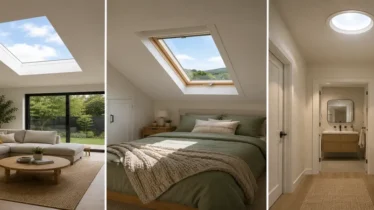
A fixed skylight is often suited to rooms where stronger natural light and a more visible architectural effect are desired.
It may suit:
- Kitchens
- Living rooms
- Dining areas
- Bedrooms
- Home offices
- Larger bathrooms
- Open-plan spaces
A fixed skylight does not open, so airflow must be considered separately.
Vented skylight
A vented skylight can provide daylight and controlled opening, depending on the product and installation. It may suit rooms where light and airflow both matter.
It may suit:
- Bathrooms
- Kitchens
- Upper-level rooms
- Raked-ceiling spaces
- Rooms that feel stuffy or closed in
The control method, roof height, rain exposure and ventilation expectations should be discussed early.
Tubular skylight or sky tube
A tubular skylight, often called a sky tube, is often best for targeted daylight in smaller or internal spaces.
It may suit:
- Hallways
- Toilets
- Laundries
- Walk-in wardrobes
- Internal bathrooms
- Pantries
- Dark transition zones
A sky tube can be especially useful when the homeowner wants practical daylight without a large roof-window feature.
The right product depends on the room, roof, ceiling and desired result. Choosing the category early helps other trades plan around it.
Decision 4: where should the daylight actually land?
This is one of the most important renovation questions.
Do not only ask where the skylight can go. Ask where the daylight should land.
In a kitchen, the best position may be over the island, preparation bench or darker side of the room. In a bathroom, it may be near the vanity or central floor area rather than directly above the shower. In a hallway, it may be where the corridor feels most enclosed. In a living room, it may be deeper into the space rather than near the existing windows.
Poor placement can create a disappointing result.
A skylight may technically bring light into the room but miss the area that needed it most. This is especially important in renovation projects where cabinetry, walls, shower glass, furniture placement and lighting plans are all being decided at the same time.
Before the renovation quote is finalised, mark the room plan with the areas that need daylight most.
That gives the skylight discussion a clear purpose.
Decision 5: will the ceiling need a light well?
A light well is the lined shaft or opening that connects a skylight in the roof to the ceiling below when there is roof space between them.
In simple terms, it is the pathway that brings daylight from the roof into the room.
Light wells matter because they affect:
- The final appearance
- The amount and spread of light
- Internal finishing work
- Plastering and painting
- Cost
- Timing
- Coordination with builders or painters
A home with a flat ceiling and roof cavity may need a light well for a fixed skylight. A raked ceiling may allow a more direct installation. A sky tube uses a different system, with a reflective tube and ceiling diffuser.
If the ceiling is already being opened, relined or painted as part of the renovation, this can be a smart time to coordinate the skylight work.
If the ceiling is finished first and the skylight is added later, the project may involve extra disruption and finishing.
Decision 6: should the skylight be coordinated with roof work?
If roof work is part of the renovation, skylights should be discussed before the roofing quote is locked in.
This is especially important if you are:
- Re-roofing
- Replacing flashings
- Repairing roof sections
- Adding an extension
- Changing roof penetrations
- Removing old vents or roof features
- Upgrading insulation or ceiling linings
Installing a skylight while roof work is already planned may allow better coordination between trades. It can also reduce the chance of paying for finished roofing work, then reopening the area later for a skylight.
This does not mean every skylight must happen during a re-roof. Many can be retrofitted. But when roof work is already on the horizon, early coordination is usually smarter.
Ask this question in July:
Will any roof, ceiling or renovation work happen in the next three to six months?
If yes, include skylights in the planning conversation now.
Decision 7: what should be included in the quote?
A skylight quote should be clear about scope.
Before spring renovation quotes begin, decide what you need clarified.
Common scope items include:
- Supply of the skylight or sky tube
- Roof installation
- Flashings
- External weatherproofing
- Internal trimming
- Light well construction
- Plastering
- Painting
- Electrical work for powered units
- Blinds or accessories
- Removal of old skylights if relevant
- Waste removal
- Site access requirements
Not every quote includes every item. That is normal, but it must be clear.
For example, a skylight installation may include supply and roof installation but exclude final painting. Or a renovation builder may handle the light well while the skylight installer handles the roof unit and flashing. Or electrical controls may require a separate electrician.
The risk is not that scopes differ. The risk is assuming they are the same.
Good planning makes the comparison fair.
Decision 8: what photos and information should you collect now?
Before contacting skylight specialists, builders or roofers, collect a clear set of information.
Interior photos
Take photos of:
- The room from each corner
- The ceiling area where daylight is wanted
- The darkest part of the room
- Nearby walls, cabinetry, shower areas or furniture
- Existing lights, vents or ceiling features
Exterior photos
Take photos of:
- The roof area above or near the room
- The wider roof section
- Roof material if visible
- Any nearby vents, chimneys, solar panels or obstructions
- Access around the house
Project notes
Write down:
- What room you want to improve
- What feels wrong with the room
- Whether you want light, ventilation or both
- Whether you are renovating, re-roofing or repainting
- Your preferred timing
- Whether other trades are already quoting
- Any known roof or ceiling issues
This helps the advice become more specific from the start.
Decision 9: should the skylight influence the renovation design?
Sometimes the skylight is not just an add-on. It can shape the design.
In a kitchen, daylight from above may influence where the island sits. In a bathroom, a skylight may affect mirror placement, shower layout or ceiling feature lighting. In a living area, a skylight may help define a reading zone, dining area or central seating space. In a hallway, a sky tube may change how the home feels when moving between rooms.
This does not mean the skylight controls the renovation. It means daylight should be part of the design conversation.
A renovation that ignores natural light can still look good in drawings and feel disappointing in real life.
The best renovations consider how the room will feel at 7.30am on a wet Tuesday in August, not only how it looks on a sunny afternoon.
Decision 10: is now the right time, or just the right time to plan?
July does not mean every skylight must be installed immediately.
Sometimes July is the right time to install. Sometimes it is the right time to plan, quote and coordinate for spring.
Installation timing may depend on:
- Weather windows
- Roof access
- Product availability
- Builder or roofer schedules
- Interior finishing requirements
- Whether the room is currently usable
- Whether the work is part of a larger renovation
- Regional conditions
A homeowner in Auckland may be managing rain and humidity. A homeowner in Wellington may need careful wind and access planning. A homeowner in Canterbury or Otago may be working around colder mornings and roof conditions. A coastal homeowner may need extra attention to exposure and product suitability.
The key is to avoid leaving the decision until every other trade is already committed.
Planning in July gives you more control.
A room-by-room July checklist
Use this checklist before requesting spring renovation quotes.
Kitchen
- Is the bench or island dark in the morning?
- Are you changing cabinetry, ceiling linings or lighting?
- Would overhead daylight improve the working area?
- Is ventilation also a concern?
- Could a skylight position affect the kitchen layout?
Bathroom
- Is the room dark, steamy or both?
- Are you changing extraction, ceiling lining or shower layout?
- Would a vented skylight be useful, or is a sky tube enough?
- Is privacy a major concern?
- Should the skylight be coordinated with plastering and painting?
Hallway
- Does the hallway need lights on during the day?
- Is there roof space above?
- Would a sky tube improve the centre of the home?
- Is the ceiling being repainted or repaired?
Living room
- Is one part of the room consistently underused?
- Are you changing layout, flooring, lighting or wall colours?
- Would overhead daylight reach the darker zone?
- Is summer comfort or glare a consideration?
Laundry or utility room
- Is the room dark every time it is used?
- Is indoor drying or moisture part of the issue?
- Would a sky tube improve daily usability?
- Does ventilation need separate attention?
Home office or spare room
- Is the room used during the day?
- Does it rely on artificial lighting?
- Would natural light create glare on screens?
- Is privacy or summer heat a concern?
Illustrative example only
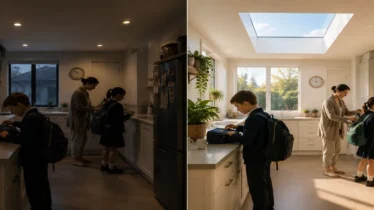
A homeowner is planning a spring kitchen renovation. The cabinetry quote is almost ready, and the painter has been asked to price the ceiling. The kitchen has a side window, but the main preparation bench sits in shadow through winter mornings.
If the skylight conversation happens after the kitchen is installed, the best daylight position may be harder to achieve. There may be new lights, finished paint, ceiling work and cabinetry decisions already locked in.
If the skylight is considered in July, the homeowner can ask the right questions early:
- Where should the daylight land?
- Does the roof above allow a fixed skylight?
- Will a light well be needed?
- Should the builder allow for ceiling finishing?
- Should the electrician adjust the lighting plan?
The result is not just a skylight added to a renovation. It is daylight built into the renovation properly.
How early skylight planning can prevent rework
Rework is one of the quiet costs of renovation.
It happens when decisions are made in the wrong order. A ceiling is painted before a skylight is confirmed. A roof section is completed before the opening is planned. A bathroom fan is positioned where a future skylight might have worked better. Downlights are installed where a sky tube diffuser could have gone.
Early skylight planning can help avoid:
- Repainting finished ceilings
- Moving lights or vents
- Reopening completed roof sections
- Compromising skylight placement
- Missing the chance to coordinate trades
- Choosing a product that does not suit the final room layout
Not every project can avoid every adjustment. But the earlier daylight is considered, the cleaner the project usually becomes.
What a good skylight conversation should clarify
Before spring renovation quotes are finalised, a useful skylight discussion should clarify:
- The room’s main problem
- Whether the goal is light, ventilation or both
- Which product type may suit
- Whether the roof type and pitch are suitable
- Whether a light well or diffuser is needed
- What internal finishing may be required
- Whether other trades need to allow for the skylight
- Whether weather or access may affect timing
- Whether the work should happen before, during or after the wider renovation
The outcome may be a quote, a site visit, a product recommendation or a decision to wait until another trade is ready.
All of those are useful if they prevent a rushed decision later.
The best renovation daylight question
The best question is not “Can we add a skylight?”
In most homes, the better question is:
Where would natural light change how this room works every day?
That question moves the decision from product to purpose.
It helps homeowners think beyond appearance and consider morning routines, winter comfort, ventilation, room use, privacy and long-term value.
A skylight should not feel like a late decoration. It should feel like a considered part of the room.
Planning your next step
If you are preparing spring renovation quotes, July is a smart time to decide whether daylight should be part of the plan.
Skylights.co.nz can help you explore whether a fixed skylight, vented skylight or tubular skylight may suit your renovation, roof type and room layout.
To start planning your options, use the Skylights.co.nz enquiry form:
https://inquiry.skylights.co.nz/inquiry
You may also find these useful:
FAQs
When should I plan a skylight during a renovation?
A skylight should be considered early in the renovation planning stage, before roofing, ceiling, cabinetry, lighting and painting decisions are locked in. Early planning can help avoid rework and improve placement.
Is July a good time to plan a skylight for spring renovations?
Yes, July is a useful planning month because winter has usually revealed which rooms feel dark or underused, while there is still time to coordinate skylight advice before spring renovation quotes and trade schedules are finalised.
Should I install a skylight before or after a re-roof?
If a re-roof is planned, it is usually worth discussing the skylight before roofing work begins. Coordinating the skylight with roof work may lead to cleaner planning, although the right timing depends on the roof, product and project scope.
Do builders or skylight installers handle the light well?
It depends on the project and quote scope. Some skylight quotes may include internal finishing, while other projects may have the builder handle the light well, plastering or painting. The scope should be clarified before work begins.
What type of skylight is best for a renovation?
The best type depends on the room. Fixed skylights often suit kitchens, living rooms and bedrooms. Vented skylights may suit bathrooms or kitchens where airflow is useful. sky tubes often suit hallways, laundries, toilets and compact internal rooms.
What information should I provide for skylight renovation planning?
Provide photos of the room, ceiling and roof area, along with notes about the room’s main issue, roof type if known, whether you want light or ventilation, and what other renovation work is planned.