How to brighten a hallway without changing the floor plan
A dark hallway can make the whole home feel less welcoming.
It may not be the biggest room. It may not be where people sit, cook or sleep. But it is one of the spaces people move through most often. It connects bedrooms, bathrooms, laundries, entries and living areas. When it feels gloomy, the centre of the home can feel closed in, even if the surrounding rooms are perfectly usable.
Many New Zealand homes have this problem.
Older villas and bungalows often have central hallways. Mid-century homes may have narrow passages between bedrooms. Townhouses can have internal corridors with limited side windows. Renovated homes may have rooms added in ways that block borrowed light. Even newer homes can have dark hallways because privacy, layout and roof shape limit natural light.
The good news is that you may not need to change the floor plan to improve it.
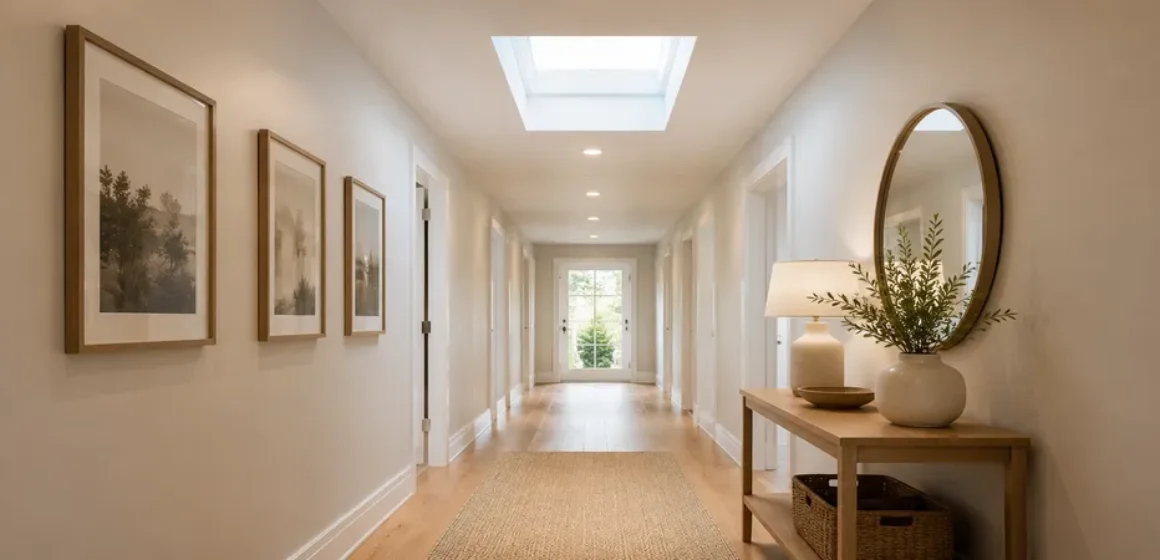
If you want to brighten dark hallway NZ homes more effectively, the answer may be overhead daylight. A tubular skylight, Sky tube or, in some wider spaces, a fixed skylight may bring daylight into the hallway without moving walls, adding side windows or changing the layout.
This guide explains how to think about hallway daylight, what options may suit and what to check before requesting a quote.
Why hallways become dark
Hallways are often dark because they sit in the middle of the home.
Unlike living rooms and bedrooms, they may not have exterior walls. They often rely on borrowed light from open doors, nearby rooms, entries or windows at the end of the passage. When those doors close, or when winter light is weak, the hallway can quickly feel gloomy.
Common causes include:
- No direct windows
- Bedrooms or bathrooms opening off both sides
- Doors that remain closed for privacy or warmth
- A long narrow passage
- Low ceilings
- Dark wall colours or flooring
- Heavy timber trims
- Limited borrowed light from nearby rooms
- South-facing or shaded parts of the home
- Covered entries or verandas reducing light
- Additions that block former daylight paths
- Internal layouts in townhouses or compact homes
A hallway does not need to be completely windowless to feel dark.
If the daylight does not reach the part of the passage people use most, the hallway can still feel enclosed.
Why a hallway matters more than homeowners expect
A hallway is not usually the first room people renovate.
But it affects the way a home feels every day.
A dark hallway can:
- Make bedrooms feel disconnected from living areas
- Make the centre of the home feel smaller
- Create a gloomy first impression from the entry
- Require artificial lighting during the day
- Make the home feel colder or less inviting in winter
- Reduce the sense of flow between rooms
- Make practical movement through the home feel less comfortable
A brighter hallway can have the opposite effect.
It can make the home feel more connected, easier to move through and less dependent on ceiling lights during the day. It can also help nearby rooms feel less isolated, especially if the hallway links bedrooms, bathrooms and living spaces.
The hallway may not be a destination.
But it shapes how the whole home is experienced.
Start with the hallway daylight test
Before choosing a product, walk through the hallway during the day with the lights off.
Do this on a normal day, not only when the house is at its brightest.
Ask:
- Does the hallway need lights on during daylight hours?
- Is the whole hallway dark, or only one section?
- Does one end receive borrowed light while the centre remains gloomy?
- Is the hallway straight, long, short or L-shaped?
- Does the hallway connect high-use rooms?
- Are there doors that are normally closed?
- Does the hallway feel worse in winter?
- Is there roof space above the hallway?
- Would one daylight point help, or are there multiple dark zones?
This test helps identify whether the hallway needs a small lighting improvement, better paint and finishes, or a more direct daylight source from above.
If the hallway needs artificial lighting during the day, overhead daylight may be worth exploring.
Option 1: Tubular skylight for a dark hallway
A tubular skylight is often one of the most practical options for a dark hallway.
It brings daylight from the roof through a reflective tube and spreads it into the hallway through a ceiling diffuser. From inside, the diffuser is usually a subtle ceiling feature rather than a large skylight opening.
This can suit hallways because most hallways need practical daylight, not a large roof-window feature.
A tubular skylight may suit when:
- The hallway is narrow or compact
- The goal is practical daylight
- A large skylight would feel out of proportion
- The hallway sits below roof space
- The home needs a subtle ceiling finish
- The darkest section can be reached with a diffuser
- The roof collector and tube path are workable
A tubular skylight is not a compromise when the hallway only needs daylight.
It can be the right tool for the room.
Option 2: Sky tube for compact hallway daylight
A Sky tube can also be considered for a dark hallway where compact overhead daylight is the goal.
Like other tubular daylighting options, it is generally suited to smaller or internal spaces where the homeowner wants useful natural light without creating a large skylight feature.
A Sky tube may suit when:
- The hallway is used often but does not need a major design statement
- There is limited wall-window opportunity
- The ceiling needs a discreet daylight source
- The room below and roof above can be connected practically
- The homeowner wants daylight, not a view of the sky
Sky tubes may be especially useful where the hallway connects bedrooms, bathrooms, laundries or entries and feels dark through the centre of the home.
The key is placement.
The diffuser should sit where daylight will change the hallway most.
Option 3: Fixed skylight for wider entries or feature hallways
A fixed skylight may suit some hallways, but not all.
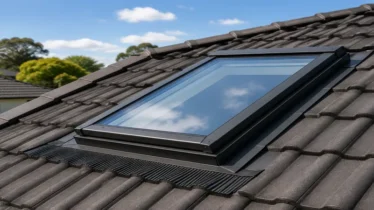
It can work well in wider entries, stair landings, larger corridors, raked-ceiling passages or homes where the hallway has enough width and ceiling presence to suit a more visible skylight feature.
A fixed skylight may suit when:
- The hallway is wide enough to carry a larger feature
- The ceiling height and roof layout support it
- A stronger architectural daylight effect is wanted
- The hallway forms part of the entry or central living connection
- Internal finishing can be handled cleanly
- Glare and placement can be managed
A fixed skylight may be unnecessary in a narrow hallway where a tubular skylight or Sky tube would provide enough practical daylight.
The product should match the hallway’s scale.
Option 4: Bright finishes and reflective surfaces
Not every hallway needs a skylight as the first step.
In some homes, small interior changes may help improve light spread.
These can include:
- Lighter wall colours
- Lighter ceiling paint
- Cleaner trim colours
- Removing heavy dark hallway runners
- Choosing brighter internal doors
- Using mirrors carefully near borrowed light sources
- Replacing heavy curtains near hallway-adjacent rooms
- Improving artificial lighting for night use
These changes can help, but they do not create natural light where none exists.
If the hallway has no useful daylight source, lighter finishes may only make a dark space look slightly less dark.
A skylight or tubular daylight option may still be needed if the real issue is lack of natural light.
Option 5: Better artificial lighting, but know its limits
Artificial lighting is still important.
A hallway needs good lighting at night, early morning and during very dull conditions. Updating poor artificial lighting can make the hallway safer and more functional.
However, artificial lighting is not the same as natural daylight.
If the hallway feels gloomy at midday, a brighter bulb may not solve the underlying issue. It may improve visibility, but it may not change the way the home feels during the day.
A good hallway plan may involve both:
- Natural daylight for daytime use
- Well-planned artificial lighting for night and low-light conditions
The two should work together.
A skylight does not remove the need for good night lighting. Good artificial lighting does not replace the value of daylight.
Placement: the most important hallway decision
Hallway daylight depends heavily on placement.
A diffuser or skylight placed in the wrong section may leave the darkest area unchanged.
Before choosing placement, identify:
- The darkest part of the hallway
- Whether one end already receives borrowed light
- Where people move most often
- Whether the hallway turns a corner
- Whether doors are normally open or closed
- Where ceiling lights, smoke alarms or access panels sit
- Whether one daylight point will be enough
- Whether the roof above that section is suitable
The skylight does not need to be centred automatically.
It needs to be useful.
In many hallways, the best location is near the dark centre rather than at the visually neatest point.
One tubular skylight or two?
Some hallways need only one daylight point.
Others may need more than one.
One daylight point may be enough when:
- The hallway is short
- The darkest area is central
- One diffuser can brighten the main passage
- One end already receives borrowed light
- The hallway is straight and compact
Two daylight points may be worth considering when:
- The hallway is long
- There are two dark sections
- The hallway is L-shaped
- One end remains dark even if the centre is bright
- Several bedrooms or service rooms open off the passage
- The hallway forms a long internal spine through the home
More is not automatically better.
The goal is even, useful daylight coverage. A well-placed single diffuser may outperform two poorly placed ones.
The roof and ceiling path also need to support the plan.
Roof space can change the answer
A hallway may look straightforward from below, but the roof space still matters.
Above the ceiling may be:
- Trusses or rafters
- Electrical wiring
- Smoke alarm wiring
- Ducting
- Plumbing
- Insulation
- Ceiling access panels
- Roof valleys or hips
- Solar panels or roof vents
A tubular skylight or Sky tube needs a workable path from the roof collector to the ceiling diffuser. A fixed skylight may need a light well if the ceiling is flat and there is a roof cavity above.
The best hallway daylight plan should consider both:
- Where the hallway needs daylight
- Where the roof and ceiling allow it properly
If the preferred placement needs to move slightly because of roof framing or services, that may be the right decision.
Hallways in older NZ homes
Older New Zealand homes often have strong hallway daylight potential.
Villas and bungalows may have long central passages, bedrooms on both sides and limited natural light through the middle. Some have beautiful character details, but the hallway can still feel dark, especially in winter.
A tubular skylight or Sky tube can sometimes improve these hallways without changing the floor plan or compromising the room arrangement.
However, older homes may also have:
- Altered roof structures
- Older wiring
- Ceiling repairs
- Heavy timber trims
- Additions that affect roof layout
- Limited access into roof spaces
- Previous leak or moisture history
These homes can be excellent candidates for daylight upgrades, but they deserve careful assessment.
The aim should be to improve the hallway while respecting the character and structure of the home.
Hallways in townhouses and compact homes
Townhouses and compact homes often have internal hallways because of boundary constraints and privacy needs.
Side windows may not be possible. Bedroom and bathroom doors may remain closed. Narrow layouts can make the centre of the home feel darker than the rooms at each end.
A tubular skylight or Sky tube may suit these homes if the hallway sits below suitable roof space.
However, townhouses may also involve:
- Multi-level layouts
- Limited roof access
- Body corporate or shared property considerations
- Fire or building separation requirements
- Complex rooflines
- Services packed into tight ceiling spaces
If the hallway is downstairs with another floor above, a standard roof skylight may not be straightforward.
The room location within the home should be explained early in the enquiry.
Hallways near bathrooms and laundries
Many dark hallways sit beside bathrooms, separate toilets, wardrobes or laundries.
This can create a cluster of small dark spaces.
Before choosing one daylight point, consider whether the hallway is part of a wider internal zone.
For example:
- A hallway may need a tubular skylight
- A nearby bathroom may also need daylight and ventilation review
- A laundry may need its own daylight point
- A separate toilet may benefit from a small diffuser
- A wardrobe may remain dark even if the hallway improves
This does not mean every room needs a skylight.
It means the hallway should be assessed as part of the home’s movement pattern.
Sometimes improving the hallway first gives the biggest daily benefit.
What a hallway skylight can and cannot do
A hallway skylight or tubular daylight option can:
- Bring natural light into an internal passage
- Reduce reliance on artificial lighting during daytime use in suitable conditions
- Make the centre of the home feel less gloomy
- Improve movement between rooms
- Help bedrooms and bathrooms feel more connected to the rest of the home
- Brighten a space without changing the floor plan
- Provide a subtle daylight solution in narrow areas
It cannot:
- Add physical width to the hallway
- Replace night lighting
- Solve dampness or ventilation problems in nearby rooms
- Suit every roof or ceiling layout
- Guarantee a specific energy saving
- Fix poor paint, damaged ceilings or structural issues by itself
Clear expectations matter.
A hallway daylight upgrade improves light and feel. It does not replace good maintenance, ventilation or artificial lighting.
The hallway photo checklist
Before asking for advice, collect clear photos.
Useful photos include:
- Photo looking down the hallway from one end
- Photo looking back from the other end
- Ceiling photo of the darkest section
- Photo showing existing lights, smoke alarms or access panels
- Photo of nearby room doors
- Photo showing where borrowed light comes from
- Ground-level roof photo above or near the hallway
- Wider exterior roofline photo
- Photo of any ceiling stains or damage if present
Also include notes about:
- Whether the hallway is single-storey or upstairs
- Whether another floor sits above it
- Whether lights are used during the day
- When the hallway feels darkest
- Whether the hallway is straight, long or L-shaped
- Whether you prefer subtle daylight or a larger skylight feature
This helps assess whether a tubular skylight, Sky tube or fixed skylight may suit.
Questions to ask before approving a hallway skylight
Before approving a quote, ask:
- Where will the daylight land in the hallway?
- Is one daylight point enough?
- Would a tubular skylight, Sky tube or fixed skylight suit best?
- Is there a workable roof-to-ceiling path?
- Are trusses, ducts, wiring or smoke alarms in the way?
- What roof type and pitch are involved?
- What flashing will be used?
- Is internal finishing included?
- Will the skylight affect any existing lights or ceiling features?
- Is a site visit needed to confirm placement?
These questions help make the final result more predictable.
A hallway skylight may look simple, but the placement and roof path still matter.
Common hallway daylight mistakes
Mistake 1: Placing the diffuser at the easiest point, not the darkest point
The best location should improve the hallway’s actual problem area.
Mistake 2: Assuming one daylight point is always enough
Long or L-shaped hallways may need more careful coverage.
Mistake 3: Choosing a large skylight when a tubular skylight would suit better
Narrow hallways often need practical daylight, not a major roof feature.
Mistake 4: Ignoring the roof path
A tubular skylight or Sky tube still needs a suitable path from roof to ceiling.
Mistake 5: Forgetting artificial lighting
A hallway still needs good lighting at night, even if daytime daylight is improved.
Mistake 6: Treating the hallway in isolation
Nearby bathrooms, laundries, wardrobes and entries may also affect the daylight plan.
Illustrative example only
A homeowner has a long hallway connecting three bedrooms, a bathroom and the living area. The living-room end receives some borrowed light, but the middle and bedroom end remain dark throughout the day.
The first idea is to place one tubular skylight diffuser near the living-room end because that ceiling section is easiest to photograph.
A better approach is to assess where the hallway actually needs daylight. The central section may be the strongest placement, or two daylight points may be worth reviewing if the hallway is long enough and the roof path allows it.
In another home, a short hallway between bedrooms and bathroom may only need one well-placed Sky tube to make the passage feel less enclosed.
The right answer depends on hallway length, shape, roof space and the way the home is used.
The practical takeaway
You do not always need to change the floor plan to brighten a dark hallway.
A well-placed tubular skylight, Sky tube or, in some cases, fixed skylight may bring daylight into the centre of the home without moving walls or adding side windows.
The best hallway daylight plan should answer three questions:
- Which part of the hallway feels darkest?
- What product suits the hallway’s size and purpose?
- Can the roof and ceiling path support the placement properly?
When those questions are answered clearly, a dark hallway can become one of the most valuable daylight upgrades in the home.
Not because it becomes a feature room.
Because it makes the whole home feel easier to move through.
Planning your next step
If your hallway needs lights on during the day or makes the centre of your home feel gloomy, it may be worth exploring a targeted daylight option.
Skylights.co.nz can help you consider whether a tubular skylight, Sky tube or fixed skylight may suit your hallway, roof type and desired outcome.
To start the process, use the Skylights.co.nz enquiry form:
https://inquiry.skylights.co.nz/inquiry
You may also find these useful:
FAQs
How can I brighten a dark hallway without changing the floor plan?
A dark hallway may be brightened with lighter finishes, better artificial lighting and, where suitable, overhead daylight from a tubular skylight, Sky tube or fixed skylight. The best option depends on hallway shape, roof space and daylight needs.
Is a tubular skylight good for a hallway?
A tubular skylight can be a strong option for a dark hallway because it brings practical daylight through a ceiling diffuser without needing a large skylight feature. Suitability depends on roof and ceiling conditions.
How many tubular skylights does a hallway need?
A short hallway may need one tubular skylight or Sky tube. A long, deep or L-shaped hallway may need more than one daylight point to avoid leaving sections dark.
Can a fixed skylight work in a hallway?
A fixed skylight may suit wider hallways, entries, stair landings or feature corridors. Narrow hallways often suit tubular skylights or Sky tubes better because they need practical daylight rather than a large feature.
Can a hallway skylight be installed downstairs?
A standard roof skylight needs a practical path to the roof. If the hallway is downstairs with another level above it, a traditional skylight may not be straightforward and would need specific assessment.
What photos should I send for a hallway skylight enquiry?
Send photos looking down the hallway from both ends, ceiling photos of the darkest section, photos of existing lights or smoke alarms, and ground-level roof photos above or near the hallway if possible.