Circular skylights for lifestyle blocks and rural sheds: from stables to studios
1. Light for work, care and quiet – the rural skylight brief
Early on a Waikato lifestyle block, the first building you walk to may not be the house.
It might be:
- a machinery shed with tools and feed
- a stable where horses wait for their morning routine
- a converted bay now acting as a home studio or workshop.
These spaces are often:
- deep in plan with few windows
- lined with timber, metal or unlined framing
- used in all weather, from hot Canterbury nor’westers to damp Taranaki days.
In this setting, circular skylights rural NZ sheds are not about creating showpiece interiors. They are about:
- safer handling of tools, feed and animals
- more pleasant working conditions during the day
- making converted studios and hobby spaces feel genuinely usable.
This article starts with buildings first – sheds, barns, stables and rural studios – then layers in climate, materials and maintenance.
All scenarios are Illustrative Only, intended to help you brief designers, builders and skylight professionals clearly.
2. Everyday rural buildings where circular skylights earn their keep
Rather than starting with roof types, it helps to look at how rural buildings are used.
Machinery and storage sheds
These structures typically:
- are long, deep and have limited wall openings
- rely on roller doors or sliding doors for most daylight
- store tools, machinery, feed, and sometimes vehicles.
Circular skylights can:
- bring light into the centre of the shed, away from large doors
- make it easier to find parts, labels and fittings
- reduce the need for artificial lighting during daytime tasks.
Placement focus:
- above workbenches or central aisles
- clear of large structural members
- aligned with general circulation rather than cluttered corners.
Stables and animal shelters
Horse barns, loose boxes and animal shelters benefit from:
- calm, even light
- reduced deep shadows that can unsettle animals
- good visibility for checking condition, footing and feed.
Circular skylights over stable aisles or central feed areas can help by:
- lifting light levels without adding side windows that may be kicked or chewed
- avoiding bright, low beams that shine directly into animals’ eyes
- making early-morning and evening checks easier.
Shearing sheds and multipurpose rural buildings
Older shearing sheds and multipurpose structures are often:
- part-lined or unlined
- a mix of timber and metal cladding
- used sporadically but intensely at certain times of year.
Circular skylights may be used to:
- enhance existing daylight in key working zones
- help with sorting, packing or minor maintenance tasks
- make parts of the building suitable for occasional community or family use.
3. Rural studios, hobby spaces and “one-bay conversions”
Lifestyle blocks often evolve over time. A shed bay or outbuilding may become:
- a home art studio
- a sewing or craft room
- a small office, treatment room or consulting space.
Bringing studio-quality light into rural conversions
In these converted spaces, circular skylights can:
- provide consistent, diffused light over work tables
- reduce reliance on spotlights and lamps
- help colours and fine detail read more accurately.
Illustrative Example Only: On a Canterbury lifestyle block, one bay of a machinery shed was lined and insulated to form a small studio. A circular skylight over the main workbench now provides soft daylight for painting during the day.
Balancing work and occasional residential use
Some rural studios double as:
- occasional guest rooms
- quiet retreats for reading or music
- teen hangout spaces.
Here, circular skylights should be planned so that:
- daytime glare is controlled, especially on screens or devices
- night-time darkness is preserved as needed (with blinds or complementary lighting)
- the space feels comfortable in both summer and winter.
4. Material and durability considerations on rural sites
Rural buildings see different stresses from urban townhouses or coastal homes.
Dust, debris and occasional impacts
On lifestyle blocks and farms, roofs may be exposed to:
- dust from unsealed tracks and paddocks
- small debris from trees or wind
- occasional minor impacts.
For circular skylights, this often leads to:
- consideration of polycarbonate domes in certain high-risk locations
- careful positioning away from areas where large branches could fall
- treatment of skylights as part of the broader risk profile of the site.
Acrylic vs polycarbonate vs glass
Most rural sheds and working buildings do not require high-end glass solutions. Common patterns include:
- Acrylic domes where clarity and cost balance well, especially in studios and light-duty sheds
- Polycarbonate domes where impact resistance and robustness are more important
- Glass only in select, architecturally focused rural homes or high-end studios.
The right choice depends on:
- whether the building is primarily working, mixed-use or residential
- how much visual refinement is desired
- budget and maintenance expectations.
Thickness and exposure
Flat open landscapes, especially on the Canterbury plains and parts of Hawke’s Bay, can be:
- very exposed to wind
- subject to strong sun and seasonal extremes.
Here, increased dome thickness (for example, moving from 3 mm to 4.5 mm acrylic on larger domes) may be appropriate. The exact specification should respond to dome size, roof pitch and site exposure.
5. Roof types on lifestyle blocks and rural sheds
Most rural and lifestyle properties favour straightforward roof forms.
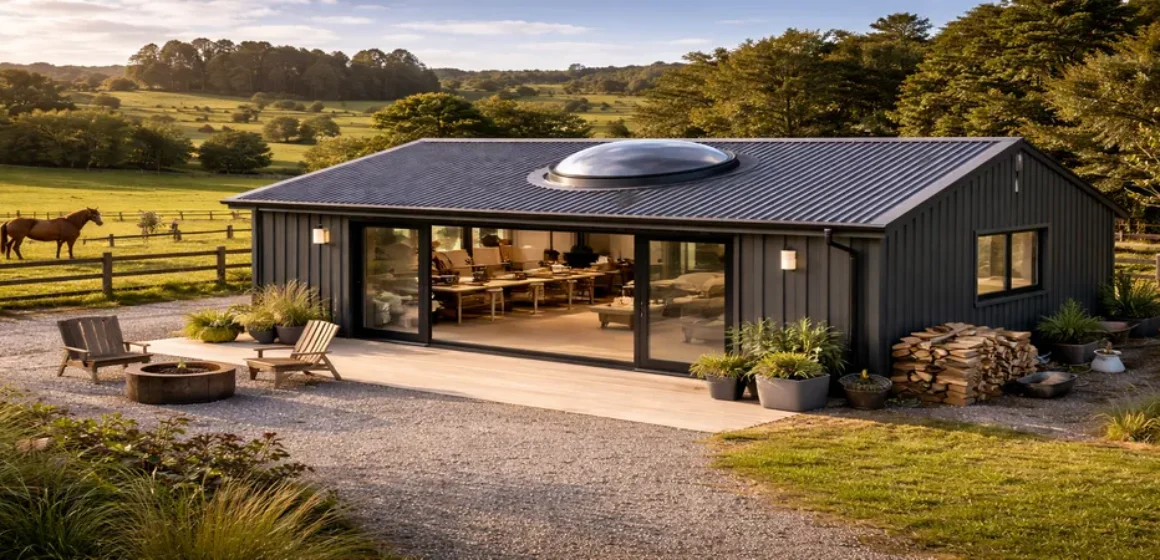
Longrun metal on sheds and barns
Common features include:
- long runs of corrugated or trapezoidal metal
- simple gables or mono-pitches
- gutters running the length of the building.
Circular skylights on these roofs usually:
- sit on square bases that bridge ribs
- rely on flashings that work with the direction of fall
- are placed away from valleys, step-downs or complex junctions.
Mixed roofs on house + shed combinations
Some properties have a mix of:
- modern metal roofs on the house
- older or lower-slope roofs on sheds
- occasional membrane roofs on studio conversions.
In these situations, it often helps to:
- treat each roof separately in terms of skylight choice
- consider which building benefits most from additional light
- coordinate installation with any planned re-roofing.
Colour and heat
Darker rural roofs:
- absorb more heat in summer
- can influence how much heat is felt beneath skylights.
Circular skylight planning should consider:
- dome type (clear vs diffused)
- shaft design (flared vs straight)
- how light and warmth will be used in each season.
6. Regional patterns – Waikato, Canterbury plains, Taranaki and Hawke’s Bay
While rural life has common threads, each region has its own climate rhythm.
Waikato lifestyle blocks
- Mixed weather with foggy mornings and warm afternoons.
- A blend of small blocks, equine properties and working farms.
Circular skylight themes:
- lifting light in central bays of large sheds
- bringing softer daylight into stables and tack rooms
- supporting studio conversions where dampness and low light can be an issue.
Canterbury plains
- Big skies, strong sun, and nor’west winds.
- Long, low buildings on open, exposed land.
Circular domes in this context:
- often sit on longrun roofs with clear exposure
- are sized and specified for both wind and sun
- can make enclosed workshops and storage bays much more usable in winter.
Taranaki
- Regular rain, green paddocks and coastal influences.
- Mix of older sheds and newer lifestyle developments.
Here, circular skylights may:
- help offset overcast days inside sheds and studios
- need detailing that accounts for frequent wet conditions
- benefit from attention to moss, lichen and maintenance around gutters and flashings.
Hawke’s Bay
- Warm, often dry summers and cooler winters.
- Vineyards, orchards and lifestyle blocks spread across rolling country.
Circular skylights can:
- support packing sheds and small processing spaces with cleaner daylight
- bring light into home offices or studios in outbuildings
- be chosen with seasonal heat and glare in mind.
7. Maintenance, safety and practicality on rural roofs
Rural roofs are often higher and more exposed than urban ones. That makes safe access planning important.
Access and safety
Before installing circular skylights, it is worth asking:
- how will a professional safely reach the skylight?
- are there existing ladders, platforms or access tracks?
- will harness points or other safety measures be needed?
Skylights may be best positioned where:
- access is simplest from the safest side of the building
- inspection can be carried out without crossing fragile sections
- future maintenance can be planned realistically.
Maintenance rhythm
Over time, you can expect to:
- check domes, bases and flashings visually from the ground or nearby high points
- arrange occasional professional cleaning and inspection
- monitor for debris build-up, particularly under nearby trees.
Illustrative Example Only: On a Hawke’s Bay lifestyle block, circular skylights were installed only on the easily accessed side of a long shed roof, even though the opposite side would have given similar light. This decision reflects a priority on future safety.
8. Planning a circular skylight for a rural shed or lifestyle block – checklist
To make an enquiry more productive, gather a few details first.
Before you speak with a skylight professional, note:
- Property and building type
- e.g. “Waikato lifestyle block – three-bay shed and stable”, or “Canterbury plains workshop”.
- What happens in the space
- machinery work, animal care, crafting, studio work, storage, or a mix.
- Roof type, pitch and access
- longrun gable or mono-pitch, older materials, any access challenges.
- Current light levels
- where the space feels darkest, and at what times of day or year.
- Durability and comfort priorities
- robustness for working spaces, improved visibility, better conditions for animals, or studio-quality light.
Skylights New Zealand uses this information to match circular skylights rural NZ sheds solutions with how your property actually functions.
Make an enquiry via Skylights New Zealand
Attach photos of the building from outside and inside, plus a short note about what you do there on a typical day. A skylight professional can then outline circular skylight options that respect both the work you do and the climate you work in.
FAQs – circular skylights for lifestyle blocks and rural sheds in NZ
Q1. Are circular skylights suitable for working farm sheds and barns?
Yes, provided materials, placement and detailing are matched to the building’s use, roof type and exposure. Many rural sheds benefit from carefully placed circular domes.
Q2. Will a circular skylight be damaged easily in a rural setting?
Domes are chosen with site conditions in mind. In some locations, polycarbonate or thicker acrylic may be recommended. Placement away from high-risk areas and good maintenance planning also help.
Q3. Can circular skylights improve conditions for animals in stables or shelters?
They can improve visibility and reduce deep shadows, which can support calmer movement and easier checks. Ventilation and overall design still need to be considered.
Q4. Do rural studios and hobby spaces need different skylights from sheds?
Often yes. Studios may prioritise quality of light and thermal comfort more than heavy-duty impact resistance. The same building can host different skylight approaches in different bays.
Q5. Is retrofitting circular skylights into older rural sheds realistic?
In many cases it is, subject to structural condition, roof integrity and access. A site inspection will confirm which roof areas are suitable and safe.
Q6. How often should rural skylights be checked or cleaned?
The right interval depends on tree cover, dust and exposure. Your installer can suggest a sensible schedule, but expecting periodic professional inspection is wise.