Designing for Altitude: Why Skylights Shine in Queenstown’s Modern Architecture
Queenstown’s skyline is framed by peaks, glass, and light. Modern homes here aren’t just built to withstand alpine conditions — they’re designed to celebrate them. Skylights have become essential in achieving this harmony, turning altitude into advantage by capturing pure mountain daylight.
The result is architecture that breathes with the environment: sharp angles, soft light, and a deep connection between design and landscape.
1. Why altitude changes everything
Queenstown’s elevation means thinner air, higher UV, and an ever-shifting palette of light. Architects now use skylights to shape this intensity rather than fight it.
Altitude-specific challenges and opportunities:
- Stronger sunlight: Ideal for passive lighting but requires UV protection.
- Cooler air: Encourages designs that capture heat in winter and release it in summer.
- Variable weather: Calls for materials and seals built for resilience.
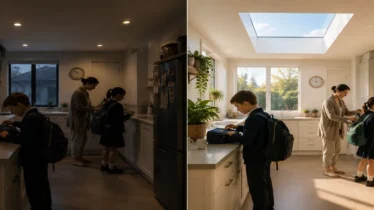
Illustrative example only: A Kelvin Heights build integrated roof windows across its gabled ridge. Morning sun now floods the kitchen; afternoon glare is diffused through Low-E glass. The design adapts to light, not against it.
2. Daylight as an architectural feature
Modern Queenstown homes prioritise openness and connection. Skylights are no longer afterthoughts — they’re central to form and flow.
Design roles skylights play:
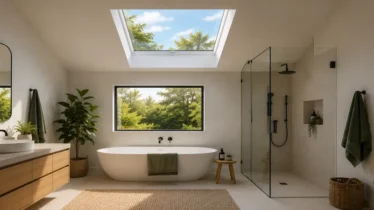
- Framing alpine views while maintaining privacy.
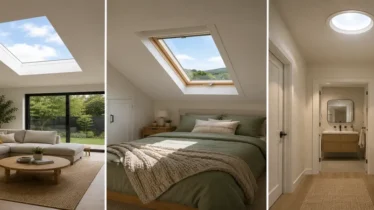
- Drawing light deep into high-ceilinged spaces.
- Balancing north-south exposure for consistent illumination.
- Highlighting materials like schist, timber, and polished concrete.
Pro tip: Align skylight placement with ceiling lines and roof geometry to create architectural rhythm.
3. Material intelligence – glazing for altitude
At elevation, the wrong glass can mean overheating or UV damage. The solution lies in high-performance glazing systems:
Technology | Purpose | Benefit |
Low-E coatings | Reflect heat, maintain brightness | Year-round temperature balance |
Double glazing with argon fill | Insulates against alpine chill | Lower heating costs |
UV-filter layers | Prevents fading on wood and fabrics | Long-term material protection |
Tinted or opal diffusers | Softens brightness | Comfortable ambient light |
These upgrades transform sunlight from harsh to harmonious, creating interiors that glow naturally even at altitude.
4. Architectural integration – form follows light
Modern Queenstown homes blend indoor and outdoor lines. Skylights often align with pergolas, verandas, or clerestory windows to maintain continuous sightlines.
Design considerations:
- Flat skylights suit minimal, box-form homes.
- Pyramid or ridge skylights add drama to atriums.
- Frameless internal trims enhance seamless design.
- Solar vented units introduce passive airflow through concealed automation.
Analogy: Skylights act like time-lapse cameras, tracing light across walls to define the mood of a home.
5. Sustainability through daylighting
At altitude, energy efficiency and environmental sensitivity go hand in hand. Thoughtful skylight design reduces reliance on artificial lighting and heating.
Performance benefits:
- Cuts daytime lighting energy by up to 40%.
- Supports solar heating on cooler days.
- Improves occupant wellbeing through daylight exposure.
Sustainability tip: Pair skylights with solar sensors or blinds that regulate internal temperature automatically — comfort without compromise.
Key takeaways
- Design with altitude in mind: Balance strong sunlight with efficient glazing.
- Light as structure: Skylights define modern Queenstown architecture.
- Sustainability meets style: Natural illumination that saves energy.
- Integration is key: Align skylight design with roof form and interior flow.
Final thoughts
In Queenstown’s high country, architecture is a conversation with light. Skylights are the language that makes it fluent — controlled, refined, and endlessly inspiring.
Get expert guidance on designing with light and see how altitude can elevate your home’s atmosphere.
FAQs
How does altitude affect skylight performance?
Higher UV and temperature variation demand durable glazing, strong seals, and Low-E coatings to maintain comfort and longevity.
Are skylights energy-efficient in alpine climates?
Yes. With double glazing and thermal breaks, they reduce heating costs while maximising natural light.
What skylight designs suit modern Queenstown homes?
Flat or frameless styles complement minimal architecture; ridge or pyramid skylights add bold architectural focus.
Can I automate skylights for comfort control?
Yes. Solar vented skylights and smart blinds adjust automatically for temperature and light changes.
Do modern skylights protect interiors from UV?
Quality glazing filters over 95% of UV rays, preserving finishes even in high-sun regions like Queenstown.