Hallways and stairwells: the two spaces NZ homes consistently under-light
There is a particular kind of darkness that shows up in New Zealand homes.
Not the cosy kind. The practical kind.
The hallway that needs a light on even at midday. The stairwell that feels slightly cave-like on winter afternoons. The entry corridor where you cannot quite read the mail without flicking a switch.
These spaces are not “bad design”. They are simply the parts of the home that sit furthest from exterior windows.
And because you move through them every day, improving their light can change how the whole home feels, more than most people expect.
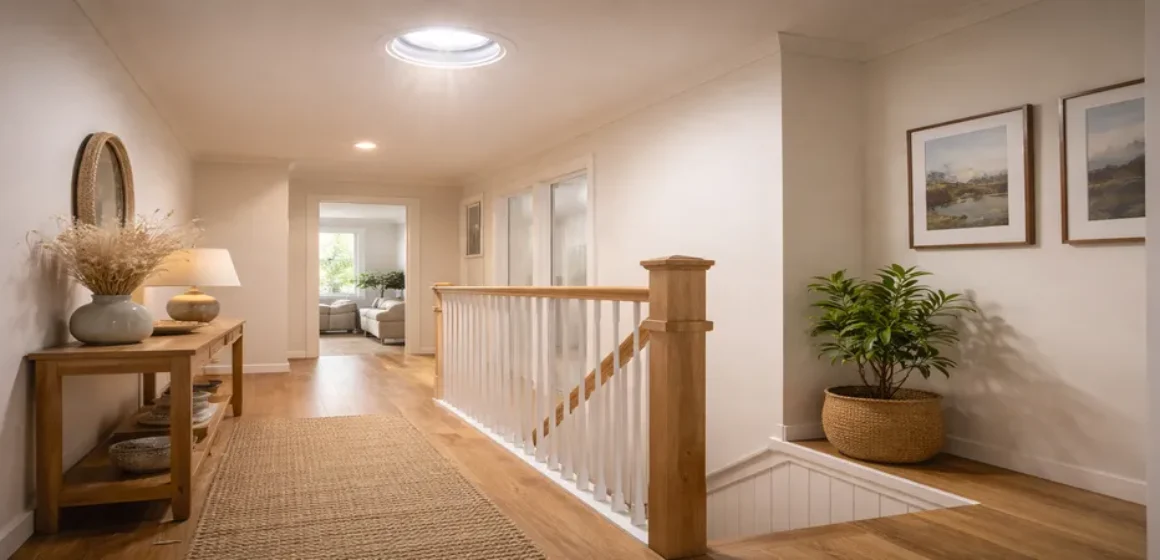
A well-planned skylight in a hallway or stairwell does not just add brightness. It makes the home feel more open, calmer, and easier to move through.
Why these spaces are so often dark in NZ homes
Hallways and stairwells are typically under-lit for a few simple reasons.
They sit in the middle of the floor plan
In many NZ houses, hallways run through the home’s “spine”. That spine is efficient for layout, but it is rarely close to exterior windows.
They are narrow, with light absorbed along the way
Even if there is a bright room at one end, light does not travel far down a narrow corridor. It fades quickly.
Stairwells trap light and shadow
Stairwells often have high walls, changing angles, and corners. Light can enter, but it does not spread evenly.
Seasonal shift makes the problem obvious
In summer, you may not notice as much. In autumn and winter, the difference is stark.
The hallway skylight advantage (why “light from above” changes everything)
When daylight comes from a side window, it travels across the room.
When daylight comes from above, it behaves differently. It tends to:
- reach deeper into the centre of the home
- create a more even spread (especially with the right diffuser or glazing choice)
- reduce that “tunnel” feeling in corridors
A helpful analogy is to imagine pouring water into a long narrow tray.
- Pour from one end, and it only fills part of the tray strongly.
- Pour from above in the middle, and it spreads more evenly.
That is why skylights can be so effective in hallways and stairwells.
The two approaches that work best (and when to use each)
There is no single right answer. The best choice depends on your ceiling, roof space, and the type of light you want.
Option 1: Tubular skylights for focused, reliable daylight
Tubular skylights are often ideal for hallways because they:
- deliver light deep into the home
- suit smaller roof areas
- can work well with limited ceiling space
- create consistent, usable daylight without harsh patches
If you have a tubular skylights page, link it here: [ADD LINK]
Option 2: Fixed skylights for broader visual impact
Fixed skylights can be excellent when you want the hallway or stairwell to feel more open.
They can:
- create a stronger sense of “sky connection”
- brighten wider stair landings or double-height spaces
- add architectural value when placed thoughtfully
A types guide link can sit here: [ADD LINK]
Placement matters more than size
One of the biggest mistakes in hallway lighting is treating it like a product sizing exercise.
A small skylight placed well can outperform a larger skylight placed poorly.
Good placement usually considers:
- where the hallway is darkest (often the middle)
- where the stairwell changes direction
- where you naturally pause or turn
- how the light will fall in the hours you use the space most
The goal is not “a bright patch”. It is a hallway that feels naturally lit.
What “good hallway light” actually feels like
Homeowners rarely say, “I want more lumens.”
They say things like:
- “I want to stop turning lights on during the day.”
- “I want it to feel more open when you walk in.”
- “I want the stairs to feel safer and less shadowy.”
That is the real target.
A successful hallway or stairwell skylight tends to deliver:
- even light, not glare
- gentle shadowing that feels natural
- a sense of openness, especially in narrow spaces
Illustrative example only: a realistic NZ scenario
A homeowner in Palmerston North had a central hallway that stayed dark even on clear days. The living room was bright, but the corridor between rooms felt like a separate zone.
They expected they would need multiple downlights. Instead, a daylight-first plan focused on:
- placing a skylight where the hallway was darkest,
- choosing a light quality that spread evenly rather than creating a hotspot,
- and ensuring the result felt natural in both summer and winter.
The impact was immediate.
“It’s not just brighter. The house feels more open when you walk through.”
A quick checklist: is your hallway or stairwell a good candidate?
You are a strong candidate for a hallway or stairwell skylight if:
- you switch lights on during the day in that space
- the corridor sits in the centre of the floor plan
- there is roof area above the darkest zone
- the stairwell has a tall wall section that could benefit from top light
If you are unsure, photos and a quick layout description are usually enough to give practical guidance.
Planning notes that avoid common regrets
Aim for comfort, not drama
A hallway does not need dramatic beams of sunlight. It needs calm, usable light.
Think about glare and reflection
In stairwells, glossy paint or reflective finishes can amplify contrast. Even light tends to feel better.
Consider the seasonal swing
A solution that feels perfect in summer should still feel good in winter when the sun sits lower.
Keep it weathertight and properly specified
These are roof penetrations. The quality of installation and flashing matters.
A calm next step if you want a brighter, easier home
Hallways and stairwells are the parts of the home you move through every day. Improving their light changes daily life in small but noticeable ways.
If you want advice on the best skylight approach for your hallway or stairwell, share a few photos and tell us which areas stay dark. We can recommend a solution that suits your roof, ceiling, and comfort goals.
Start here: https://inquiry.skylights.co.nz/inquiry