In control of the sky: skylight blinds and daylight control in NZ homes
For many New Zealand homes, skylights transform the way rooms feel. A dark kitchen wakes up. A hallway becomes a place you enjoy walking through. A study or kids’ room suddenly feels usable during the day.
Then the first very bright summer day arrives.
Light bounces off worktops and screens. Someone lies on the sofa and squints. A bedroom feels too light for an afternoon nap.
You may find yourself thinking:
“We love the daylight, but we need more control. Do we have to choose between skylights and comfort?”
This article focuses on skylight blinds and daylight control in NZ homes – how shades, glass choices and layout decisions work together so skylights feel like a flexible part of your home, not a source of glare.
1. What “control” really means for skylights
Skylight control is about more than just blocking light.
Four things most households want to manage
Across different rooms, owners typically want to manage:
- brightness – how intense the light feels at different times of day
- glare – particularly on screens, tables and beds
- heat gain – on hot days or in sunny regions
- privacy – especially in bedrooms and bathrooms.
Skylight blinds, diffusers and glazing choices are tools to shape these factors without losing the benefits of natural light.
Different rooms, different priorities
For example:
- a home office may prioritise glare control on monitors
- a kids’ room may need darkness for naps but brightness for play
- a living room may want flexible mood setting from day to evening
- a bathroom may focus on privacy and moisture.
Good control starts with being clear about the job skylights need to do in each space.
2. Types of skylight blinds and control systems
Not all skylight blinds work the same way. Choosing the right type is as important as choosing the skylight itself.
Blackout blinds
Best for:
- bedrooms and nurseries
- media rooms
- any space where you sometimes want near‑total darkness.
Consider:
- how often full blackout is truly needed
- whether you still want a softer light setting for daytime
- ease of operation for all household members.
Light‑filtering blinds
These blinds soften daylight rather than blocking it completely.
They can:
- reduce glare on bright days
- create a more even light across the room
- help maintain privacy while still admitting usable light.
They suit:
- living areas
- kitchens
- home offices and hallways.
Dual or layered systems
In some rooms, a combination works best – for example:
- a light‑filtering layer for everyday use
- a blackout layer for sleep or media.
This is especially useful in spaces that serve multiple roles over the day.
3. Manual vs automated control – what suits NZ homes
How you operate skylight blinds influences how often they are actually used.
Manual blinds
These may be operated by:
- poles
- cords
- basic mechanical systems.
They can be a good fit when:
- skylights are within easy reach
- use is occasional (e.g. bedroom naps, movie nights)
- budgets are tighter.
However, if operation feels awkward, blinds may be left in one position for long periods.
Remote or wall‑switch control
Motorised blinds, operated via:
- wall switches
- remotes
- in some cases, app‑based systems,
are often more practical when skylights are:
- high in the ceiling
- above stairs or double‑height spaces
- used daily for glare or heat management.
Many households find that easy control encourages more precise use – opening blinds in the morning and adjusting them as light changes.
Automation and sensors
In some projects, blinds can be linked to:
- timers
- light sensors
- integrated home systems.
For example, blinds might close partially during the brightest part of the day in summer, or respond to room temperature in combination with other systems. This level of control is more common in new builds and larger renovations, but the principles apply everywhere: the easier a blind is to adjust, the more benefit you gain from the skylight.
4. Using glazing and diffusers as part of the control strategy
Blinds are not the only way to manage daylight.
Diffused vs clear glazing
Diffused glazing or internal diffusers can:
- soften direct sunlight
- spread light more evenly
- reduce sharp shadows and hot spots.
They are often suitable for:
- bathrooms and ensuites
- hallways and stairs
- service areas and internal nooks.
Clear glazing suits spaces where a view of the sky is desirable, provided glare and heat gain are addressed.
Solar control and Low‑E coatings
Modern skylight glass can include coatings that:
- reduce unwanted heat gain
- improve insulation performance
- filter parts of the solar spectrum while still admitting light.
In plain terms, this helps rooms feel bright without overheating as easily, particularly in sunnier regions such as Northland, Bay of Plenty and parts of Hawke’s Bay.
Sizing and placement as control tools
Sometimes, better control starts with:
- choosing a slightly smaller unit
- shifting location so light washes a wall rather than a table
- pairing two modest skylights instead of one very large one.
Good advice at design stage can reduce how hard blinds need to work later.
5. Room‑by‑room daylight control in NZ homes
Different spaces call for different control strategies.
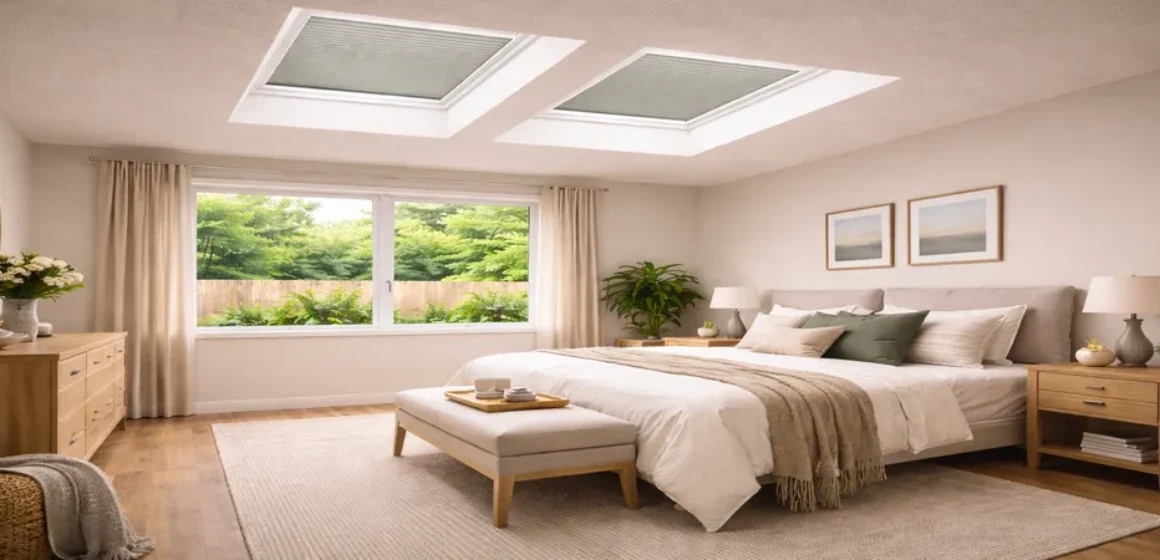
Bedrooms and nurseries
Priorities:
- darkness for sleep when needed
- gentle light for mornings and quiet time
- privacy from surrounding homes.
Approach:
- combine blackout blinds with good sealing around skylight frames
- consider light‑filtering options for daytime
- coordinate with side‑window treatments.
Living rooms and open‑plan spaces
Priorities:
- avoiding harsh glare on sofas, tables and screens
- flexible mood throughout the day
- protecting comfort during hot afternoons.
Approach:
- light‑filtering blinds on most skylights
- careful placement to light walls and central zones rather than seating directly
- blackout or near‑blackout only where a media zone specifically requires it.
Home offices and study nooks
Priorities:
- stable, low‑glare light on screens and paper
- comfort during long periods of focused work
- sometimes privacy from neighbouring properties.
Approach:
- diffused glazing or light‑filtering blinds
- skylights positioned beside or in front of desks, not directly above screens
- remote control where adjustments are frequent.
Bathrooms and ensuites
Priorities:
- privacy
- clear visibility for safety and grooming
- moisture management.
Approach:
- diffused glazing as a first step
- blinds mainly used for specific privacy or light‑level needs
- coordination with extraction and vented skylights where appropriate.
Illustrative Example Only: In a Hamilton family home, adding light‑filtering blinds to two living‑room skylights meant the family could enjoy bright winter days, but soften the light on hot summer afternoons without losing their connection to the sky.
6. Planning path – building control into your skylight decisions
A brief that includes control from the outset leads to better outcomes.
Step 1 – Observe how rooms feel at different times of day
Note when light feels too harsh, too flat or just right. Pay attention to screens, tables and beds.
Step 2 – List what you need to control in each room
Is the priority glare, sleep, privacy, heat, or a mix of several? Keep it simple – one to three key points per space.
Step 3 – Consider how often you will adjust blinds
Daily, weekly, or only occasionally? This helps determine whether manual or motorised control makes sense.
Step 4 – Pair blinds with glazing and layout choices
Discuss with your installer or designer how glass type, skylight size and location work together with blinds so no single element has to do all the work.
Step 5 – Capture your preferences in a short brief
Include your region, room photos, any overheating or glare issues, and your preferred style of control (manual, switch, remote, or integrated).
Skylights New Zealand can help connect you with installers and partners who treat daylight control as part of the design, not an afterthought.
Make an enquiry via Skylights New Zealand
With the right combination of blinds, glazing and placement, skylights can stay comfortable and versatile from bright summer days through to the darker months.
FAQs – skylight blinds and daylight control in NZ
Q1. Do I really need blinds on all skylights?
Not always. Some skylights use diffused glazing or are placed where direct sun is less intense. Blinds are most useful in rooms where you need to control sleep, glare, privacy or heat more precisely.
Q2. Are blackout blinds necessary for bedroom skylights?
They are strongly recommended if you or your family are light‑sensitive sleepers, or if sunrise is very early in your region during summer. In some cases, good light‑filtering blinds may be enough.
Q3. Will blinds affect the thermal performance of my skylights?
Blinds can add a small layer of insulation when closed, but they should not be relied on as the primary thermal solution. Glazing choice, shaft insulation and sealing remain the main performance drivers.
Q4. Are motorised skylight blinds worth the extra cost?
Where skylights are high or used often for glare and heat control, motorised blinds can make daily adjustment much easier. This usually leads to better real‑world comfort because blinds are actually used as intended.
Q5. Can I add blinds to existing skylights?
In many cases, yes. Options depend on the skylight type, age and access. An installer can advise which retrofit blind systems are compatible with your existing units.
Q6. How do I choose between diffused glazing and blinds?
Diffused glazing is a good baseline for soft, even light in many rooms. Blinds add another layer of control, especially in bedrooms, living rooms and offices. Often the best results come from combining both.