Light for Life: How Skylights Enhance Mood and Wellbeing in Long Wanaka Days
Wanaka’s summers feel almost endless: golden light over the lake, evenings that linger past nine. Yet with so many bright hours, many homes still rely on artificial lighting — flat, flickering, and disconnected from the rhythm outside.
Natural light isn’t just aesthetic; it’s physiological fuel. The right skylight design can help Wanaka homeowners feel calmer, sleep better, and live more attuned to the natural day.
1. The science of light and wellbeing (in plain English)
Sunlight sets your circadian rhythm — the internal clock that controls alertness, mood, and sleep. Morning light raises serotonin and cortisol, gently waking your body. Evening light signals melatonin production, guiding rest.
Skylights amplify this natural balance by:
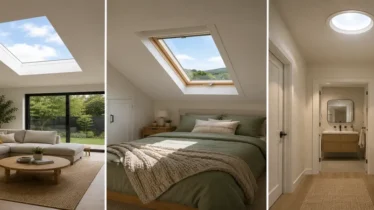
- Delivering morning light where you actually start your day — kitchens, bathrooms, or stairwells.
- Reducing dependence on blue-rich artificial light at night.
- Increasing daylight exposure even on cloudy alpine days.
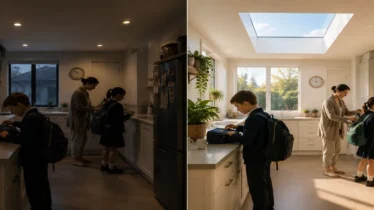
Illustrative example only: A family in Albert Town replaced a small windowless hallway with a tubular skylight. The space brightened instantly — and their children began waking naturally, without alarms, within a week.
2. Emotional architecture – designing light that feels good
Light influences emotion more than most materials in a home. A softly diffused skylight can make a room feel kind, while direct shafts energise focus zones.
Practical design cues:
- Diffuse for calm: Opal or prismatic diffusers soften brightness in living and rest areas.
- Angle for focus: Narrow shafts above work zones improve concentration.
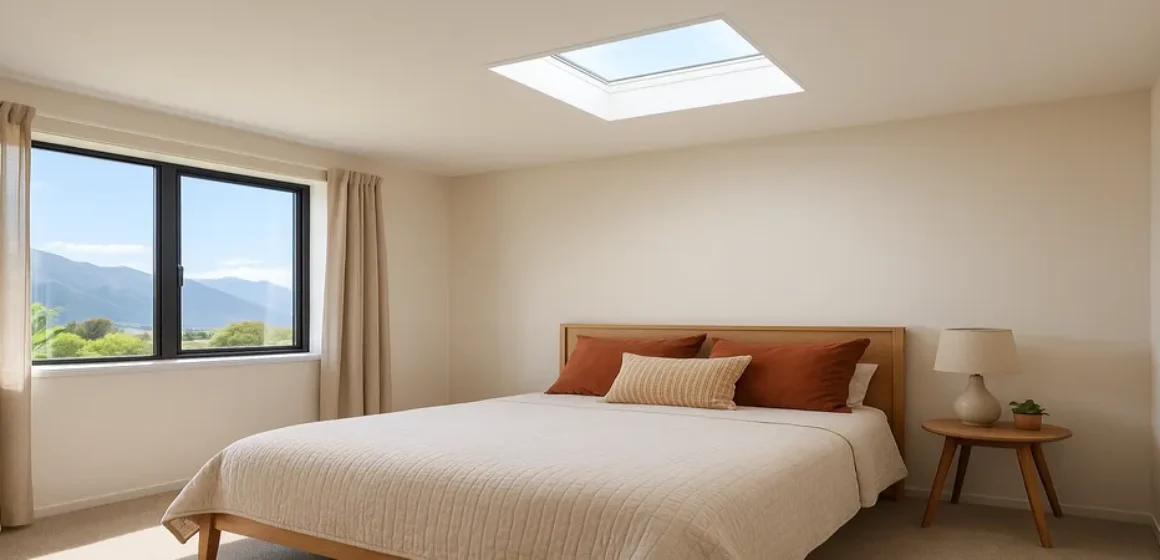
- Warmth by timing: East-facing skylights greet mornings gently; west-facing ones enliven late afternoons.
Analogy: Think of light as your home’s heartbeat — steady, natural, and quietly life-affirming.
3. Seasonal wellbeing in Wanaka’s alpine climate
Long daylight hours and intense UV require balance between exposure and protection.
- Low-E glazing filters excess infrared, avoiding heat stress.
- Tinted diffusers reduce eye strain from snow glare on nearby peaks.
- Ventilation maintains oxygen levels, supporting alertness during hot afternoons.
Visible difference: Interiors feel open but not overwhelming — bright enough for activity, gentle enough for rest.
4. How daylight improves daily life
Benefit | How skylights help | Everyday impact |
Mood regulation | Increases serotonin through morning light exposure | Better resilience and motivation |
Sleep quality | Strengthens day-night rhythm | Easier rest, fewer late-night wake-ups |
Productivity | Provides consistent illumination without flicker | Improved focus for home offices |
Physical comfort | Reduces artificial lighting heat and glare | Cooler, calmer interiors |
5. Integrating wellness into design
When planning or renovating, consider skylights part of your wellbeing strategy:
- Combine vented skylights with smart sensors for fresh, oxygen-rich air.
- Pair with light-colour interiors to reflect daylight deeper indoors.
- Use automated blinds to mimic sunrise or sunset transitions for gentle light changes.
- Choose quiet-close mechanisms — serenity is as much sound as sight.
Key takeaways
- Daylight equals vitality: Natural light regulates body and mood.
- Diffuse wisely: Match light tone to the activity of each space.
- Balance exposure: Glazing and tinting maintain comfort in long days.
- Design for wellbeing: Treat skylights as lifestyle infrastructure, not decoration.
Final thoughts
The light in Wanaka isn’t just scenery — it’s medicine. By weaving it through your home thoughtfully, you align architecture with nature’s rhythm and your own wellbeing.
Enquire now to learn how modern skylight design can make every day feel lighter — in every sense of the word.
Visible FAQs
Do skylights really affect mood and sleep?
Yes. Exposure to natural daylight reinforces circadian rhythms, improving energy by day and restfulness at night.
Can too much alpine light cause fatigue?
Direct glare can strain eyes. Use diffusers or tinted glazing to maintain comfort without losing brightness.
Where should I place skylights for wellbeing?
Focus on rooms you use early or late in the day — bedrooms, kitchens, and bathrooms benefit most from morning light.
Are skylights helpful in winter too?
Absolutely. Even low winter sun boosts Vitamin D and lifts mood during shorter daylight hours.
How do I design a balanced lighting environment?
Combine skylights with warm-tone LEDs and blinds that let you tune brightness throughout the day.