Natural Light vs Artificial — How Skylights Support a Healthier Home
Lighting shapes how we experience our homes every day. In New Zealand, many houses still rely heavily on artificial light — even during the day. But there’s a clear difference between natural daylight and electric lighting when it comes to health, energy use, and atmosphere. Skylights provide a way to unlock the benefits of daylight indoors, bridging the gap between comfort and efficiency.
Health: Natural vs Artificial Light
Natural Daylight
- Regulates circadian rhythms, improving sleep patterns.
- Boosts serotonin levels, reducing stress and supporting mental wellbeing.
- Reduces eye strain by delivering balanced, diffuse illumination.
Artificial Lighting
- Can disrupt sleep if overused late in the day.
- Often creates glare or uneven illumination.
- Lacks the biological benefits of daylight exposure.
Energy Use: Free vs Costly
Natural Daylight
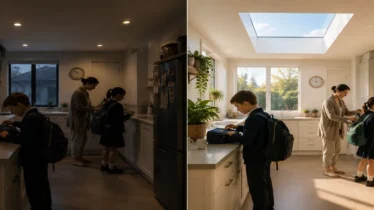
- Reduces reliance on artificial lighting during the day.
- Cuts electricity costs, especially in kitchens, lounges, and hallways.
- When combined with energy-efficient glazing, provides insulation benefits.
Artificial Lighting
- Adds to power bills, especially in spaces that should naturally be bright.
- Requires ongoing replacement of bulbs and fittings.
- Offers no contribution to passive heating or cooling.
Atmosphere: Mood and Ambience
Natural Daylight
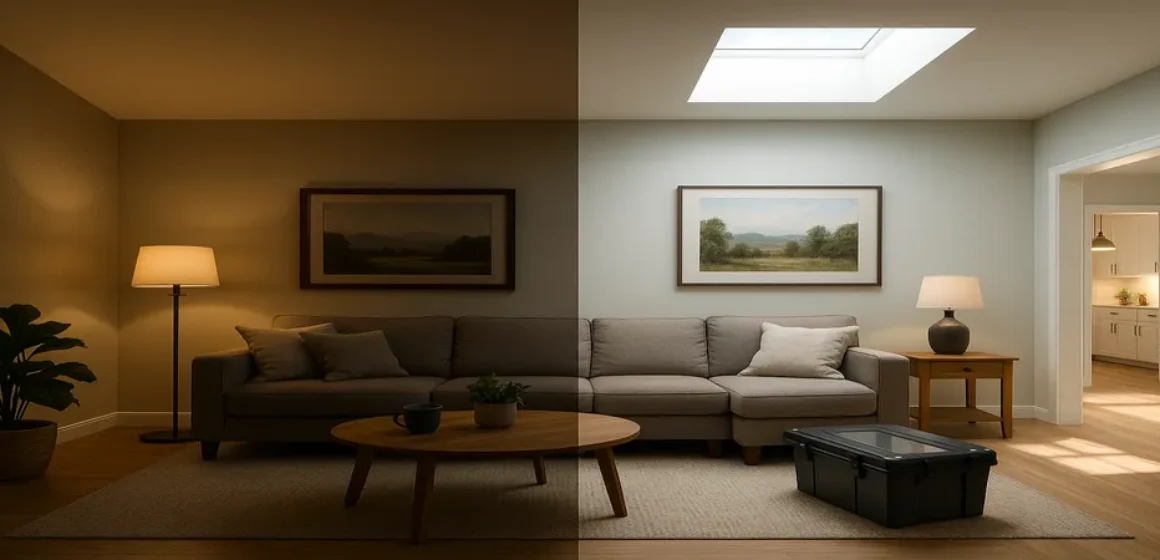
- Creates open, inviting rooms that feel more spacious.
- Enhances colours, textures, and interior design features.
- Connects indoor spaces with the outdoors.
Artificial Lighting
- Functional but limited for ambience.
- Can leave spaces feeling flat or sterile.
- Often lacks the warmth and dynamism of natural light.
How Skylights Amplify the Benefits of Natural Light
- Deliver daylight where traditional windows can’t reach.
- Provide overhead light that balances illumination across a room.
- Combine daylight with ventilation options for healthier air quality.
- Available in energy-efficient glazing options to control heat and glare.
Illustrative Example Only: A Dunedin homeowner replaced reliance on fluorescent tubes in their hallway with two tubular skylights. The space, once gloomy and cold, became naturally bright, reducing power bills and improving the overall feel of the home.
Comparison Snapshot
Feature | Natural Daylight (via Skylights) | Artificial Lighting |
Health | Improves mood, sleep, and focus | Neutral or disruptive |
Energy Use | Free, reduces electricity costs | Adds ongoing costs |
Atmosphere | Bright, inviting, and natural | Flat, functional |
Conclusion: Choosing Healthier Light
Artificial light has its place, but it can’t match the health, energy, and design benefits of natural daylight. Skylights give homeowners across New Zealand a way to bring more daylight indoors, supporting healthier living environments without compromising comfort.
Thinking about making the switch to natural daylight? Request a free skylight consultation today.