Small homes, big light: making compact NZ spaces feel less closed-in
A small home does not need to feel small every day.
It may be a townhouse, unit, compact family home, cottage, minor dwelling, apartment-style layout or older house with smaller rooms. The floor area may be limited, but the real issue is often not size alone. It is how light moves through the home.
A compact living room can feel comfortable when it has good daylight. A small kitchen can feel efficient and pleasant when the bench is naturally lit. A narrow hallway can feel less enclosed when it is not relying on ceiling lights during the day. A bathroom can feel calmer when privacy does not come at the cost of darkness.
That is where thoughtful daylight planning matters.
The best small home skylight ideas are not about making a modest home look grand. They are about using natural light carefully so compact rooms feel clearer, more usable and less boxed in.
For New Zealand homes, this often means choosing the right balance between fixed skylights, vented skylights, tubular skylights and Sky tubes, depending on the room, roof and desired outcome.
Why small homes feel closed-in
Small homes can feel closed-in for several reasons.
Sometimes the rooms are genuinely compact. Sometimes the layout is narrow. Sometimes the home shares boundaries with neighbouring houses, fences or garages. Sometimes privacy requirements limit window size. Sometimes older homes have small windows, lower ceilings or darker internal corridors. Sometimes a newer townhouse has open-plan living, but still includes internal bathrooms, pantries, laundries and stairwells with little natural light.
The feeling usually comes from a combination of factors:
- Limited window positions
- Narrow room proportions
- Shaded side walls
- Deep eaves or covered outdoor areas
- Internal hallways or service rooms
- Low or flat ceilings
- Dark finishes
- Smaller floor plans
- Nearby buildings or boundary fences
- Winter daylight loss
When daylight is limited, small rooms can feel smaller than they are.
A homeowner might say:
“The house is not too small for us, but some rooms feel tighter than they should.”
That is often a daylight issue as much as a space issue.
Daylight can change the perception of space
Natural light does not add square metres.
But it can change how a room feels.
A brighter compact room can feel more open, cleaner and easier to use. A darker compact room can feel cluttered, even when it is tidy. This is because shadows reduce visual depth. Corners disappear. Walls feel closer. The room feels heavier.
Skylights and tubular skylights can help because they bring daylight from above rather than relying only on side windows.
This is especially useful in small homes where wall windows may be limited by privacy, neighbouring buildings or layout constraints.
The goal is not to flood the home with light.
The goal is to place daylight where it gives the room more breathing room.
The small-home daylight test
Before choosing a skylight, walk through the home during the day with the lights off.
Ask:
- Which rooms feel smaller because they are dark?
- Which spaces need artificial lighting during daytime use?
- Does the home feel narrow through the middle?
- Are the windows blocked by fences, walls, eaves or neighbouring homes?
- Does the kitchen bench receive useful daylight?
- Does the bathroom feel private but dull?
- Does the hallway make the home feel more enclosed?
- Are there rooms that would be used more if they felt brighter?
This test helps identify whether the issue is the whole home or one or two strategic spaces.
In many compact homes, the best result comes from improving the right small area rather than trying to brighten everything.
Room 1: the compact kitchen
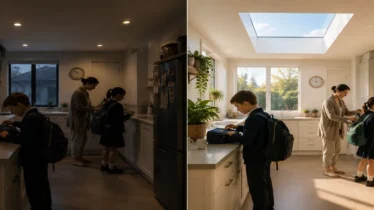
Small kitchens need daylight in the working zones.
A kitchen can have a window and still feel dark if the bench, island, pantry wall or preparation area sits away from the natural light. In compact homes, kitchen layouts are often shaped by walls, appliances and circulation, not ideal daylight.
What to check
- Does the bench need lights on during the day?
- Is the window light blocked by an eave, fence or neighbouring wall?
- Does the kitchen feel darker in winter?
- Is the room narrow or galley-style?
- Is there a scullery or pantry with no daylight?
What may help
A fixed skylight may suit a compact kitchen where stronger overhead daylight is needed above the main working area. A tubular skylight or Sky tube may suit a small kitchen, scullery, pantry or darker transition zone.
Placement is critical. The daylight should land where the room is used, not simply where the ceiling looks symmetrical.
Room 2: the narrow hallway
Hallways can make small homes feel even smaller.
A compact home may have a short hallway, but if that hallway is dark, it can make the whole floor plan feel compressed. This is especially common in units, townhouses, older cottages and homes with bedrooms grouped off a central passage.
What to check
- Does the hallway light go on during the day?
- Does the hallway rely on bedroom doors being open?
- Is the passage narrow or low-ceilinged?
- Does it connect several frequently used rooms?
- Does it make the home feel darker than the living area suggests?
What may help
A tubular skylight is often a strong option for narrow hallways because it provides practical daylight through a ceiling diffuser without needing a large skylight feature.
For a compact home, this can be especially effective because improving the hallway improves the way the whole home connects.
Room 3: the small bathroom
Small bathrooms need privacy, function and freshness.
Many compact homes have bathrooms with small windows, frosted glass, shaded side walls or no useful natural light. The room may be clean and functional, but still feel enclosed.
What to check
- Does the room feel dull before the light is switched on?
- Is the window too small or too shaded to be useful?
- Does privacy limit window options?
- Is steam or condensation also a concern?
- Would better daylight make the room feel less closed in?
What may help
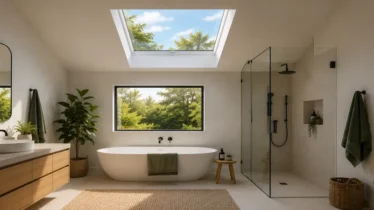
A tubular skylight may suit a small bathroom where the main issue is poor daylight. A vented skylight may suit some bathrooms where airflow and daylight both matter. A fixed skylight may suit a larger bathroom or renovation design.
Moisture needs careful thinking. A brighter bathroom can feel fresher, but daylight does not remove steam. Extraction and ventilation may still be needed.
Room 4: the laundry or utility zone
In compact homes, laundries are often tucked into small or awkward spaces.
They may sit in a cupboard, hallway, bathroom-adjacent space, garage entry or narrow utility room. These spaces can feel dark even when the rest of the home is acceptable.
What to check
- Is the laundry internal or windowless?
- Does it need lights every time it is used?
- Does it feel less clean because it is dim?
- Is moisture from drying clothes part of the issue?
- Is the laundry connected to a dark hallway or bathroom?
What may help
A tubular skylight or Sky tube may be a practical fit for a laundry or utility zone, especially where the goal is useful daylight rather than a visible feature.
Ventilation should be considered separately if moisture is present.
Room 5: the compact living area
A small living room can feel generous when light is well placed.
The challenge is often not total daylight, but daylight distribution. The windows may brighten one side of the room while the back corner remains dim. Furniture placement may be limited by the available light rather than by the best layout.
What to check
- Is one part of the living area consistently darker?
- Does the room feel smaller in winter?
- Is a covered deck or veranda shading the windows?
- Does the seating area sit away from the natural light?
- Would daylight from above improve the centre of the room?
What may help
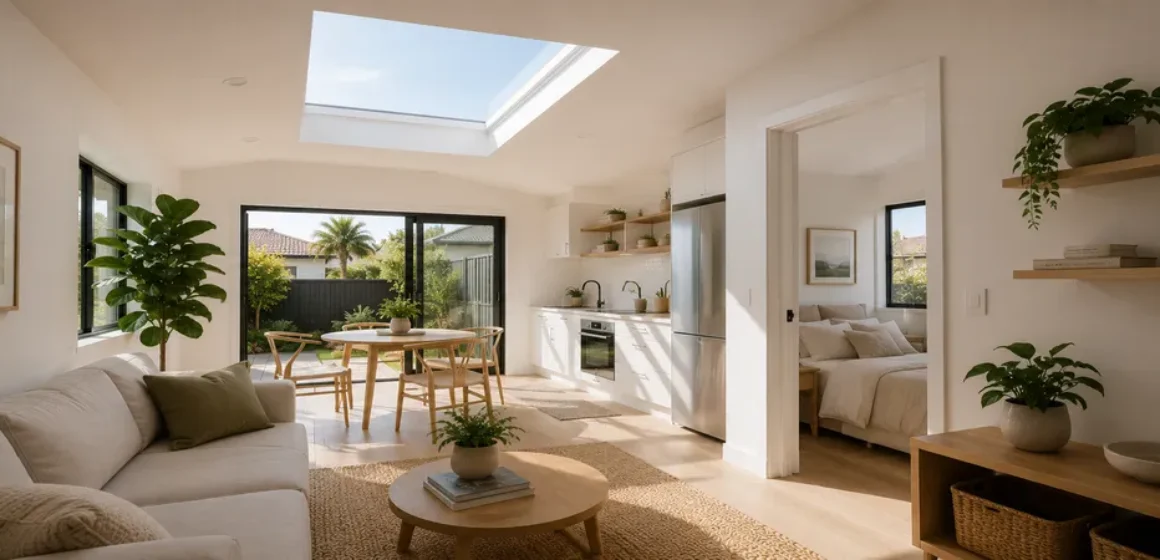
A fixed skylight may suit a compact living area where a stronger sense of openness is wanted. The size and placement need careful planning so the result feels balanced, not overpowering.
A tubular skylight may suit a smaller transition area beside the living room, such as a dining edge, entry or hallway connection.
Room 6: the spare room or office nook
Small homes often rely on multi-purpose rooms.
A spare room may become an office, guest room, study space, storage room or hobby area depending on the week. If the daylight is poor, the room can quickly become underused.
What to check
- Is the room used during the day?
- Does it need artificial lighting for work or study?
- Does the window face a fence, wall or shaded side path?
- Would daylight create screen glare?
- Is the room too small for a large skylight feature?
What may help
A fixed skylight may suit a permanent home office or spare room where a stronger daylight improvement is wanted. A tubular skylight or Sky tube may suit a compact room where subtle daylight is enough.
Screen position, desk layout and glare control matter for workspaces.
Room 7: the stairwell or landing
Townhouses and compact two-storey homes often have internal stairwells or landings.
These areas may not be large, but they affect how the home moves vertically. A dark stairwell can make both levels feel more disconnected.
What to check
- Does the landing need lights during the day?
- Does the stairwell feel enclosed?
- Is there roof space above the upper landing?
- Are there safety concerns in low light?
- Does the stairwell connect bedrooms, bathrooms or living spaces?
What may help
Depending on roof and ceiling layout, a fixed skylight or tubular skylight may bring daylight into the stairwell or landing. Placement should consider safety, glare and how light moves between levels.
Choosing the right daylight solution for a small home
Small homes need proportionate decisions.
A skylight that is too large or poorly placed can feel intrusive. A daylight source that is too small may not solve the problem. The right answer depends on room size, ceiling height, roof access, use and desired appearance.
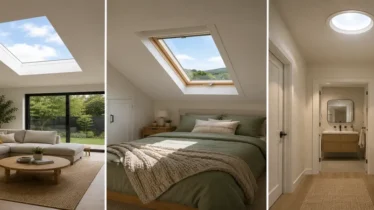
Fixed skylight
Best when:
- The room is a main living, kitchen, bedroom or office space
- A stronger natural light effect is wanted
- The ceiling and roof can support a larger opening
- The skylight can be placed without creating glare or imbalance
Vented skylight
Best when:
- The room needs daylight and airflow
- The space is a bathroom, kitchen or upper-level area
- Operation, weather exposure and ventilation use are suitable
- Moisture or stuffiness is part of the discussion
Tubular skylight or Sky tube
Best when:
- The room is small or internal
- Practical daylight is the main goal
- A subtle ceiling diffuser is preferred
- A large skylight would feel unnecessary
- The space is a hallway, laundry, toilet, wardrobe, pantry or compact bathroom
The product should match the room’s scale.
In small homes, restraint is often what creates the best result.
Why placement matters even more in compact rooms
In a large room, a slightly imperfect skylight location may still improve the space.
In a small room, placement is less forgiving.
A skylight or diffuser should be positioned to support how the room is used.
Ask:
- Where does the room feel darkest?
- Where do people stand, sit or work?
- Would the daylight create glare?
- Would it brighten a useful zone or just the ceiling?
- Are there downlights, vents, fans or access hatches in the way?
- Is the roof path above suitable?
- Would the position still make sense if furniture changes?
The aim is not to place the skylight in the centre by default.
The aim is to place daylight where it creates the most value.
Privacy: a major advantage of overhead daylight
Small homes often sit close to neighbours, fences or shared boundaries.
This can make wall windows difficult. A larger window may reduce privacy. Frosted glass may protect privacy but weaken daylight. Curtains or blinds may stay closed for much of the day.
Overhead daylight can reduce this trade-off.
A skylight, tubular skylight or Sky tube can bring natural light from above without needing to enlarge a wall window. This can be useful in bathrooms, bedrooms, offices, hallways and compact living areas.
Privacy is one of the reasons skylights can suit smaller and denser homes so well.
They allow the room to feel brighter without opening it directly to the neighbour’s fence or window.
What a skylight can and cannot do in a small home
A skylight or tubular skylight can:
- Make compact rooms feel less enclosed
- Bring daylight into internal spaces
- Reduce the need for daytime artificial lighting in suitable rooms
- Improve the usability of hallways, bathrooms, laundries and kitchens
- Help small rooms feel cleaner and more open
- Support renovation planning in tight layouts
- Provide daylight without compromising privacy in some rooms
It cannot:
- Add physical floor area
- Replace heating or insulation
- Solve moisture issues by itself
- Suit every roof or ceiling layout
- Guarantee a specific power bill reduction
- Fix poor ventilation without proper airflow planning
- Replace a full renovation where structural or layout issues are the main problem
The value is real, but it should be understood clearly.
Good daylight makes a small space work better. It does not make the home something it is not.
Local NZ situations where this matters
Compact home daylight issues are common across New Zealand.
In Auckland, Wellington, Tauranga and other growing urban areas, townhouses and infill homes often sit closer to neighbouring buildings. This can reduce side light and increase the need for privacy. In Christchurch, Hamilton and regional centres, units and compact family homes may have internal hallways, small bathrooms and shaded service rooms. In coastal areas, covered outdoor living and weather protection can reduce light to rooms behind them. In older suburbs, cottages and bungalows may have small rooms, central corridors and later additions that affect natural light.
The details differ, but the pattern is familiar:
The home is not necessarily too small.
It is under-lit in the places that make it feel small.
Illustrative example only
A homeowner lives in a compact townhouse with an open-plan kitchen and living area. The main room has decent daylight near the sliding doors, but the hallway, laundry cupboard and downstairs bathroom all feel dark. The bathroom has a small frosted window, and the laundry needs a light every time it is used.
The first thought is to upgrade artificial lighting throughout the lower level.
That may help at night, but it does not bring daytime natural light into the internal spaces.
A targeted daylight plan may look at whether a tubular skylight could improve the hallway or laundry zone, while the bathroom may need a separate discussion around daylight and ventilation.
The result would not make the townhouse bigger.
It could make the home feel less closed in during everyday use.
A small-home skylight planning checklist
Before making an enquiry, work through this checklist.
Room choice
- Which small room feels most closed in?
- Which room needs lights during the day?
- Which room is used most often?
- Which room would feel most different with natural light?
Daylight goal
- Do you want subtle daylight?
- Do you want a visible skylight feature?
- Do you need daylight over a work area?
- Do you need privacy preserved?
- Is ventilation also part of the issue?
Practical details
- What roof type do you have?
- Is the room below roof space?
- Is the ceiling flat, sloped or raked?
- Are there vents, lights or services in the ceiling?
- Is renovation or painting planned?
- Can you provide roof and room photos?
This helps turn a general desire for a brighter home into a clearer skylight brief.
Avoiding the “too much skylight” mistake
In small homes, the most powerful design move is often restraint.
A skylight should not overwhelm the room. It should not create glare, heat discomfort or an awkward ceiling layout. It should not be chosen because it looks impressive in another house.
The right skylight for a compact home should feel like it belongs there.
It should support the room’s use, suit the roof and ceiling, and improve the way the home feels without making the solution larger than the problem.
Sometimes that means a fixed skylight.
Sometimes it means a tubular skylight or Sky tube.
Sometimes it means improving one overlooked room first.
The real goal: less closed-in, more usable
A compact home can still feel generous when its light is handled well.
The goal is not to pretend the home is larger than it is. The goal is to make each space feel more usable, more considered and less dependent on artificial lighting during the day.
A brighter hallway can make the home feel more connected. A better-lit bathroom can feel calmer. A kitchen with overhead daylight can work better in the morning. A small living room with balanced light can feel more settled.
That is the quiet value of skylights in small homes.
They help the home feel less compressed and more complete.
Planning your next step
If your compact home, unit or townhouse has rooms that feel darker or more closed-in than they should, it may be worth exploring whether overhead daylight could help.
Skylights.co.nz can help you consider whether a fixed skylight, vented skylight, tubular skylight or Sky tube may suit your room, roof type and desired outcome.
To start planning your options, use the Skylights.co.nz enquiry form:
https://inquiry.skylights.co.nz/inquiry
You may also find these useful:
FAQs
Are skylights a good idea for small homes?
Skylights can be a good idea for small homes when the room lacks useful natural light and the roof and ceiling layout are suitable. The best option depends on the room size, placement, privacy needs and desired outcome.
What type of skylight is best for a compact room?
A tubular skylight or Sky tube is often suitable for compact rooms such as hallways, laundries, toilets, wardrobes and small bathrooms. A fixed skylight may suit larger rooms where stronger daylight and visual openness are wanted.
Can a skylight make a small room feel bigger?
A skylight does not add floor area, but better natural light can make a small room feel less closed in and more usable. The effect depends on placement, room layout, ceiling height and the type of skylight chosen.
Is a tubular skylight good for a townhouse?
A tubular skylight can be useful in townhouses where internal rooms, hallways, bathrooms or laundries lack daylight. Suitability depends on roof access, ceiling layout, shared property considerations and the room’s position.
Can skylights help with privacy in small homes?
Yes, overhead daylight can sometimes improve a room without increasing visibility from neighbours. This can be useful in bathrooms, bedrooms, offices and compact homes where wall windows are limited by privacy.
What should I send for a small home skylight enquiry?
Send photos of the room, ceiling and roof area if possible. Also explain when the room feels darkest, whether lights are used during the day, whether privacy or ventilation is a concern, and what result you want.