Steam isn’t the enemy: stale air is a bathroom airflow playbook
Most New Zealand bathrooms do the same thing after a shower.
The mirror fogs.
The room feels heavy.
You crack the door, flick the fan on, and hope it clears.
Sometimes it does.
Sometimes it lingers, clinging to the ceiling and corners long after everyone has moved on with their day.
That lingering feeling is the part worth paying attention to.
Because steam is normal.
The real problem in many NZ bathrooms is stale, trapped air.
If moist air cannot leave the room efficiently, the bathroom stays damp. Dampness becomes habit. Then it becomes mould, peeling paint, and that musty smell you can’t quite locate.
This playbook is a plain-English guide to bathroom airflow in New Zealand homes, with a practical focus on what actually changes outcomes, and where skylights fit without pretending they solve everything.
The bathroom airflow goal (simple and measurable)
A healthy bathroom isn’t the one that never steams up.
It’s the one that:
- clears moisture quickly after showers
- dries surfaces without constant wiping
- does not hold that stale, damp feeling
A useful rule of thumb is to aim for a bathroom that feels noticeably clearer within a short period after showering.
If it still feels heavy well after the shower, it is usually an airflow bottleneck.
First principle: warm, moist air rises
Here is the most important concept, explained without jargon.
When you shower:
- the air warms
- it absorbs moisture
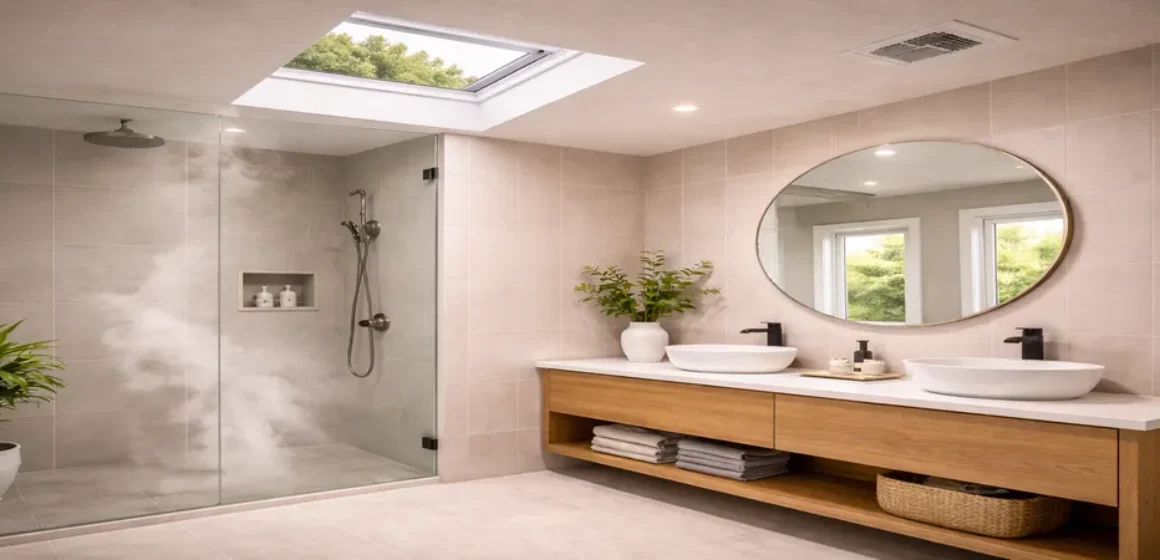
- it rises toward the ceiling
If that warm, moist air has no effective exit path, it sits at ceiling level, spreads to corners, and then cools. As it cools, moisture condenses onto the coldest surfaces.
That is when you get:
- wet ceilings and upper walls
- mould starting at the top corners
- damp that returns even after you clean
This is why ceiling-level airflow matters more than people expect.
The ‘stale air’ signs NZ homeowners should not ignore
If you recognise two or more of these, your bathroom is likely not clearing moisture effectively.
- The mirror stays fogged for a long time
- The ceiling feels damp to the touch after showers
- You see mould dots in top corners or around the ceiling line
- Towels never fully dry
- The room smells musty despite cleaning
- Paint or plasterboard shows bubbling, soft spots, or peeling
These are not hygiene issues. They are airflow issues.
The airflow playbook (in five moves)
This is a practical sequence. You can use it whether you own the home or manage a rental.
Move 1: Create an exit path for moist air
Moist air needs a clear way out.
That can be:
- effective mechanical extraction (in the right location, vented to outside)
- natural ventilation through an opening that actually releases warm air
The goal is not just moving air around. It is removing it.
Move 2: Capture the moisture where it gathers
Because warm air rises, extraction and venting strategies work best when they deal with the top layer of air.
A common mistake is relying on opening a door and hoping moisture finds its way out.
Doors help, but they are not a ceiling-level solution.
Move 3: Use daylight to support drying, not replace ventilation
Daylight changes how bathrooms feel and behave.
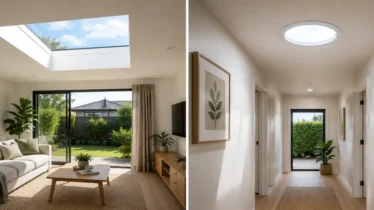
A skylight can:
- make the room feel fresher and less cave-like
- warm surfaces gently in the right conditions
- encourage better daily habits because the room feels nicer to use
But skylights are not extraction fans.
They support drying best when paired with a clear airflow plan.
Move 4: Reduce the ‘cool-down condensation’ window
Condensation happens most when warm moist air cools on cold surfaces.
Practical ways to reduce that window include:
- running extraction for long enough after showers
- keeping doors slightly open once privacy is no longer needed
- ensuring the room has a pathway to clear warm air
This is not about perfection. It is about consistency.
Move 5: Treat the ceiling as the priority zone
If you only improve one thing, improve what happens at ceiling height.
That is where moisture sits first.
That is where mould starts.
And that is where the room either clears or stays stale.
Where skylights fit in a ventilation-first bathroom plan
When homeowners search for bathroom ventilation skylight NZ, they are usually hoping a skylight will fix dampness.
It can help, but the role is specific.
A skylight helps most when:
- the bathroom has limited wall windows
- you want privacy without sacrificing daylight
- the room feels gloomy, which often correlates with poor drying
- you choose a solution that suits moisture conditions and the roof design
A skylight helps least when:
- the bathroom has no effective extraction
- the room has chronic moisture issues from leaks or plumbing problems
- airflow paths are blocked (sealed door gaps, no venting route)
If ventilation is missing, start there.
If ventilation exists but the room still feels stale, consider how daylight and ceiling-level airflow could work together.
The biggest misconception: “If I add daylight, mould will disappear”
Daylight can support drying.
It can also make problems visible sooner, which is useful.
But mould is not only a light issue.
Mould is a moisture and time issue.
If the room stays damp long enough, mould finds a way.
This is why ventilation is the foundation, and daylight is the upgrade.
A simple bathroom airflow self-check (no tools needed)
Try this once this week.
- After a normal shower, leave the fan on (if you have one).
- Close the door for five minutes, then open it.
- Notice whether the air feels heavy and humid, or already lighter.
- Look at the mirror and ceiling line.
If the room still feels heavy and surfaces stay wet, the problem is not “steam”.
It is clearance.
Illustrative example only: a winter bathroom that never dried
A homeowner in Dunedin noticed their bathroom felt damp for most of winter.
The bathroom had privacy, but very little daylight, and the ceiling corners kept returning with mould dots.
The turning point was not a single product.
It was a plan:
- improve moisture removal after showers
- ensure air could exit effectively
- and bring in daylight so the room felt drier and more usable day-to-day
Once the stale air stopped lingering at ceiling level, the bathroom’s behaviour changed.
Not overnight, but consistently.
A calm next step
If your bathroom steams up, that is normal.
If it stays damp, smells stale, or keeps growing mould, it is usually an airflow problem you can solve.
If you share a couple of photos, tell us whether you have an extractor fan, and describe how long the bathroom stays foggy or damp after showers, we can recommend a ventilation-first approach and skylight options that suit NZ conditions.
Start here: https://inquiry.skylights.co.nz/inquiry