The Energy Equation: How Skylights Reduce Lighting Costs in Queenstown Homes
Queenstown’s climate brings a unique challenge: abundant sunlight but higher heating demands. Many homes still rely heavily on artificial lighting, even on clear days. The solution lies above — strategically placed skylights that turn sunlight into everyday efficiency.
This is the energy equation redefined: more light, less power, and a home that feels alive from dawn to dusk.
1. Why daylighting matters in Queenstown
Artificial lighting accounts for up to 15% of household energy use. In a region known for long, bright summers and crisp winters, daylighting through skylights provides natural illumination without the electrical footprint.
Local energy dynamics:
- High electricity rates: Efficiency upgrades have faster payback in alpine towns.
- Cooler seasons: Skylights can provide passive warmth in winter with proper glazing.
- High daylight hours: Queenstown enjoys over 2,000 hours of sunshine yearly — perfect for daylight harvesting.
Illustrative example only: A home in Frankton replaced four recessed LEDs with two tubular skylights. Annual lighting energy dropped by nearly 60%, while interiors felt noticeably warmer in winter mornings.
2. Understanding the daylight–energy balance
The goal isn’t just adding light — it’s optimising where and how it enters.
|
Design Factor |
Energy Impact |
Best Practice for Queenstown |
|
Orientation |
Determines solar gain and brightness |
North or east-facing skylights maximise morning light |
|
Glazing type |
Controls heat transfer |
Use Low-E or double glazing for insulation |
|
Diffusion |
Distributes light evenly |
Prevents glare, reduces need for blinds |
|
Ventilation |
Regulates air and temperature |
Solar vented models release excess heat naturally |
Balanced correctly, these factors ensure rooms stay bright without the burden of artificial energy use or summer overheating.
3. Modern technologies that enhance savings
Today’s skylight systems go far beyond simple glass panels.
Energy-smart innovations include:
- Low-E glass coatings that reflect infrared heat.
- Thermal breaks in frames to prevent conductive heat loss.
- Solar blinds that respond automatically to sunlight levels.
- LED-integrated skylights that supplement daylight seamlessly at night.
Result: A lighting system that adapts naturally to the Queenstown day.
4. Design for year-round performance
Homes at altitude require a balance of insulation and solar access. The most efficient designs capture free light in winter and protect against heat in summer.
Seasonal approach:
- Winter: Angle skylights to capture low sun; use clear glazing for warmth.
- Summer: Add diffusers or external shading to reduce glare and cooling load.
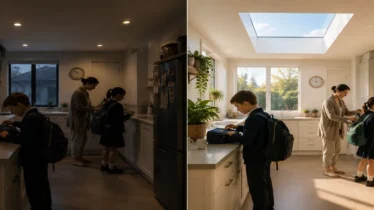
- All year: Position skylights over activity areas — kitchens, stairwells, and hallways — to replace daytime lighting entirely.
Analogy: Think of a skylight as a solar panel for your mood and wallet — collecting natural light, not electricity.
5. Economic and environmental benefits
|
Benefit |
Homeowner Impact |
Environmental Impact |
|
Lower energy bills |
Reduced use of electric lighting |
Less grid demand |
|
Passive heating |
Captures solar warmth on cool days |
Lower emissions |
|
Longevity |
LEDs and diffusers last longer under natural cycles |
Less waste over time |
Over a decade, energy savings from modern skylights can offset much of the installation cost — while improving wellbeing and sustainability.
Key takeaways
- Use daylight first: Replace artificial lighting hours with natural illumination.
- Upgrade glazing: Low-E, double-glazed skylights balance comfort and efficiency.
- Automate shading: Smart blinds manage brightness and heat.
- Design with orientation: North or east-facing installations maximise usable light.
Final thoughts
In Queenstown’s crisp alpine light, energy efficiency isn’t a compromise — it’s an opportunity.
Every well-placed skylight turns daylight into design, and design into savings.
Find out how much you could save with an energy-efficient skylight upgrade today.
FAQs
Do skylights really lower electricity use?
Yes. By replacing daytime artificial lighting with natural light, skylights can reduce lighting energy by 40–70%.
Will I lose heat through skylights in winter?
Not with Low-E double glazing. Modern skylights retain warmth while still harvesting daylight.
Are solar-powered blinds worth it?
Yes. They regulate light automatically, keeping interiors comfortable and reducing the need for cooling.
How quickly can skylight energy savings pay back?
Depending on usage, most households see returns in 4–6 years through reduced energy bills.
Do skylights help with sustainability goals?
Absolutely. Daylighting reduces carbon emissions and improves indoor wellbeing naturally.