The Healthy Home Office: How Natural Light Reduces Stress and Eye Strain
Working from home is now part of daily life for many in New Zealand. But long hours in poorly lit spaces can take a toll—eye strain, tension headaches, and fatigue are common complaints. Artificial lighting may illuminate your desk, but it can’t mimic the full benefits of natural daylight.
A home office bathed in natural light does more than brighten your mood—it transforms your daily work experience.
Key benefits of daylight in your home office:
- Reduces stress: Sunlight helps regulate cortisol, the stress hormone.
- Minimises eye strain: Consistent, diffused daylight reduces glare and harsh contrasts.
- Boosts alertness: Natural light aligns your body clock, improving focus and energy.
- Enhances mood: Exposure to daylight increases serotonin, helping combat the mid-afternoon slump.
For busy parents or remote professionals, this means fewer headaches, better concentration, and a workspace that feels uplifting rather than draining.
The Problem: Dark and Fatiguing Workspaces
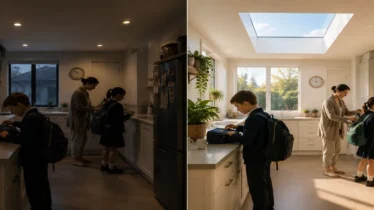
Many home offices are tucked into spare bedrooms, basements, or corner nooks with limited windows. Relying on overhead lighting or lamps leads to:
- Glare on screens and reflective surfaces
- Uncomfortable contrast between bright monitors and dim surroundings
- Mental fatigue from prolonged exposure to artificial light
Even small design changes can improve your space dramatically—and installing a skylight or tubular skylight is often the most transformative solution.
Skylights: A Simple Fix for a Healthier Workspace
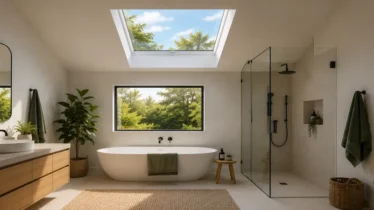
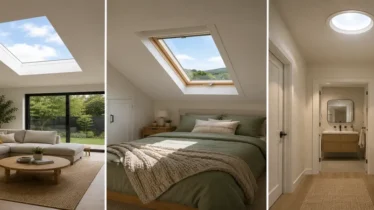
Skylights and roof windows bring consistent daylight into areas where wall windows fall short. A well-placed skylight:
- Delivers glare-free lighting that reduces eye strain on screens.
- Opens up smaller rooms, making them feel larger and more inviting.
- Provides natural ventilation if you opt for a vented model, which can improve air quality.
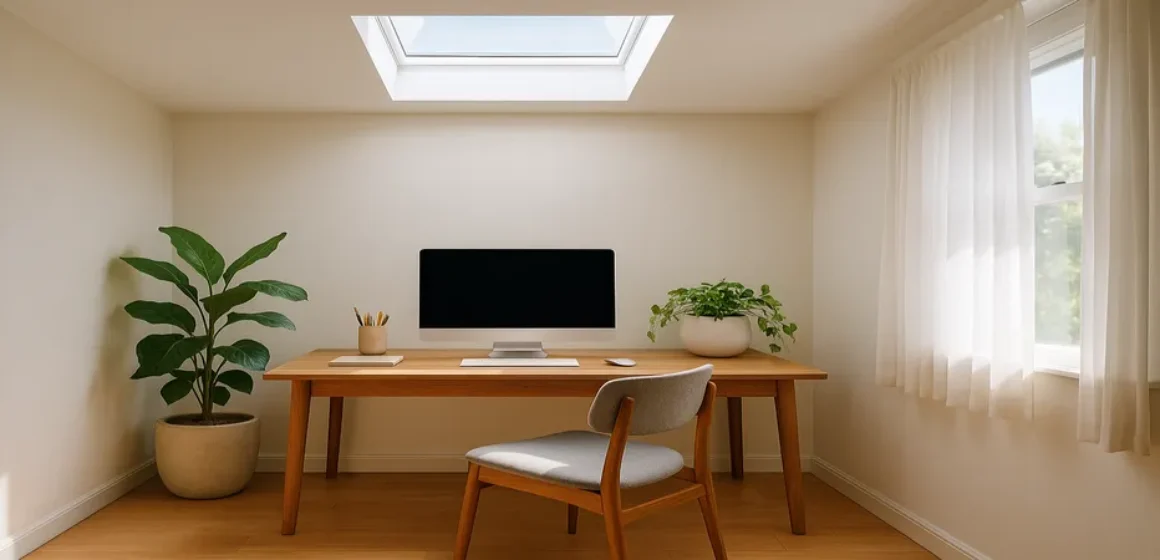
Illustrative Example Only: A Christchurch parent transformed a dark spare bedroom into a bright, productive workspace with a single tubular skylight. They reported fewer afternoon headaches and a noticeable lift in mood during winter.
Practical Tips for a Health-Focused Setup
- Position your desk wisely: Place your screen perpendicular to the source of light to minimise glare.
- Consider diffused daylight: Tubular skylights distribute soft light evenly, perfect for screen-heavy tasks.
- Mix natural and artificial light: Pair skylights with a warm desk lamp for early mornings or late evenings.
- Add ventilation where possible: A vented skylight can keep the air fresh, reducing the stuffiness that worsens fatigue.
Next Steps: Create Your Healthier Home Office
If your home office feels dim and draining, the solution could be above your head. A skylight can transform a cramped, stressful workspace into a bright, energising environment.
Bring daylight into your daily routine—and feel the difference in focus, comfort, and wellbeing.