Before condensation season settles in: where ventilation and daylight work together
There is a point in the year when condensation stops being occasional and becomes part of the morning routine.
You wake up, pull back the curtains and find moisture on the glass. The bathroom mirror fogs before the shower is finished. The kitchen window clouds over while breakfast is being made. In some rooms, the air feels heavier before anyone has even started the day.
For many New Zealand homes, this change arrives gradually as the mornings cool, the windows stay closed longer, and warm indoor air meets cold surfaces more often.
This is where ventilation and daylight need to be understood together.
Ventilation helps move moist air out of the home. Daylight helps a room feel clearer, more usable and less shut in. A skylight or sky tube is not a complete condensation cure, and it should never be treated as a replacement for proper extraction, heating, insulation or moisture control. But in the right room, the combination of natural light and better airflow can support a healthier-feeling, more practical space.
The key is knowing where each part matters.
Condensation is a signal, not just a nuisance
Condensation happens when warm, moist indoor air meets a colder surface. In winter, this is most visible on windows, mirrors, aluminium frames, tiles and other cool materials.
It can be tempting to think of condensation as just a glass problem. Wipe it down, open the window for a few minutes, move on.
But repeated condensation often tells you something broader about the room:
- Moisture is being created faster than it is being removed
- Air movement may be limited
- The room may be cooler than surrounding spaces
- Surfaces may be staying damp for longer
- The space may be under-lit, under-ventilated or both
Bathrooms, laundries and kitchens are the usual suspects because they produce moisture through showers, washing, cooking and everyday use. Bedrooms can also become part of the pattern, especially in colder homes where windows stay shut overnight.
A skylight conversation should not ignore this wider context. If condensation is part of the issue, the room needs to be assessed as a living environment, not just a place to add more light.
The simple difference between light and ventilation
Homeowners often talk about a room feeling “dark and damp” as if it is one problem. In practice, it may be two problems happening at the same time.
Daylight improves how the room looks and feels. It can make a bathroom feel fresher, a hallway feel less enclosed, or a kitchen feel easier to use during winter mornings.
Ventilation helps remove moisture, odours and stale air. It is especially important in rooms where moisture is created regularly.
A good way to think about it is this:
- Daylight changes the room’s feel
- Ventilation changes the room’s air movement
- Heating and insulation help manage temperature
- Extraction helps remove moisture at the source
When these work together, a room can feel more balanced.
When one is missing, the room may still struggle. A bright bathroom with poor ventilation can still become steamy. A well-ventilated hallway with no daylight can still feel cold and unwelcoming. A kitchen with a good window can still need artificial lighting if the working area sits away from the natural light source.
That is why the right solution depends on the room’s behaviour, not just the product.
The rooms to check before condensation season settles in
Bathroom
The bathroom is usually the most obvious room to review before winter.
Ask yourself:
- Does the mirror fog heavily after showers?
- Does moisture stay on walls, ceilings or windows?
- Does the room have a working extractor fan?
- Is there usable natural light during the morning?
- Does the room feel fresh once the shower has been used?
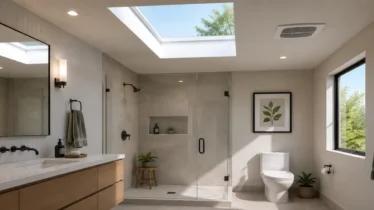
If the bathroom is both dark and steamy, it may need a combination approach. A vented skylight may be worth considering where roof layout, ceiling structure and room use make it suitable. In other cases, a fixed or tubular daylight solution may improve light, while a separate extractor handles moisture removal.
The important point is not to force one product to do every job. A bathroom often needs daylight for comfort and visibility, plus ventilation for moisture management.
Kitchen
Kitchens produce moisture through boiling, cooking, dishwashing and general household use. They also tend to carry the emotional weight of the morning routine.
A kitchen with poor daylight can feel gloomy before the day has properly started. A kitchen with poor ventilation can feel humid, stale or heavy after cooking.
Many New Zealand kitchens also have deep eaves, covered decks, neighbouring walls or older layouts that limit side light. In these homes, daylight from above can sometimes make a clearer difference than relying on windows alone.
A fixed skylight or sky tube may help brighten work areas, while rangehoods, windows and airflow strategies help manage moisture and cooking air.
Laundry
The laundry is easy to ignore until winter makes it unpleasant.
It may sit at the back of the home, beside a bathroom, under a lean-to roof or in a compact internal space. It may have poor light, limited airflow and drying-related moisture.
A sky tube can be a practical daylight option for laundries where the room does not need a large roof window but would benefit from feeling cleaner and easier to use. Ventilation still needs to be considered separately, especially if clothes drying happens indoors.
Hallway and internal rooms
Hallways do not usually create moisture, but they can amplify the feeling of a closed-up winter home. When the centre of the home is dark, every connected room can feel less inviting.
This is where daylight alone may be the main issue. A tubular skylight can help bring natural light into an internal area that would otherwise rely on artificial lighting.
The goal is simple: make the home feel less shut down during the darker months.
Bedroom
Bedrooms can experience condensation because people breathe moisture into the room overnight, especially when windows stay closed in cold weather.
A skylight may improve daylight and make the room feel more open, but it is not a standalone solution for condensation on windows or dampness. Heating, insulation, ventilation habits and window performance all matter.
For bedrooms, skylight planning also needs to consider privacy, glare, summer heat, blinds and sleeping comfort.
Where a vented skylight can make sense
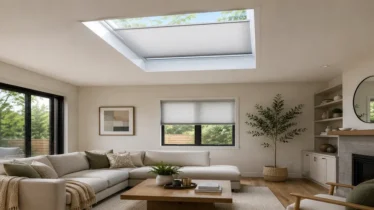
A vented skylight may be suitable where both natural light and airflow are important.
Common examples include:
- Bathrooms where steam regularly builds up
- Kitchens where warm air gathers near the ceiling
- Upstairs rooms that feel stuffy
- Loft-style or raked-ceiling spaces where high-level airflow is useful
- Rooms where windows do not provide effective cross-ventilation
Warm air naturally rises, so an opening skylight can allow air to escape from above. This can be useful in the right setting, particularly when paired with sensible ventilation habits and other moisture-control measures.
However, a vented skylight should still be specified carefully. Roof pitch, roof material, flashing detail, ceiling access, height, control method and weather exposure all matter.
A good installation is not just about cutting an opening in the roof. It is about making sure the product suits the home and is installed in a way that remains weathertight.
Where a sky tube may be the better answer
A sky tube, or tubular skylight, may be the better option when the main issue is daylight rather than ventilation.
It can be especially useful for:
- Internal hallways
- Toilets
- Laundries
- Walk-in wardrobes
- Small bathrooms with separate extraction
- Dark corners of larger homes
- Areas where a larger skylight is not necessary
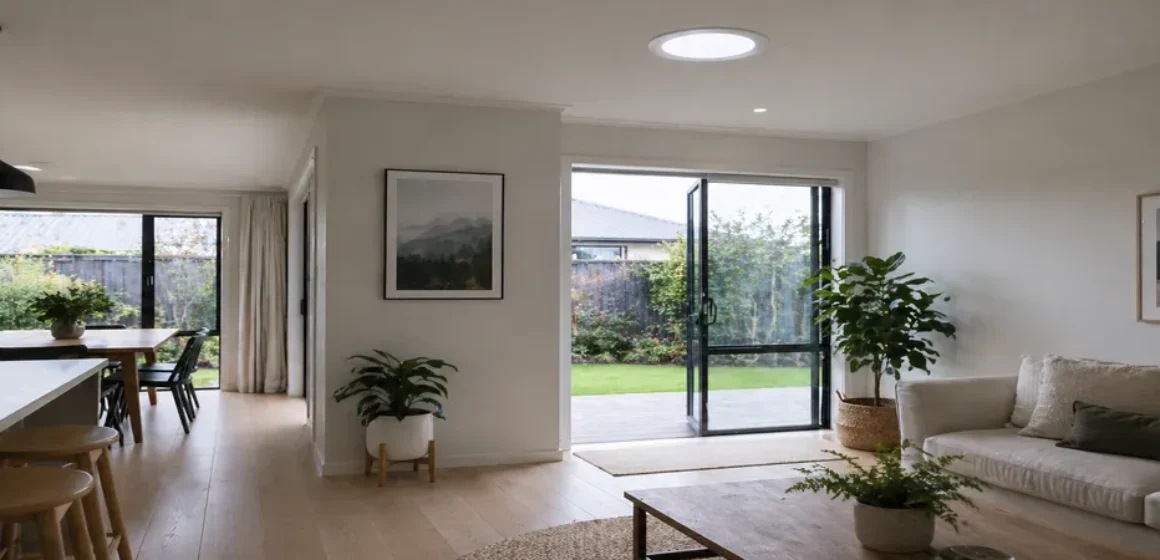
A sky tube brings daylight through a reflective tube from the roof to a ceiling diffuser. The internal appearance is usually more subtle than a larger skylight, which makes it a practical option for smaller rooms or homes where the owner wants daylight without a major visual change.
The “ceiling diffuser” is the part you see inside the room. It spreads the daylight into the space, a little like a natural light fitting that does not need to be switched on during the day.
For many homeowners, that is enough to change how a small room feels.
What daylight can do, and what it cannot do
Daylight can make a room feel more open, more pleasant and easier to use. It can reduce the need for artificial lighting during the day and help homeowners notice issues such as lingering dampness, staining or poor airflow.
But daylight alone does not remove moisture from the air.
This distinction matters.
A bright bathroom with no working extraction can still have a moisture problem. A sunlit bedroom with cold, poorly insulated surfaces can still experience condensation. A kitchen with a skylight may still need a suitable rangehood and good ventilation habits.
The honest answer is often the strongest one: skylights and sky tubes can be excellent daylighting solutions, and vented skylights can support airflow in suitable rooms, but condensation control is usually a whole-room issue.
That level of clarity helps homeowners make better decisions and builds trust before the quote stage.
A practical pre-winter room check
Before condensation season becomes part of your daily routine, walk through your home and rate each room against three questions.
1. Does the room create moisture?
High-moisture rooms include bathrooms, kitchens and laundries. Bedrooms can also contribute overnight.
If the answer is yes, ventilation should be part of the discussion.
2. Does the room lack natural light?
Look for spaces where lights go on during the day, especially in the morning.
If the answer is yes, daylight should be part of the discussion.
3. Does the room feel unpleasant even when it is clean and tidy?
This is the human test.
Some rooms are technically functional but still feel flat, stale or closed in. That feeling often influences how the home is used.
A room does not need to be broken to deserve improvement. It only needs to be underperforming.
Illustrative example only
A family notices their bathroom feels dull every morning, even after cleaning and repainting. The small frosted window gives privacy, but very little useful light. After showers, steam hangs in the room and the mirror stays fogged longer than expected.
In this situation, the best discussion may not be “Which skylight is cheapest?”
A better discussion would be:
- Does the bathroom need more daylight?
- Does it also need better airflow?
- Is a vented skylight suitable for the roof and ceiling layout?
- Is a separate extractor still needed?
- Would a tubular skylight and improved extraction be a better combination?
The right answer depends on the home. But asking the right questions early prevents a one-dimensional solution.
Why this matters more in New Zealand homes
New Zealand homes vary widely by age, region, roof type and climate.
A coastal home may deal with salt air, wind exposure and high humidity. A South Island home may face colder mornings and longer periods of closed windows. A suburban Auckland home may have shaded boundaries, deep eaves and moisture-prone bathrooms. A Wellington home may need careful consideration around wind, roof exposure and access. A rural home may have long roof runs and internal rooms far from exterior walls.
That variety is why daylight and ventilation decisions should be practical and site-specific.
The same product does not suit every room. The same advice does not suit every region. A good skylight plan respects the house as it is actually lived in.
Signs it may be time to ask for advice
It may be worth exploring your skylight or sky tube options if:
- A room needs artificial lighting during much of the day
- The bathroom feels dark and steamy through winter
- The kitchen feels dull during morning routines
- The hallway makes the home feel closed in
- A laundry or internal room feels unpleasant to use
- You are already planning other ceiling, roofing or renovation work
- You want to improve the room before winter issues become more noticeable
You do not need to know the exact product before making an enquiry. In many cases, photos and a clear description of the room are enough to start the conversation.
Planning before the season takes over
Condensation season has a way of making small home frustrations feel more obvious.
The room that was slightly dark becomes the room everyone avoids. The bathroom that was a little steamy becomes part of the morning clean-up. The kitchen that was just “okay” starts every day with the lights already on.
Before the season settles in, it is worth asking whether your home needs better daylight, better ventilation, or both.
Skylights.co.nz can help you explore whether a fixed skylight, vented skylight or sky tube may suit your room, roof type and desired outcome.
To start planning your options, use the Skylights.co.nz enquiry form:
https://inquiry.skylights.co.nz/inquiry
You may also find these useful:
FAQs
Can a skylight stop condensation?
A skylight alone should not be treated as a condensation cure. Condensation usually relates to moisture, temperature, ventilation and surface conditions. A skylight can improve daylight, and a vented skylight may support airflow in suitable rooms, but moisture control often needs a wider approach.
Is a vented skylight good for a bathroom?
A vented skylight can be a good option for some bathrooms because it can provide both daylight and high-level airflow. Suitability depends on roof type, ceiling layout, bathroom use, weather exposure and whether separate extraction is still needed.
What is better for a dark bathroom, a sky tube or a vented skylight?
If the main issue is lack of daylight, a sky tube may be suitable. If the room needs both daylight and airflow, a vented skylight may be worth considering. The right choice depends on the bathroom layout, roof access and moisture behaviour.
Does daylight help with damp rooms?
Daylight can make a room feel clearer and more pleasant, and it may help homeowners notice dampness or poor airflow. However, daylight does not remove moisture from the air. Damp rooms often need ventilation, heating, insulation and moisture-source control considered together.
Which rooms should I check before condensation season?
Start with bathrooms, kitchens, laundries, bedrooms and internal hallways. Look for rooms that feel dark, steamy, stale, cold, closed in or overly dependent on artificial lighting during the day.
Can skylights be installed in wet or winter conditions?
Skylights can often be installed during cooler months, but timing depends on the roof type, access, weather conditions and installer availability. The installation team will usually plan around suitable weather windows to protect the home and maintain weathertightness.