Common circular skylight mistakes in NZ homes (and how to avoid them)
1. Why “getting it mostly right” still matters
Most circular skylights in New Zealand do their job quietly.
They brighten internal rooms, make stairs safer, and add a simple sense of connection to the sky. Problems usually arise not from one dramatic error but from small decisions that did not fully consider the home, roof or climate.
This article is about learning, not blame. We will walk through recurring circular skylight mistakes NZ designers, installers and homeowners see, then show how to:
- ask better questions at the planning stage
- recognise when more detail is needed
- avoid false economies that cost more later.
All examples are Illustrative Only. They are based on patterns we see across many projects, rather than any single job.
2. Oversizing without thinking about heat, glare and the room’s role
“Let’s just make it bigger” sounds simple, but size decisions carry consequences.
When “more light” is not always better
A common pattern is:
- a room feels dark
- a small skylight is proposed
- someone suggests a much larger dome for impact.
Bigger can be appropriate in some cases, but without careful thought it may lead to:
- excessive brightness over seating or work areas
- increased summer heat in already warm rooms
- a ceiling feature that competes with how the room is actually used.
Illustrative Example Only: A large circular dome over a compact sitting area turns late-afternoon reading into a squinting exercise on bright summer days.
How to avoid the oversizing trap
Before deciding on diameter, check:
- How is the room used now, and how might that change?
- Where will people sit, stand and work?
- Which surfaces should be lit most strongly?
Sometimes, two smaller domes in the right places or a single well-positioned unit can outperform one very large feature.
3. Choosing the wrong base type or flashing approach for the roof
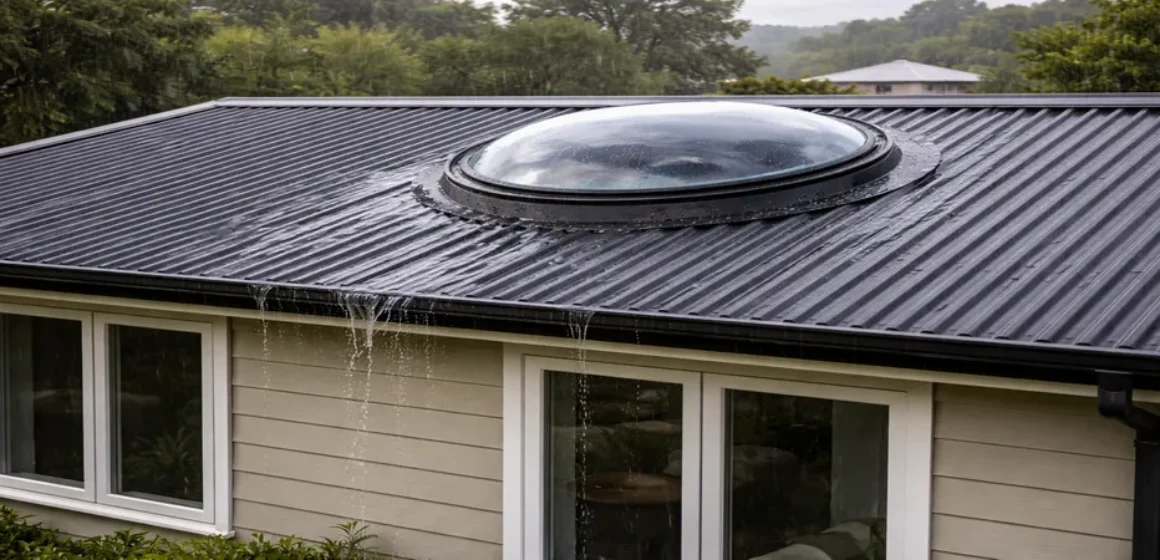
Circular skylights do not sit directly on every roof. They rely on bases and flashings to:
- connect dome to roof profile
- direct water safely past the opening
- keep the system stable under local weather conditions.
The base mismatch
A frequent issue is using a base that is not well suited to the roof type, for example:
- treating all longrun profiles as the same
- underestimating how tiles, membrane roofs or complex junctions behave
- placing a circular dome too close to valleys or step-downs.
The skylight itself may be sound, but the base and flashing arrangement have to work with the roof, not against it.
How to avoid base and flashing mistakes
Ask for clarity on:
- Which base is being used – square or circular – and why?
- How will water move around the skylight in heavy rain?
- Are there any roof features nearby that complicate drainage?
If the answers feel vague, it may be a sign that more design work is needed before choosing exact locations and base types.
4. Under-speccing thickness or material for exposed sites
Thickness and material choices are not about “more is always better”. They should respond to:
- dome size
- roof pitch
- wind zone and general exposure
- how the building is used.
When lighter domes struggle
Problems can arise when:
- a large dome is specified in a thinner acrylic than ideal
- a very exposed ridge line is treated like a sheltered inner roof
- working buildings or high-risk areas are treated like quiet residential settings.
The result can be:
- more flexing than feels comfortable under wind
- increased wear on fixings and seals over time
- a perception that the skylight is less robust than the rest of the roof.
How to align thickness and material with reality
Helpful questions include:
- How exposed is this roof compared with others nearby?
- Is the building primarily residential, working or mixed-use?
- How does dome size relate to recommended thickness for this product?
Putting the size, exposure and use side by side usually leads to clearer decisions between 3 mm and 4.5 mm acrylic, or between acrylic and polycarbonate.
5. Forgetting about the shaft – the “missing middle” between roof and ceiling
Homeowners often focus on the dome they see outside or the opening they see inside. What can be overlooked is the shaft or throat between roof and ceiling.
Common shaft-related issues
Mistakes here can include:
- poorly insulated shafts in otherwise well-insulated homes
- shaft shapes that create odd light patterns or glare
- junctions at ceiling level that are not well sealed.
These can lead to:
- localised heat loss or gain
- condensation risk in colder climates
- a light effect that feels harsh or uneven.
Designing the shaft on purpose
To avoid this, ensure that the shaft design is part of the conversation, not an afterthought. Useful prompts are:
- How will the shaft be insulated and lined?
- Is the shaft straight, flared or shaped to spread light?
- How will the ceiling opening relate to furniture, circulation and how people use the room?
A well-designed shaft can turn a simple dome into a calm, even light source.
6. Overlooking room use, furniture and daily life
Another quiet mistake is treating skylights as a purely architectural gesture, rather than something people live with every day.
Light landing in the wrong place
Without a furniture and activity plan, it is easy to:
- place a skylight directly above TV screens or monitors
- flood a spot where someone will regularly lie down or look up
- ignore how daylight will move across the room at different times.
The result can be:
- glare on screens
- discomfort when using key furniture
- a feeling that the skylight is working against the way the room actually functions.
Planning with daily life in mind
Before finalising locations, consider:
- Where will key furniture sit?
- What activities will happen underneath or nearby?
- Do you need strong drama, gentle light, or a balance of both?
A simple sketch of furniture and circulation often reveals better skylight positions.
7. Assuming “any installer” or “any roofer” will do
Circular skylights sit at the meeting point of:
- product knowledge
- roof construction
- local climate behaviour.
A recurring issue is assuming that anyone who works on roofs will automatically understand all three.
What can go wrong
Without relevant experience, there is a risk that:
- product-specific guidelines are not followed
- flashings are adapted from other details rather than designed for the skylight
- climate-specific issues like wind uplift or driven rain are under-estimated.
Choosing experience as carefully as products
To reduce this risk, ask potential installers:
- How many circular skylights of this type have you installed?
- Have you worked with similar roofs and exposures in this region?
- How do you approach flashings and bases for circular domes specifically?
Clear, detailed answers are a good sign that the installation will match the quality of the product chosen.
8. Treating maintenance and access as an afterthought
Skylights are long-term elements. They sit on the roof for many years and, like any building component, benefit from occasional checks.
Access issues that only appear later
Common patterns include:
- placing skylights on parts of the roof that are hard to reach safely
- overlooking how future cleaning or inspection will be carried out
- assuming that because something is working now, it will never need attention.
This can make even simple maintenance a challenge.
Planning for safe, realistic upkeep
At design stage, ask:
- How will someone safely access this skylight in future?
- Are there locations that balance light quality with easier access?
- What maintenance rhythm is sensible for this product and site?
A small adjustment in placement can make long-term care much simpler.
9. Turning lessons into a practical planning checklist
The goal is not perfection. It is a skylight that feels well-matched to your home, site and life.
Before you commit to a circular skylight, it can help to pause and review these questions:
- Size and light behaviour
- Does the diameter reflect how you use the room, or just a desire for “more light”?
- Base, flashing and roof fit
- Is the base type and flashing approach clearly explained for your specific roof?
- Material, thickness and exposure
- Has someone considered wind, climate and building use when choosing dome material and thickness?
- Shaft design and insulation
- Do you know how the shaft will be shaped, lined and insulated?
- Room layout and daily life
- Have you checked skylight locations against furniture, screens and movement paths?
- Installer experience
- Are you confident the installer understands both the product and your local conditions?
- Access and maintenance
- Is there a practical plan for safe future inspection and cleaning?
If any of these feel uncertain, that is not a reason to abandon the idea. It is an invitation to ask one more question now, rather than later.
Make an enquiry via Skylights New Zealand
Share a brief description of your room, roof type and what you want the skylight to achieve. A skylight professional can then help you refine decisions so that common circular skylight mistakes NZ homeowners encounter are addressed before work begins.
FAQs – common circular skylight mistakes in NZ homes
Q1. What is the most common mistake people make with circular skylights?
There is rarely a single “most common” mistake. Issues usually come from a mix of size choice, placement, base/flashing detail and how the room is actually used.
Q2. How do I know if a proposed skylight is too big for my room?
Consider furniture layout, room size and how sensitive you are to brightness. If the skylight footprint feels large compared with where people will sit or work, ask about alternative sizes or positions.
Q3. Can circular skylight problems be fixed after installation?
Some issues, such as light control or minor detailing, can be improved. Others may require more significant changes. Early planning remains the best way to avoid complex fixes.
Q4. Is it a mistake to choose a thinner dome just to save cost?
It depends on size and exposure. In some sheltered locations, thinner domes are appropriate. The key is making the choice based on conditions, not just price.
Q5. How can I tell if my installer understands circular skylights well?
Ask about their recent projects with similar products, roofs and climates. Detailed, specific answers are a positive sign.
Q6. Do circular skylights always cause more maintenance?
They add an element that should be checked occasionally, but with good design and access planning, maintenance can be straightforward.