Maintenance, cleaning and lifespan of circular skylights in NZ climates
1. Why a skylight care plan matters more than a “set and forget” mindset
Circular skylights are designed to work quietly in the background.
Most of the time they:
- brighten rooms without you thinking about them
- make stairs and internal spaces safer
- connect daily life to the sky and weather.
They are, however, still building elements exposed to New Zealand weather. A simple, realistic view of circular skylight maintenance NZ can:
- keep performance consistent over many years
- help you budget for periodic care
- prevent small issues from becoming larger ones.
This article focuses on:
- what “normal” wear and ageing looks like
- how coastal, inland and alpine climates differ
- practical cleaning and inspection rhythms
- when to consider replacement or professional assessment.
All scenarios are Illustrative Only. They are based on patterns seen across multiple projects rather than any single home.
2. What a circular skylight is actually doing all day
Before talking about maintenance, it helps to remember what a skylight experiences.
From the outside, a dome and its base are exposed to:
- ultraviolet light
- rain, wind and temperature swings
- debris such as leaves, dust and pollen
- in some regions, salt or frost.
From the inside, the skylight and shaft interact with:
- warm, moist indoor air
- heating and cooling patterns
- everyday use of the room below.
None of this is unusual. Roofs, gutters and windows all experience similar forces. The difference is that skylights combine roof, glazing and internal lining elements in one assembly, so a joined-up view of care is useful.
3. How climate and location shape maintenance patterns
New Zealand’s climates are varied. Two circular skylights of similar design can age differently in different locations.
Coastal zones
In coastal regions such as:
- Northland and Bay of Plenty
- Coromandel and Kapiti Coast
- parts of Auckland and Canterbury’s coastal fringe
skylights experience:
- salt-laden air
- higher humidity
- more frequent wind and driving rain.
This can lead over time to:
- faster build-up of salt film on domes
- more frequent dirt streaking around flashings
- greater attention needed to metal components in the broader roof system.
Inland and plains
Inland areas and plains – such as Waikato, Hawke’s Bay and the Canterbury plains – tend to see:
- temperature swings between hot sun and cool nights
- dust from agriculture, tracks and dry periods
- strong, dry winds at times.
For skylights, this often means:
- dust film on domes during dry spells
- expansion and contraction cycles to be accounted for in detailing
- a need for periodic cleaning even where roofs look “visually clean” from the ground.
Alpine and high-country climates
Areas such as Queenstown, Wanaka and the Mackenzie country experience:
- colder winters and clear-sky days
- frost and occasional snow
- intense sun at certain times of year.
Here, skylights need:
- suitable insulation and shaft detailing to manage condensation risk
- consideration of snow shedding and ice formation on roofs
- realistic expectations around surface weathering over time.
4. What “normal ageing” looks like for circular domes
Circular domes do not look exactly the same on day one and year fifteen. Some change is expected.
Surface weathering
Over time, even with sensible cleaning, you may notice:
- a softening of the original sheen
- fine surface marks from dust and environmental contact
- gradual build-up of minor marks in high-exposure zones.
These signs do not automatically mean the skylight is failing. They are part of the normal life of a roof element.
Optical changes
Very old domes, or those that have been exposed to harsh conditions without cleaning, may develop:
- noticeable cloudiness
- fine cracks or crazing in extreme cases
- visible discolouration compared with newer elements.
At this stage, it can be sensible to seek professional advice about replacement options, especially if light levels or appearance have changed significantly.
5. Cleaning – what tends to work in practice
Detailed cleaning methods vary by product and installer guidance. The aim here is to set principles, not to override specific instructions.
Exterior cleaning principles
In general, safe cleaning routines:
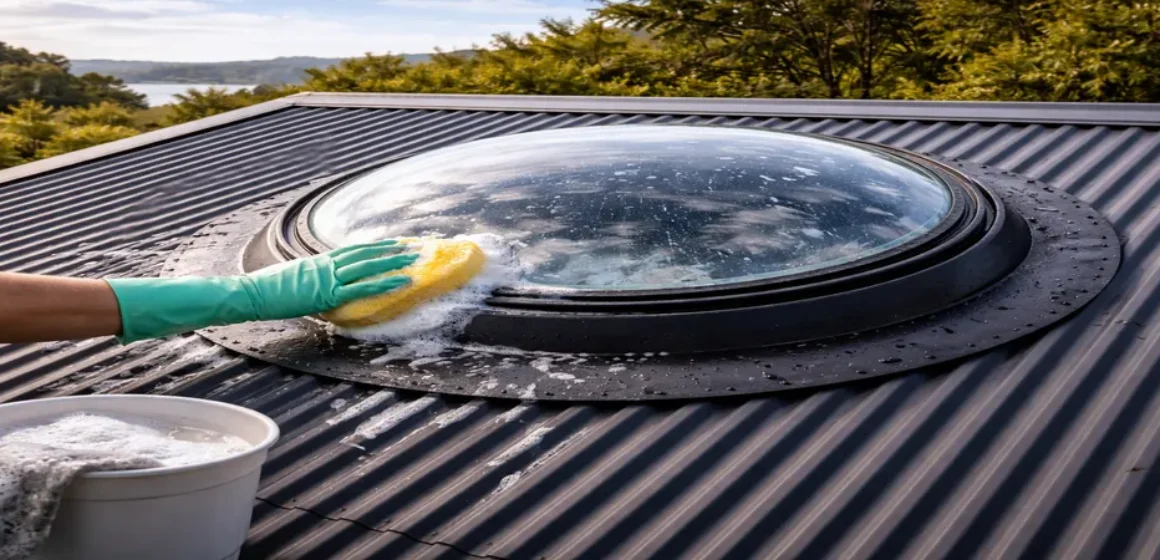
- avoid harsh abrasives and strong solvents on domes
- use soft cloths or sponges with appropriate cleaning solutions
- rely on safe roof access or professional services where heights are involved.
Illustrative Example Only: A homeowner in coastal Tauranga arranges a roof and skylight clean once a year as part of a wider roof, gutter and solar panel maintenance visit.
Interior cleaning
Inside the home, occasional dusting and gentle cleaning of the ceiling opening or diffuser (if present) can help maintain visual clarity. Care should be taken:
- around any seals or trims
- not to introduce moisture into ceiling linings
- to follow product-specific guidance where provided.
6. Inspection: what to look for and how often
Beyond cleaning, periodic inspection helps catch small issues early.
Visual checks from inside
From inside the home, simple signs to note include:
- new or unusual condensation patterns
- visible water staining around the ceiling opening
- noticeable changes in light quality, cloudiness or colour.
If you see these, it does not automatically indicate a serious problem, but it may be worth raising them with a skylight professional.
Visual checks from the ground or nearby vantage points
From outside, without accessing the roof, you can sometimes see:
- obvious debris build-up around domes and bases
- signs of plant growth or persistent dirt streaking
- changes compared with other roof elements.
Professional inspection intervals
A practical approach for many homes is to:
- align skylight inspections with other roof and gutter checks
- seek professional review after major weather events or re-roofing work nearby
- ask your installer what interval they recommend for your climate and product.
7. Lifespan – thinking in ranges, not single dates
There is no single expiry date for all circular skylights. Lifespan depends on:
- material (acrylic, polycarbonate, glass)
- thickness and size
- climate and exposure
- installation quality and maintenance.
Ranges rather than promises
Instead of expecting an exact year, it can be more useful to think in bands:
- a period where only light cleaning and routine checks are expected
- a middle period where some weathering or minor component attention is normal
- a later period where assessment for replacement becomes sensible planning.
Your installer or supplier can provide product-specific guidance, but this mindset helps focus on ongoing performance rather than a fixed date.
Signs it may be time to discuss replacement
You might consider a professional assessment if you notice:
- persistent cloudiness or discolouration that affects light quality
- recurring condensation or moisture issues at the skylight opening
- visible damage or significant surface deterioration.
In some cases, planned replacement can be aligned with other work, such as re-roofing or upgrading insulation.
8. Comfort, safety and realistic expectations
A practical maintenance mindset supports both comfort and safety.
Comfort
Regular care helps ensure that skylights continue to:
- provide clear, pleasant daylight
- support thermal comfort where shaft and insulation are well considered
- integrate smoothly with changes in how you use the room.
Safety
Safe access planning for maintenance and inspection reduces:
- the temptation for DIY work at height without the right equipment
- the likelihood of small issues being ignored
- risks associated with ad hoc visits to hard-to-reach roof areas.
Illustrative Example Only: A homeowner on the Canterbury plains positioned circular skylights where they could be reached from a low-slope section of roof served by a permanent access route, rather than at the highest ridge.
Expectations over time
Seeing skylights as long-term, maintainable elements, rather than fixed objects, can make ownership feel calmer. Some change is normal; the aim is to keep performance and appearance within a range you are comfortable with.
9. A simple circular skylight care checklist for NZ homes
Before and after installation, it can help to keep a short checklist handy.
- Know your climate and exposure
- coastal, inland, plains, alpine or mixed.
- Understand your materials
- acrylic, polycarbonate or glass – and why they were chosen.
- Plan safe access from the start
- where professionals will stand, how they reach the area, and how often.
- Align inspections with other roof care
- combine skylight checks with gutter and roof reviews.
- Notice changes calmly
- condensation, staining or cloudiness are signals to ask questions, not reasons to panic.
- Think in lifespans, not single dates
- plan to review skylights as your roof, insulation and home evolve.
If any of these points raise questions, it is usually a good moment for a conversation rather than a concern.
Make an enquiry via Skylights New Zealand
Share your region, a few photos and a short description of what you have noticed. A skylight professional can help you understand whether your circular skylight maintenance NZ needs are routine, or whether a closer look is worthwhile.
FAQs – maintenance, cleaning and lifespan of circular skylights in NZ
Q1. How often should circular skylights be cleaned in New Zealand?
It depends on climate and exposure. Many homeowners align cleaning with roof and gutter maintenance, often annually or as advised by their installer.
Q2. Do coastal skylights need more maintenance?
They may need more frequent cleaning due to salt and wind-driven debris. Product choice and detailing should also reflect coastal conditions.
Q3. Can I clean my circular skylight myself?
Work at height carries risk. In many cases it is safer to use professionals, especially for multi-storey homes or steep roofs. Always follow product and installer guidance.
Q4. How do I know if my skylight has reached the end of its useful life?
Persistent cloudiness, visible damage, recurring moisture issues or significant changes in light quality can be signals to seek professional assessment.
Q5. Do different materials have different lifespans?
Yes. Acrylic, polycarbonate and glass behave differently over time. Your installer or supplier can explain what to expect for your specific product and climate.
Q6. Will regular maintenance extend the life of my skylight?
Thoughtful cleaning, inspection and timely attention to small issues can support longer, more consistent performance.