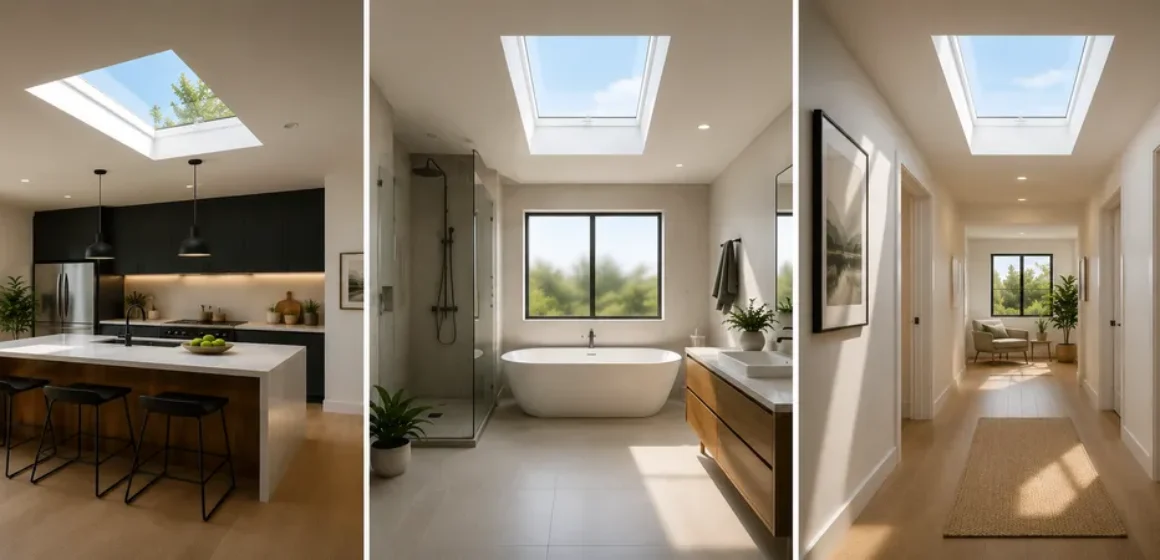
Kitchen, bathroom or hallway first? How to prioritise your first skylight upgrade
Most homeowners do not start with a product decision.
They start with a feeling.
The kitchen feels dull in the morning. The bathroom feels enclosed and steamy. The hallway needs lights on during the day. A spare room is underused. The living area feels darker than it should through winter.
The question is not always whether a skylight could help.
The harder question is where to begin.
Choosing the best room for skylight installation is not about picking the biggest room or the room guests see first. It is about identifying where better daylight would create the strongest everyday value.
For many New Zealand homes, the first-choice room often comes down to three high-impact areas: kitchen, bathroom or hallway. Each one can be a strong candidate, but for different reasons.
This guide explains how to prioritise your first skylight upgrade with a practical, room-by-room framework before you request advice.
The best first room is not always the darkest room
It is easy to assume the darkest room should be first.
Sometimes that is true. But not always.
A room can be very dark and rarely used. Another room may be only moderately dark but used many times a day. In that case, the second room may deliver more value from the first skylight upgrade.
A storage room used once a week may feel darker than the hallway, but the hallway affects the home every day. A guest bedroom may be dull, but the kitchen bench may shape every morning. A bathroom may be small, but it may be used by the whole household before 8am.
The best first room usually has three qualities:
- It is used often
- It has a clear daylight problem
- Better daylight would change how the room feels or functions
That is the starting point.
The first-skylight priority test
Before comparing rooms, score each possible space against five questions.
1. How often is the room used?
A room used daily usually deserves more attention than a room used occasionally.
2. Does it need artificial lighting during the day?
If the light switch is used during daylight hours, the daylight problem may be significant.
3. Would better daylight change the room’s use?
A strong skylight candidate is not just brighter afterwards. It becomes easier, more pleasant or more practical to use.
4. Does the room have other needs too?
Bathrooms and kitchens may also involve ventilation, moisture or airflow. These should be considered before choosing the product.
5. Is the roof and ceiling likely to allow a practical solution?
The room may be the ideal candidate, but the roof, ceiling cavity, framing, services and roof pitch still influence what is possible.
Use these questions before deciding whether the kitchen, bathroom or hallway should come first.
Kitchen first: when the morning work zone needs daylight
The kitchen is one of the strongest skylight candidates because it is used often and for practical tasks.
Many kitchens have windows, but the daylight does not always reach the areas where people actually work. The sink may receive light while the island, bench, pantry wall or preparation zone remains in shadow.
This can be especially noticeable in winter, when breakfast, lunchboxes and early cooking happen before strong daylight reaches the room.
A kitchen may be the best first room when:
- The bench or island needs lights on during the day
- The kitchen is used heavily every morning
- The room has windows but poor light distribution
- A covered deck, eave or nearby structure blocks side light
- The kitchen is part of a renovation or repainting plan
- Better daylight would improve daily tasks
- The working zone feels darker than the rest of the room
Product options to consider
A fixed skylight may suit a kitchen where stronger overhead daylight is needed over the working area.
A vented skylight may be worth considering if the kitchen also needs high-level airflow and the roof and room conditions suit it.
A tubular skylight or Sky tube may suit a smaller kitchen, pantry, scullery or darker transition zone.
The key kitchen question
Do not ask only, “Can we add a skylight to the kitchen?”
Ask:
Where does the kitchen need daylight most?
If the answer is the bench, island or preparation zone, placement becomes critical.
Bathroom first: when daylight, privacy and moisture overlap
Bathrooms are small rooms with large expectations.
They need privacy, functional light, good ventilation, moisture management and a clean feeling. In many NZ homes, bathrooms have small frosted windows, shaded side walls or limited natural light. In winter, they may feel dull and steamy at the same time.
A bathroom may be a high-value first skylight location because it is used every day, often by the whole household.
A bathroom may be the best first room when:
- The light is needed during daytime use
- The bathroom feels enclosed even when clean
- The window is small, frosted or shaded
- Privacy limits wall-window options
- Steam or condensation is part of the issue
- The bathroom is due for renovation, painting or extraction review
- The room affects the morning routine heavily
Product options to consider
A tubular skylight or Sky tube may suit a compact bathroom where practical daylight is the main goal.
A fixed skylight may suit a larger bathroom or a bathroom renovation where a stronger daylight feature is wanted.
A vented skylight may suit some bathrooms where daylight and airflow are both relevant.
The key bathroom question
Is the problem daylight, ventilation or both?
A skylight can improve daylight. A vented skylight may support airflow in suitable rooms. But steam and condensation may still need proper extraction, heating and ventilation habits.
A bathroom skylight decision should never confuse brightness with complete moisture control.
Hallway first: when the centre of the home feels forgotten
Hallways are often underestimated.
They are not usually feature rooms, but they affect how the whole home feels. A dark hallway can make bedrooms feel disconnected, bathrooms feel less fresh and the centre of the home feel closed in.
In many homes, a hallway has no direct window. It borrows light from nearby rooms, doors or the front entry. In winter, borrowed light is often not enough.
A hallway may be the best first room when:
- The hallway light is used during the day
- The passage sits in the centre of the home
- It connects bedrooms, bathroom, laundry and living areas
- It feels narrow, gloomy or disconnected
- The rest of the home feels acceptable but the middle feels dark
- A subtle daylight improvement would change daily movement
- The hallway is used constantly by the household
Product options to consider
A tubular skylight or Sky tube is often a strong option for hallways because the room usually needs practical daylight rather than a large skylight feature.
A fixed skylight may suit a wider entry hall, landing, stairwell or architectural hallway where a stronger visual result is wanted.
The key hallway question
Does this hallway affect the way the whole home feels?
A hallway upgrade may not look dramatic on paper, but it can be noticed many times a day.
Kitchen vs bathroom vs hallway: how to compare them
Each room offers a different type of value.
Choose the kitchen first if:
- The working area is dark
- The room is used heavily every day
- Better daylight would improve cooking, breakfast or family routines
- The kitchen is already being renovated or refreshed
- A fixed skylight would bring light where windows cannot
Choose the bathroom first if:
- The room feels enclosed, dull or steamy
- Privacy limits natural light from windows
- The bathroom is used by several people each morning
- You are already considering ventilation, painting or renovation
- Daylight and airflow both need assessment
Choose the hallway first if:
- The centre of the home feels dark
- The hallway needs lights on during the day
- Multiple rooms connect through it
- A tubular skylight or Sky tube could improve daily movement
- The whole home feels less connected because the middle is gloomy
The best first room is the one where the improvement would be felt most often.
The daily-use scoring method
Use this scoring system to compare your top rooms.
Score each room from 1 to 5.
Daily use
1 = Rarely used
3 = Used most days
5 = Used many times daily
Daylight problem
1 = Slightly dull
3 = Often dark in winter
5 = Needs artificial lighting during the day
Practical impact
1 = Mostly visual improvement
3 = Improves comfort or usability
5 = Changes a daily routine or repeated task
Product fit
1 = Unclear or difficult
3 = May be suitable
5 = Strong candidate for fixed, vented, tubular skylight or Sky tube assessment
Household priority
1 = Low concern
3 = Noticed regularly
5 = A room the household complains about often
Add the score.
- 5 to 10: Lower priority
- 11 to 15: Worth reviewing
- 16 to 20: Strong candidate
- 21 to 25: High-priority first skylight room
This is not a technical assessment. It is a practical decision filter.
The room nobody mentions may be the right answer
Sometimes the best first skylight upgrade is not the room first mentioned.
A homeowner may ask about a living room because it is the largest room. After reviewing the home, the hallway may be the stronger candidate because it is used constantly and has no direct light.
Another homeowner may ask about a bedroom, but the kitchen may have a clearer daylight problem because the bench needs artificial lighting every morning.
Another may ask about a bathroom skylight, but the true issue may be heavy steam and poor extraction, meaning ventilation needs to be addressed alongside daylight.
The first room should be chosen through use, not assumption.
That is how a skylight decision becomes more strategic.
What about living rooms, bedrooms and offices?
Kitchen, bathroom and hallway are common first choices, but they are not the only good options.
A living room may be the best first room if it is used daily and feels under-lit away from the windows.
A bedroom may be the best first room if it doubles as an office, feels dull all day or needs privacy-friendly daylight.
A home office may be the best first room if it is used for long periods and relies on artificial lighting through winter.
A laundry may be the best first room if it is dark, internal and used often.
The principle remains the same.
Choose the room where daylight creates the greatest daily value.
Product choice after room priority
Once the first room is chosen, product selection becomes easier.
Fixed skylight
Often suitable when the room is larger or needs stronger daylight.
Common first-room examples:
- Kitchen
- Living room
- Bedroom
- Home office
- Larger bathroom
Vented skylight
Worth considering when the room needs daylight and airflow.
Common first-room examples:
- Bathroom
- Kitchen
- Upper-level room
- Raked-ceiling space
Tubular skylight or Sky tube
Often suitable when the room is compact, internal or mainly needs practical daylight.
Common first-room examples:
- Hallway
- Laundry
- Toilet
- Walk-in wardrobe
- Pantry
- Compact bathroom
The product should follow the room’s purpose.
Avoid choosing the product first and forcing it onto the room.
Roof and ceiling realities still matter
The best room on paper still needs to be practical to install.
Before a recommendation can be confirmed, the roof and ceiling need consideration.
Important factors include:
- Roof type
- Roof pitch
- Roof condition
- Flashing requirements
- Roof cavity depth
- Rafters or trusses
- Electrical wiring
- Plumbing or ducting
- Existing downlights, fans or vents
- Ceiling type
- Internal finishing requirements
- Safe roof access
- Weather exposure
For example, the kitchen may be the strongest room, but the ideal skylight position may conflict with framing or roof features. The hallway may be a strong candidate, but the tube path for a tubular skylight must be workable. The bathroom may need a vented skylight, but extraction and roof suitability still need review.
This is why room priority and technical assessment work together.
Renovation timing can change the priority
The first room may also depend on timing.
A room due for renovation, painting, ceiling work or roofing may be a better first candidate because the skylight can be coordinated with other trades.
For example:
- A kitchen renovation may be the right time to plan a fixed skylight
- A bathroom refresh may be the right time to consider daylight and ventilation
- A hallway repaint may be the right time to add a tubular skylight
- A re-roof may be the right time to plan one or more skylights
- Ceiling repairs may create an opportunity for internal finishing
This does not mean you should install a skylight only during renovation work.
Many skylights can be retrofitted. But when other work is already planned, daylight should be discussed early to avoid rework.
Budget and value: think in daily use, not only room size
A skylight upgrade should be judged by how often it improves the home.
A hallway may be small, but it may be used 30 times a day. A bathroom may be compact, but it may be used by everyone. A kitchen may be expensive to renovate, but a well-placed skylight may improve the working area without changing the whole room.
Think of value this way:
- How often will this daylight be noticed?
- How much does the room currently frustrate the household?
- Will the upgrade reduce daily reliance on artificial lighting in suitable conditions?
- Will it make the room feel more usable?
- Does it solve a practical problem, not just a visual preference?
The highest-value first room is often the one with the clearest daily benefit.
Common mistakes when choosing the first room
Mistake 1: Choosing the largest room automatically
The largest room is not always the highest-impact room.
Mistake 2: Choosing the darkest room without considering use
A dark room used rarely may be a lower priority than a moderately dark room used every day.
Mistake 3: Ignoring ventilation
Bathrooms and kitchens may need ventilation assessed separately from daylight.
Mistake 4: Choosing the product before choosing the room
The room should guide the product, not the other way around.
Mistake 5: Forgetting roof and ceiling constraints
The best room still needs a suitable installation path.
Mistake 6: Waiting until after renovation decisions are locked in
If other trades are involved, skylight planning should happen early.
What to send when asking for advice
To help identify the best first room, send information for your top one to three candidate rooms.
For each room, include:
- Photos from several angles
- A photo of the ceiling area
- A photo of the darkest area
- Photos of the roof above or near the room if possible
- Notes on when the room feels darkest
- Whether lights are used during the day
- Whether ventilation, privacy, glare or moisture are concerns
- Roof type if known
- Ceiling type if known
- Any renovation, painting or roofing plans
You can also explain which rooms bother you most.
A good recommendation should help you prioritise, not simply quote the first room mentioned.
Illustrative example only
A homeowner is deciding between the kitchen, bathroom and hallway.
The kitchen is used every morning, but the bench receives reasonable daylight by mid-morning. The bathroom feels dull and steamy, but extraction may also need attention. The hallway has no natural light, needs the light on during the day and connects every bedroom to the bathroom and living area.
In this case, the hallway may be the best first daylight upgrade because it affects the centre of the home all day. A tubular skylight or Sky tube may be worth assessing.
The bathroom may still be important, but it needs a broader daylight and ventilation discussion.
The kitchen may become a later priority if the work zone remains under-lit.
The right first choice comes from daily impact, not guesswork.
The best first skylight room should feel obvious afterwards
A well-prioritised skylight upgrade often feels obvious once it is done.
The hallway no longer feels forgotten. The kitchen bench works better in the morning. The bathroom feels less enclosed. The office feels less flat. The laundry becomes easier to use.
The room does not need to become dramatic.
It needs to become better in a way the household notices repeatedly.
That is the marker of a strong first skylight upgrade.
Planning your next step
If you are unsure whether your kitchen, bathroom, hallway or another room should come first, start by comparing daily use, daylight problem and practical impact.
Skylights.co.nz can help you consider whether a fixed skylight, vented skylight, tubular skylight or Sky tube may suit your highest-priority room, roof type and desired outcome.
To start planning your options, use the Skylights.co.nz enquiry form:
https://inquiry.skylights.co.nz/inquiry
You may also find these useful:
FAQs
What is the best room for skylight installation?
The best room for skylight installation is usually the room where better daylight will create the strongest daily value. Kitchens, bathrooms, hallways, living rooms, bedrooms, offices and laundries can all be strong candidates depending on use and daylight need.
Should I install a skylight in the kitchen or bathroom first?
Choose the kitchen first if the working area is dark and used heavily. Choose the bathroom first if privacy, poor daylight and moisture are key concerns. The right choice depends on which room affects daily life more.
Is a hallway a good first room for a skylight?
Yes, a hallway can be an excellent first room if it needs lights during the day and affects the centre of the home. A tubular skylight or Sky tube is often worth considering for dark internal hallways.
Should I choose the darkest room first?
Not always. The darkest room may not be the best first choice if it is rarely used. A room used many times a day may deliver more value even if it is not the darkest room in the home.
What type of skylight suits each room?
Fixed skylights often suit kitchens, living rooms, bedrooms and offices. Vented skylights may suit bathrooms, kitchens and upper-level rooms where airflow matters. Tubular skylights and Sky tubes often suit hallways, laundries, toilets, wardrobes and compact bathrooms.
What should I send when asking which room should get a skylight first?
Send photos of your top candidate rooms, including the ceiling, darkest area and roof if possible. Also explain when each room feels darkest, how often it is used, and whether ventilation, privacy or glare are concerns.