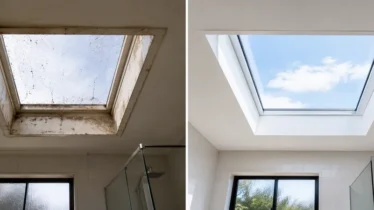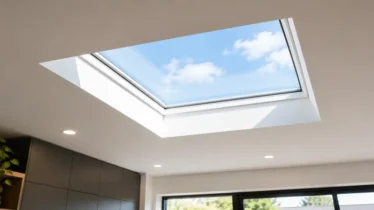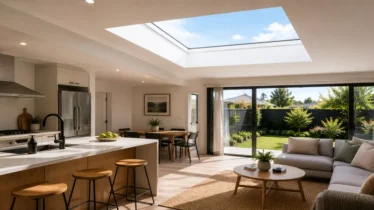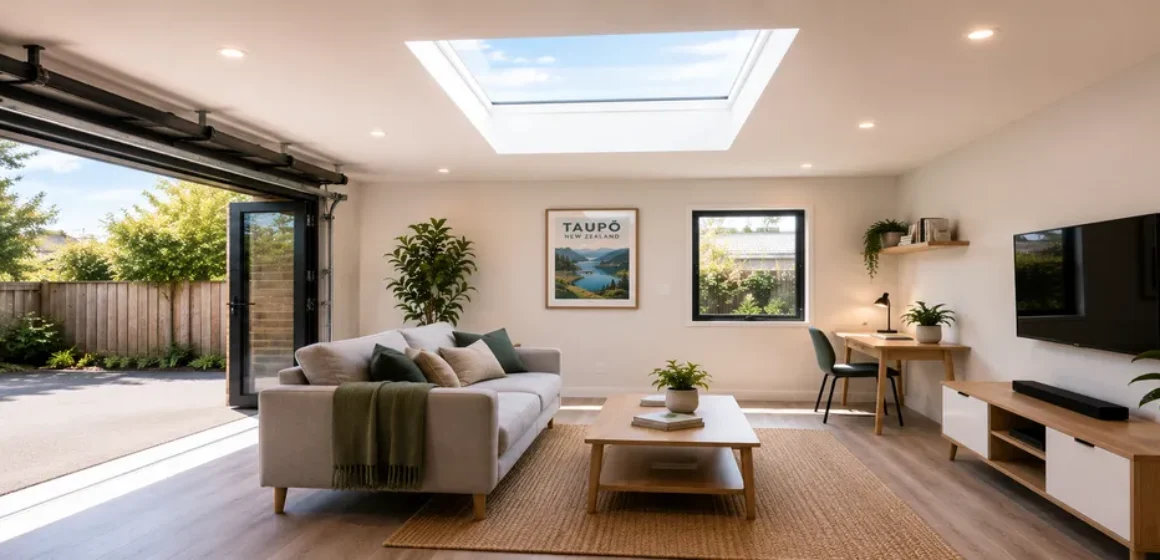
Garage-to-Living Conversions in Waikato Homes: When a Skylight May Help the New Room Work
A garage conversion can sound simple at first.
There is already a roof. There are walls. There may be a concrete floor, power, a door to the house and enough space for a bedroom, office, rumpus room, studio, guest room or second living area. For Waikato homeowners wanting more usable space, converting a garage can feel like a practical way to make the home work harder.
But once the room starts being used as living space, one issue often becomes clear.
It may not feel like a proper room.
The converted space may feel darker than the rest of the home. The windows may be small or poorly placed. The former garage door area may not provide enough natural light. The ceiling may feel low. The room may rely heavily on artificial lighting. Even after lining, painting, flooring and furnishing, the space can still feel like a converted garage rather than a natural part of the home.
For homeowners considering a skylight garage conversion Waikato project, the question is not simply whether a skylight can make the space brighter.
The better question is:
Can overhead daylight help the converted room feel more usable, more comfortable and more connected to the home?
A fixed skylight may suit some garage-to-living conversions where stronger natural light is needed. A tubular skylight or Sky tube may suit smaller converted rooms, internal zones, hallways, storage areas or bathroom additions. A vented skylight may be worth considering where airflow is also part of the room’s challenge.
This guide explains how to think clearly about skylights for garage conversions in Waikato homes before making an enquiry.
Why garage conversions often struggle with daylight
Garages are not usually designed like living rooms.
They are designed for vehicles, storage, tools, bikes, freezers, laundry overflow, workshop use and access. Even when a garage has windows, those windows are often smaller or placed for utility rather than comfort.
When a garage becomes a living space, the expectations change.
A converted garage may need to work as:
- A bedroom
- A rumpus room
- A home office
- A studio
- A guest room
- A teenage retreat
- A second lounge
- A hobby room
- A small rental-style space
- A playroom
- A gym or wellness room
These uses need more than walls and flooring. They need daylight, ventilation, comfort, insulation, heating, privacy, safe access and a layout that feels intentional.
Natural daylight is often one of the hardest parts to get right.
A room that was acceptable as a garage may feel dull, flat or enclosed once someone expects to relax, sleep, work or spend time there.
That is where a skylight may become part of the conversation.
The Waikato winter test for garage conversions
Winter is often when garage conversions reveal whether they are working properly.
During June, July and August, natural daylight is weaker and shorter. A converted garage may feel especially dull if it sits on the shaded side of the house, has limited window openings, connects poorly to the main living area or relies on the old garage layout.
Before choosing a skylight, assess the room during the day with the lights off.
Ask:
- Does the converted space feel like a real room?
- Is artificial lighting needed during daylight hours?
- Does the daylight reach the area where people sit, work or sleep?
- Does the room feel darker than the rest of the home?
- Is the former garage door area bringing in enough light?
- Are privacy coverings reducing useful daylight?
- Is the room dark, stuffy, cold-looking or all three?
- Does the ceiling feel low or closed in?
- Would overhead daylight improve the way the space is used?
- Is the room still being planned, or has the conversion already been completed?
This test helps clarify whether the room needs daylight, airflow, layout improvement or broader building work.
A skylight can help some converted spaces, but it should be considered as part of the full room performance, not as a quick fix for every issue.
Daylight can help a converted space feel less like a garage
One of the biggest challenges with garage conversions is perception.
Even after renovation work, the space can still feel different from the rest of the home. This may be because of ceiling height, floor level, window placement, wall proportions, room depth, access route or lack of natural light.
Overhead daylight may help when the room feels:
- Flat
- Internal
- Low-ceilinged
- Disconnected
- Too dependent on electric lighting
- More like a utility room than a living space
- Darker than adjoining rooms
- Less comfortable for long use
A skylight can create a stronger daylight connection from above. A tubular skylight or Sky tube can provide subtle practical brightness in smaller or internal zones. A vented skylight may support airflow in suitable situations.
However, daylight alone will not make a garage conversion successful.
The room also needs proper planning around insulation, heating, ventilation, moisture, compliance, access, flooring, ceiling, drainage, privacy and intended use.
A skylight may support the outcome, but it should not be expected to carry the whole conversion.
Consent, compliance and professional advice
Garage-to-living conversions need careful planning.
Changing a garage into a habitable room can involve building code, council, insulation, weathertightness, moisture, ventilation, fire safety, drainage, structure, access and electrical considerations. The exact requirements depend on the property, the intended room use and the scope of work.
Before treating a garage as a bedroom, office, studio or living room, homeowners should get suitable professional advice.
This may involve:
- Checking whether consent is required
- Reviewing the existing garage structure
- Assessing the floor, walls and ceiling
- Considering insulation and heating
- Reviewing ventilation
- Checking moisture and dampness risk
- Reviewing windows and natural light
- Assessing electrical work
- Considering fire separation or access issues
- Confirming whether the proposed use is appropriate
A skylight should be considered within that wider process.
It may help improve daylight and, in some cases, airflow if a vented option is suitable. But it does not replace proper building advice or compliance planning.
For garage conversions, the room must work as a habitable space, not just look brighter.
When a fixed skylight may suit a garage conversion
A fixed skylight may be worth considering when the converted garage needs stronger natural daylight and airflow is not the main issue.
It may suit:
- Rumpus rooms
- Second lounges
- Home offices
- Studios
- Guest rooms
- Hobby rooms
- Playrooms
- Larger converted spaces
- Rooms where a stronger daylight opening is wanted
A fixed skylight can help the room feel more open and less dependent on side windows. It may be particularly useful where the existing window openings are limited or where privacy prevents larger wall windows from being practical.
However, fixed skylights need proper planning.
Consider:
- Where the daylight will land
- Whether the room has a low ceiling
- Whether the skylight will feel proportional
- Whether glare could affect screens or work areas
- Whether blinds may be needed
- Whether the roof above is suitable
- Whether the ceiling structure allows the installation
- Whether the room is used for sleeping
- Whether summer comfort needs light control
A fixed skylight improves daylight. It does not provide ventilation.
If the converted room also feels stuffy, ventilation needs separate assessment.
When a tubular skylight or Sky tube may be better
A tubular skylight or Sky tube may suit some garage conversions, especially where the space is compact or has internal zones that need practical daylight.
This may include:
- Small converted offices
- Internal hallways
- Storage alcoves
- Ensuite or bathroom additions
- Laundry corners
- Utility spaces
- Converted garage entries
- Walk-in wardrobes
- Compact guest rooms
- Dark corners within a larger conversion
A tubular skylight brings daylight from the roof through a reflective tube and delivers it through a ceiling diffuser. This can be useful where the goal is soft, practical daylight rather than a large visible skylight.
For example, a garage conversion may include a small office plus storage area. The main room may need a fixed skylight, but the internal storage or hallway section may only need a tubular skylight or Sky tube.
A tubular skylight does not provide ventilation by itself. If the room needs airflow, that should be considered separately.
Tube path, roof type, roof pitch, ceiling location and obstructions all need assessment.
When a vented skylight may be worth considering
A vented skylight may be relevant when the converted garage needs both daylight and airflow.
This may apply to rooms that feel:
- Stuffy
- Closed in
- Warm in summer
- Poorly ventilated
- Dependent on small windows
- Used for long periods
- Connected to limited cross-flow
- More internal than expected
A vented skylight can support airflow in suitable situations by allowing air to escape from a higher point in the room.
However, it should not be treated as the full ventilation solution.
Garage conversions may need proper ventilation planning as part of the wider building work. Depending on the room use, windows, extraction, heating, moisture control and insulation may all matter.
A vented skylight may be a useful part of the plan, but it should not be chosen just because it sounds more complete.
The room should justify the extra function.
If the main problem is daylight only, a fixed skylight, tubular skylight or Sky tube may be more suitable.
Garage-to-bedroom conversions
Converting a garage into a bedroom needs especially careful thinking.
A bedroom must support sleep, privacy, daylight, ventilation, temperature comfort and everyday use. A garage that was not designed as a bedroom may feel dark, low, cold-looking or disconnected unless the conversion is properly planned.
A skylight may be worth considering where:
- The bedroom lacks useful natural light
- Wall windows are limited by privacy or boundary issues
- The room feels flat during the day
- The ceiling and roof layout are suitable
- Light control can be managed
- The room needs to feel more connected to the home
However, bedroom skylights require caution.
Consider:
- Blinds
- Sleep comfort
- Morning light
- Summer brightness
- Bed position
- Privacy
- Glare
- Ventilation
- Heating and insulation
- Whether the room will be used daily
A tubular skylight or Sky tube may suit some compact sleeping spaces where softer daylight is preferred. A fixed skylight may suit larger rooms where stronger daylight is wanted. A vented skylight may be discussed if airflow is also a genuine concern.
The skylight should support the bedroom’s comfort, not just brighten the conversion.
Garage-to-office conversions
A garage-to-office conversion can be practical for homeowners who need separation from the main living spaces.
But home offices need good daylight planning.
A converted garage office may have enough room for a desk, shelves and storage, but still feel dull if daylight is limited. It may also suffer from screen glare if light is introduced poorly.
A skylight may help where:
- The office feels dark during the day
- The desk area lacks useful natural light
- The existing windows are small or privacy-limited
- The room is used for long work periods
- The ceiling and roof layout are suitable
- The homeowner wants the office to feel less like a converted garage
Placement must consider:
- Desk position
- Screen direction
- Video calls
- Glare
- Artificial lighting
- Blinds
- Ventilation
- Summer comfort
A fixed skylight may suit a larger permanent office. A tubular skylight or Sky tube may suit a smaller office where softer daylight is enough. A vented skylight may be worth discussing if the room also feels stuffy.
The aim is a working environment, not just a brighter room.
Garage-to-rumpus or second living room conversions
A garage converted into a rumpus room, playroom or second lounge needs daylight that supports longer use.
These spaces may be used by children, teenagers, guests or family members. If the room feels dark, it may become underused despite the effort of converting it.
A skylight may be worth considering where:
- The room feels flat in winter
- The seating or play area lacks daylight
- The space has limited windows
- The former garage door area does not provide enough brightness
- The room feels disconnected from the main house
- The roof and ceiling layout are suitable
A fixed skylight may suit a larger rumpus or second living room where stronger overhead daylight is wanted. A tubular skylight or Sky tube may help adjoining storage areas, internal hallways or compact zones.
If the room is used for screens, games or television, glare needs careful planning.
Daylight should make the room more comfortable, not harder to use.
Garage-to-studio or hobby room conversions
A studio or hobby room may need more targeted daylight than a general living space.
The room might be used for art, sewing, music, craft, fitness, repair work, photography, teaching, consulting or creative projects. Each use has different light needs.
A skylight may help where:
- The workspace lacks daylight
- Artificial lighting makes colours harder to judge
- The room feels enclosed during long sessions
- Side windows are limited
- Privacy matters
- The roof and ceiling layout are suitable
However, not every studio benefits from strong overhead daylight.
Some activities need controlled light. Some need glare reduction. Some need ventilation. Some may need artificial task lighting more than skylights.
Before choosing a product, identify the room’s main use.
A fixed skylight may suit a creative studio where natural daylight is wanted. A tubular skylight or Sky tube may suit softer general brightness. A vented skylight may suit some fitness or hobby rooms where airflow is also important.
The skylight should support the activity.
Converted garages and low ceilings
Many garages have lower-feeling ceilings than the rest of the home, especially after lining, insulation or services are added.
A skylight can sometimes help a room feel less compressed by bringing daylight from above. But the scale needs care.
A large skylight in a low-ceiling room may feel visually heavy or create too much brightness in one area. A smaller fixed skylight or tubular skylight may be more appropriate depending on the room size.
Consider:
- Ceiling height
- Ceiling shape
- Room width
- Furniture placement
- Window locations
- Existing lighting
- Desired daylight level
- Whether the skylight should be subtle or visible
- Whether blinds may be needed
- Whether the roof above supports the preferred placement
A low ceiling does not automatically rule out a skylight.
It simply means proportion and placement matter.
The goal is to make the room feel better, not make the ceiling feel busier.
Privacy and boundary constraints
Garages are often located near driveways, streets, neighbours or boundaries.
When converted into living space, privacy can become a major issue. Wall windows may face areas where homeowners do not want more exposure. This can limit how much daylight can be gained through side windows.
A skylight may help because it brings daylight from above.
This may be useful where:
- The converted room faces the driveway
- The room is close to a boundary
- Side windows face neighbours
- Street privacy matters
- Wall window changes are limited
- Curtains or blinds reduce daylight
- The homeowner wants daylight without more external exposure
Privacy from above should still be considered, especially on sloped sites, near two-storey neighbours or where the roof angle creates sightline issues.
But in many garage conversions, overhead daylight can be a practical way to improve the room without relying entirely on wall windows.
Ventilation and moisture in garage conversions
Garage conversions need careful moisture and ventilation thinking.
Garages may have different floor, wall and ventilation conditions from the rest of the home. When the space becomes habitable, dampness, condensation, airflow and heating need to be considered properly.
A skylight can help with daylight.
A vented skylight may support airflow in suitable conditions.
A tubular skylight or fixed skylight does not provide airflow by itself.
Moisture or ventilation concerns may relate to:
- Concrete floors
- Insulation
- Heating
- External walls
- Window placement
- Lack of cross-flow
- Garage door replacement
- Drainage
- Previous leaks
- Laundry or utility use nearby
- How the new room will be occupied
A skylight should not be promoted as a cure for dampness.
If the converted garage feels damp, musty or poorly ventilated, that should be assessed as part of the wider conversion plan.
Daylight may make the room feel better, but moisture control needs its own solution.
Heating and insulation are separate from daylight
A converted garage may feel cold as well as dark.
These two issues often get described together, but they are not the same.
A skylight may improve daylight and make the room feel more pleasant during the day. It may help the room look less like a former garage. But it should not be treated as the answer to heating or insulation problems.
A cold converted room may need attention to:
- Wall insulation
- Ceiling insulation
- Floor insulation
- Draughts
- Heating
- Window performance
- Moisture
- Ventilation
- External cladding or garage door replacement
- General building condition
A skylight should sit within a broader room-performance plan.
If the room is physically cold, solve that properly. If the room is dark, overhead daylight may be part of the solution.
Both issues matter, but they need different answers.
Glare and screen use
Many garage conversions become media rooms, offices, teenage retreats or second lounges.
These rooms often include screens.
A skylight can create glare if placed poorly, especially on:
- Televisions
- Computer monitors
- Gaming screens
- Gloss desks
- Polished floors
- Glass doors
- Framed artwork
- White walls
- Reflective furniture
Before choosing placement, consider:
- Where people sit
- Where the screen is located
- Whether the desk or TV can move
- Whether blinds may be needed
- Whether the room is used during the day
- Whether a tubular skylight would provide softer light
- Whether a fixed skylight would create too much contrast
A skylight should improve the converted room’s usability.
It should not make the room harder to work, relax or play in.
Skylight placement in a converted garage
Placement should follow the intended use of the new room.
In a garage-to-living conversion, daylight may need to support:
- The seating area
- A desk
- A bed
- A play zone
- A studio workbench
- A reading area
- A transition from the house
- A kitchenette or utility area
- An internal hallway
- A bathroom or ensuite
- The darkest back section
Do not choose placement only because the roof looks easy.
Ask:
- Where will people spend the most time?
- Where does the room feel darkest?
- Where will furniture go?
- Will screens be used?
- Will someone sleep in the room?
- Is privacy important?
- Would a full skylight or tubular skylight suit better?
- Is airflow also needed?
- What does the roof structure allow?
The best skylight placement should support the future room, not the old garage.
Roof and ceiling considerations
A garage conversion skylight must work with the roof and ceiling structure.
Important considerations include:
- Roof type
- Roof pitch
- Roof profile
- Flashing requirements
- Roof condition
- Water flow direction
- Nearby valleys, ridges or gutters
- Existing roof penetrations
- Garage roof structure
- Ceiling cavity depth
- Rafters or trusses
- Wiring
- Plumbing
- Ducting
- Insulation
- Existing lights or sensors
- Internal finishing requirements
- Access for installation
Some garages may have different roof structures or lower ceiling cavities than the main home. Some may sit under a separate roofline. Some may be attached to the house but framed differently.
This makes assessment important.
For tubular skylights and Sky tubes, the tube path matters. For fixed and vented skylights, framing, flashing and internal lining need proper planning.
The roof above the converted room must support the chosen product.
Garage door replacement and daylight
Many garage conversions involve replacing the garage door with a wall, window, door, cladding or another finished frontage.
This change can affect how much wall-level daylight enters the new room.
Before choosing a skylight, consider:
- Will the garage door be replaced with a window or door?
- How much daylight will the new wall provide?
- Will privacy coverings reduce that daylight?
- Will the new windows face the street or driveway?
- Will the room still have a dark back section?
- Could overhead daylight support the deeper part of the room?
- Should skylight planning wait until the new frontage is designed?
A skylight may still be useful even if new windows are added, especially if the room is deep or the window light does not reach far enough.
However, skylight planning should work with the conversion design, not against it.
The best approach is to consider wall daylight and overhead daylight together.
Artificial lighting still matters
A skylight does not remove the need for good artificial lighting.
Converted garages often need careful lighting because the room may be used in many ways and may not have the same ceiling proportions as the rest of the home.
A good lighting plan may include:
- Natural daylight from a skylight, tubular skylight or Sky tube
- Ceiling lighting
- Task lighting
- Wall lighting
- Desk lighting
- Reading lights
- Dimmable options
- Sensor lighting for entry areas
- Lighting for night use
- Lighting that supports the new room function
A skylight supports daytime use. It does not replace artificial lighting for evenings, early mornings, dark weather or task work.
A garage conversion should feel like a complete room at all times of day.
That usually means layered lighting, not a skylight alone.
Renovation timing
The best time to consider a skylight is early in the garage conversion planning process.
Once walls, insulation, ceilings, electrical work, flooring and furniture placement are finalised, skylight placement may become more difficult.
Early planning can help coordinate:
- Skylight location
- Ceiling framing
- Insulation
- Electrical layout
- Lighting placement
- Ventilation
- Heating
- Window placement
- Privacy planning
- Internal lining
- Roofing work
- Consent and compliance discussions
- Furniture layout
If the garage conversion is already completed, a skylight may still be possible, but the options may be more limited by existing finishes and services.
For Waikato homeowners planning a winter or spring conversion, daylight should be discussed before the room layout is locked in.
It is easier to plan the room around daylight than to add daylight after the room feels wrong.
When a skylight may not be the first answer
A skylight may not be the best first step in every garage conversion.
Other issues may need attention first if:
- The conversion has not addressed compliance
- The room is physically cold or damp
- Ventilation is inadequate
- The roof above is unsuitable
- Wall windows are not yet designed
- The layout is still changing
- The main issue is poor artificial lighting
- The room will mostly be used at night
- Glare would be difficult to manage
- The room needs insulation or heating before daylight
- The homeowner expects a skylight to solve all room comfort issues
This does not mean a skylight is not useful.
It means the room’s basics should be right first.
A skylight can improve daylight, but a successful garage conversion needs the whole space to perform as a proper room.
Common mistakes with garage conversion skylights
Adding a skylight after the room already feels wrong
Daylight should be considered early, not as a last-minute fix.
Ignoring compliance and building requirements
A converted garage needs proper planning beyond appearance.
Treating daylight as a solution for dampness or cold
Moisture, heating and insulation need separate attention.
Placing the skylight without knowing the room layout
Furniture, beds, desks and screens affect placement.
Choosing a fixed skylight when a tubular skylight would be enough
Some internal zones need practical daylight, not a large feature.
Choosing a vented skylight without a real airflow need
Extra function should solve a genuine problem.
Forgetting blinds
Bedrooms, offices and media rooms may need light control.
Ignoring the old garage roof structure
The roof above the conversion may not behave like the main house roof.
Avoiding these mistakes helps create a converted room that feels more intentional and easier to use.
The Waikato garage conversion daylight test
Before asking for a skylight quote, assess the proposed or existing converted space carefully.
Ask:
- What will the room be used for?
- Does the space feel like a proper room?
- Is natural daylight limited?
- Where does the daylight currently enter?
- Does the daylight reach the main use area?
- Is artificial lighting needed during the day?
- Will the old garage door be replaced with windows?
- Will privacy coverings reduce wall-window daylight?
- Is the room dark, cold-looking, stuffy or damp-feeling?
- Is the roof above suitable?
- Would a fixed skylight, vented skylight, tubular skylight or Sky tube suit the room?
- Is the conversion still in planning, or already completed?
These questions help identify whether a skylight is part of the right solution.
They also help clarify which product type may suit the room best.
Illustrative example only
A Waikato homeowner is converting an internal access garage into a home office and guest room. The former garage door will be replaced with a wall and window, but the room is deep, and the back section still feels dull. The desk is planned near the rear wall, away from the new window.
The homeowner asks whether a skylight could help.
A fixed skylight may be worth considering if the rear part of the room needs stronger daylight and glare can be managed around the desk and guest bed. A tubular skylight or Sky tube may be more suitable if the goal is softer general brightness in a compact area. If the room also feels stuffy, a vented skylight may be discussed, but ventilation should be considered as part of the broader conversion plan.
The skylight decision should not be made separately from the conversion design.
It should support how the new room will actually be used.
What to send when asking for a garage conversion skylight quote
Good information helps shape a better recommendation.
For a garage conversion skylight enquiry, send:
- Photos of the existing garage or converted room
- Photos of the ceiling
- Photos of the darkest section
- Photos showing the garage door or new frontage
- Photos showing any existing windows
- Roof photos above or near the garage, if possible
- The approximate room size
- The intended use of the conversion
- Whether the conversion is planned, underway or completed
- Whether consent or compliance advice has already been sought
- Whether the space feels dark, stuffy, cold or damp
- Whether screens, beds, desks or seating will be used
- Whether privacy is a concern
- Whether blinds or light control may be needed
- Whether you prefer a fixed, vented, tubular skylight or Sky tube option
- The roof type, if known
These details help determine whether a skylight may suit the room and where daylight should land.
They also help avoid generic recommendations.
The best skylight outcome for a garage conversion
The best result is not simply a brighter converted garage.
It is a room that feels more like part of the home.
A good skylight outcome may mean:
- The new room feels less flat in winter
- The main use area receives better daylight
- A home office feels more suitable for work
- A guest room feels more welcoming
- A rumpus room feels more usable during the day
- Artificial lighting is needed less during daylight hours
- Glare and light control are considered
- Ventilation is discussed separately where needed
- The skylight suits the roof and ceiling structure
- The daylight plan supports the wider conversion
A garage conversion should not feel like a compromise.
If daylight is one of the reasons it feels unfinished, overhead daylight may be worth exploring.
Planning your next step
If you are converting a garage into a living space in Waikato, or if an existing garage conversion feels dark and disconnected, it may be worth considering whether overhead daylight could help.
A fixed skylight may suit larger converted rooms where stronger daylight is wanted. A tubular skylight or Sky tube may suit compact rooms, internal zones, storage areas or transition spaces where practical brightness is enough. A vented skylight may suit some conversions where airflow is also a genuine concern, but ventilation, moisture control, heating, insulation and compliance should still be considered separately.
Skylights NZ can help you review which skylight option may suit your converted space, roof type, ceiling layout and intended room use.
To start planning your options, use the Skylights NZ enquiry form:
https://inquiry.skylights.co.nz/inquiry
You may also find these useful:
- Skylight installation services
- Request a skylight quote
- Skylight options for NZ homes
- Home Office Skylights in Hamilton: Better Winter Daylight Without Screen Glare
- Bedroom Skylights in Hamilton Homes: Daylight, Privacy and Light Control
- Fixed or Vented Skylight for a Waikato Home: How to Choose Room by Room
- The 3pm Winter Test: Is Your Waikato Room Asking for Better Daylight?
FAQs
Is a skylight a good idea for a garage conversion in Waikato?
A skylight may be a good idea for a garage conversion if the new room lacks useful daylight and has a suitable roof and ceiling layout. It should be considered alongside compliance, insulation, ventilation, heating, privacy and the intended room use.
What type of skylight is best for a garage conversion?
A fixed skylight may suit larger converted rooms where stronger daylight is needed. A tubular skylight or Sky tube may suit compact rooms, internal zones or storage areas. A vented skylight may suit some conversions where airflow is also a genuine concern.
Can a skylight make a converted garage feel more like a room?
A skylight may help a converted garage feel more natural and connected to the home by improving overhead daylight. However, the room also needs proper planning around insulation, ventilation, heating, flooring, compliance and layout.
Does a garage conversion need ventilation as well as daylight?
Yes, ventilation should be considered separately from daylight. A fixed skylight or tubular skylight does not provide airflow by itself. A vented skylight may support airflow in suitable situations, but broader ventilation and moisture control may still be needed.
Should I plan the skylight before or after the garage conversion?
It is usually better to consider skylight placement early in the garage conversion planning process. This helps coordinate ceiling framing, insulation, electrical work, lighting, ventilation, windows, furniture layout and internal finishing.
What should I send for a garage conversion skylight quote?
Send photos of the garage or converted room, ceiling, roof above the space, existing or planned windows, the darkest area and the intended room layout. Include the room size, roof type if known, intended use, whether the conversion is planned or completed, and whether glare, privacy or airflow are concerns.