Home Office Skylights in Hamilton: Better Winter Daylight Without Screen Glare
A home office can look fine until you have to spend a full winter workday in it.
The room may have started as a spare bedroom, guest room, storage room or quiet corner of the house. It may have worked well enough during summer, when the days were longer and the rest of the home felt brighter. But through winter, the room can start to show its limits.
By mid-afternoon, the office feels flat. The ceiling light has been on since morning. The laptop screen reflects the wrong kind of window light. Video calls look uneven. The desk feels like it is sitting in the dullest part of the house. The room is functional, but it does not feel like a space that supports focused work.
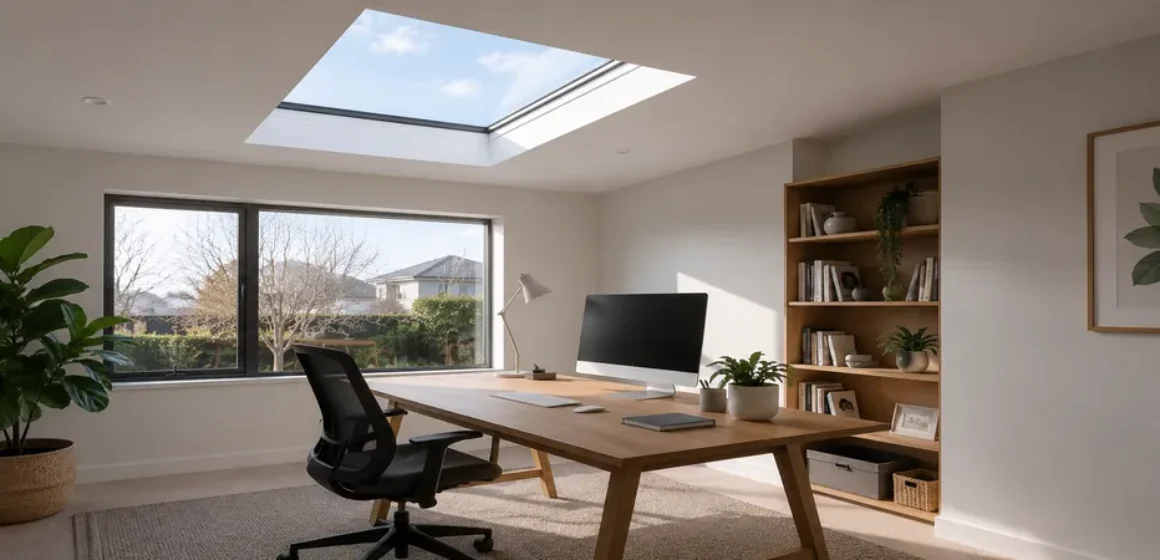
For Hamilton homeowners considering a home office skylight Hamilton solution, the goal is not simply to make the room brighter.
The better goal is to bring daylight into the room in a way that supports work without creating glare, harsh contrast, unwanted heat or screen discomfort.
A fixed skylight may suit some home offices. A tubular skylight or Sky tube may be more appropriate for compact offices or spare rooms where softer daylight is enough. A vented skylight may be worth considering if the room also feels stuffy, but airflow and daylight need to be treated as separate issues.
This guide explains how to think clearly about home office skylights in Hamilton, especially during winter when daylight problems become harder to ignore.
Why home offices expose daylight problems
A spare room can hide its weaknesses when it is only used occasionally.
It may be fine for guests. It may work for storage. It may be acceptable as a hobby room or occasional study space. But once it becomes a home office, the expectations change.
A home office is used for longer periods. It has to support concentration, screen work, reading, writing, video calls, planning and decision-making. The room may be used for several hours a day, several days a week.
Poor daylight becomes more noticeable because the room has to perform.
Common signs include:
- The ceiling light is on most of the day
- The room feels dull by mid-afternoon
- The desk sits away from the window
- The window creates glare rather than useful daylight
- The room looks flat on video calls
- The office feels colder because it looks shadowed
- The space still feels like a spare room with a desk in it
- The room is avoided when another space is available
- The office feels worse in winter than in summer
A home office does not need to feel like a commercial workspace. But it should feel like a room that can support a full day of use without making the work feel heavier than it already is.
Hamilton homes and the spare-room office problem
Many Hamilton home offices are not purpose-built.
They may be located in:
- A small bedroom
- A south-facing room
- A room beside the hallway
- A converted guest room
- A garage-adjacent room
- A second living area corner
- A compact townhouse room
- A shaded side of the home
- A room with a window facing a fence or neighbouring property
The room may have enough space for a desk, chair and shelves, but not enough useful daylight.
This is especially common where the window is small, shaded, privacy-limited or poorly positioned for the desk. A window may technically bring daylight into the room, but that daylight may stay near the wall and not reach the work area properly.
In winter, the problem becomes clearer.
The day is shorter. The sun sits lower. Side windows may receive less useful light. Curtains or blinds may stay partly closed for privacy or warmth. The room may begin to feel like the forgotten corner of the home.
A skylight may be worth considering when the room is used regularly and the existing daylight is not supporting its new role.
The goal is not more light at any cost
A home office is not the same as a hallway, bathroom or laundry.
It does not simply need to be brighter. It needs daylight that supports work.
Too little daylight can make the room feel dull and tiring. Too much light in the wrong place can create glare, reflections, harsh contrast or uncomfortable brightness.
For a home office, useful daylight should:
- Help the room feel more natural during the day
- Reduce reliance on artificial lighting where suitable
- Avoid direct glare on the screen
- Work with the desk position
- Support video calls without harsh backlighting
- Keep the room comfortable in winter and summer
- Avoid making the ceiling feel visually unbalanced
- Suit the way the room is used
This is why skylight placement matters so much.
A skylight above the desk may sound logical, but it may not be the best choice if it creates screen glare or bright reflections. In another room, overhead daylight near the desk may be exactly what is needed because the window light does not reach the work area.
The right answer depends on the room, the desk and the roof together.
The Hamilton home office winter test
Assess the office during the part of the day when the room feels weakest.
For many Hamilton home offices, this is mid-afternoon in winter.
Turn the lights off and ask:
- Does the room still feel comfortable to work in?
- Is the desk receiving useful daylight?
- Does the ceiling light feel necessary?
- Is the room dull, gloomy or simply unevenly lit?
- Does the window create glare on the screen?
- Is the screen facing towards or away from the main light source?
- Does the room feel worse after lunch?
- Is the office used often enough to justify a daylight upgrade?
- Would overhead daylight improve the room, or would it create new problems?
- Is the issue daylight, airflow, privacy, heating or a combination?
This test helps separate a true daylight problem from a general comfort problem.
A skylight may help if the room lacks useful natural light. But if the room is mainly cold, noisy, poorly insulated or badly furnished, daylight may only be part of the answer.
A home office should be assessed as a working environment, not just a room with a ceiling.
Screen glare: the issue homeowners should not ignore
Screen glare is one of the biggest risks when planning a home office skylight.
A skylight that works beautifully in a hallway may not work the same way in an office. A bright overhead light source can create reflections on laptops, monitors, glass desks, framed artwork or polished surfaces.
Before choosing skylight placement, consider:
- Where the desk is now
- Whether the desk can move
- Which direction the screen faces
- Whether existing window glare is already a problem
- Whether video calls happen regularly
- Whether the skylight would sit in front of, behind or above the screen
- Whether blinds may be needed
- Whether the room is used in summer as much as winter
- Whether strong light could make the workspace uncomfortable
A home office skylight should be planned around the screen, not just the ceiling.
The best daylight is the kind that helps the room feel more usable without interrupting work.
Desk position matters
Many homeowners ask about skylights before thinking about the desk.
That can lead to poor decisions.
The desk is the centre of the office. The skylight should be planned around how the desk is used, not simply where there is space in the ceiling.
Ask:
- Is the desk against a wall?
- Is the desk facing a window?
- Is the desk under the darkest part of the room?
- Could the desk be moved after daylight is improved?
- Does the screen face the existing window?
- Does the user sit with their back to the window?
- Is the room used by one person or shared?
- Is the desk used for laptop work, paperwork, video calls or all three?
A skylight can change how the room works. It may make a different desk position possible. It may also make the current desk position less comfortable if glare is not considered.
For a home office, placement should support the working setup.
Video calls and overhead daylight
Video calls have changed how people judge home office lighting.
A room can feel bright enough to work in, but still look poor on camera. The face may be shadowed. The background may be too bright. The window may create backlighting. The ceiling light may make the room look flat or yellow.
A skylight can help some home offices feel more natural during the day, but it needs careful planning.
Consider:
- Where the person sits during video calls
- What the camera faces
- Whether daylight would fall behind the person
- Whether overhead light would create shadows
- Whether the room needs balanced daylight rather than strong brightness
- Whether blinds or artificial fill light may still be needed
A skylight should not be expected to solve every video call lighting issue by itself. But better natural daylight can support a room that currently feels flat or closed in.
The aim is a more usable office, not a perfect studio.
When a fixed skylight may suit a home office
A fixed skylight may be worth considering when the home office needs stronger natural daylight and does not need extra airflow from the skylight itself.
It may suit rooms where:
- The office is used regularly
- The desk area feels dull
- The existing window does not provide useful daylight
- The room is south-facing or shaded
- The ceiling and roof layout are suitable
- A stronger sense of openness is wanted
- Screen glare can be managed through placement or blinds
- Ventilation is already adequate or handled separately
A fixed skylight can make a home office feel less enclosed and more connected to daylight. This can be especially helpful in winter when the room feels flat after lunch.
However, fixed skylights still need careful planning.
They do not open. They do not provide airflow. They may need blinds depending on placement, roof orientation and room use. They also need proper roof suitability, flashing and internal finishing.
A fixed skylight should be chosen because the room needs daylight, not because it is the most obvious skylight type.
When a tubular skylight or Sky tube may be better
A tubular skylight or Sky tube may be better for smaller home offices, office nooks or spare-room offices where softer practical daylight is enough.
This may suit:
- Small bedrooms used as offices
- Compact office nooks
- Internal study spaces
- Rooms where a full skylight would feel too large
- Spaces where a subtle ceiling diffuser is preferred
- Offices where screen glare needs to be carefully limited
- Rooms that need general brightness rather than a large sky view
A tubular skylight brings daylight from the roof through a reflective tube and delivers it through a ceiling diffuser. The result is usually more contained than a full fixed skylight.
For some offices, this is the better match.
The homeowner may not need a dramatic feature. They may simply need the room to stop feeling like a storage space with a desk in it.
A tubular skylight still needs assessment around roof position, tube path, bends, ceiling location, roof type and diffuser placement.
It also does not provide ventilation by itself.
When a vented skylight may be worth considering
A vented skylight may be relevant when a home office needs daylight and airflow.
This may apply to:
- Upper-level offices
- Loft-style rooms
- Rooms with raked ceilings
- Offices that feel stuffy after several hours
- Spaces where windows are rarely opened
- Rooms where warm air gathers near the ceiling
- Offices where natural airflow is part of the desired improvement
A vented skylight can support airflow in suitable conditions. It may help release warm or stale air from a higher point in the room.
However, it should not be chosen only because it sounds better.
A vented skylight may involve more cost, more controls and more consideration around operation. If the room mainly needs daylight, a fixed skylight, tubular skylight or Sky tube may be more appropriate.
Also consider whether the vented skylight would actually be used.
If it is high, hard to reach or inconvenient, manual operation may not be practical. Powered or solar options may be worth discussing, depending on the product and room.
A vented skylight is useful only when its extra function solves a real need.
Privacy and shaded windows
Some Hamilton home offices have windows that technically provide daylight but are not very useful.
This can happen when the window faces:
- A side fence
- A neighbouring home
- A driveway
- A shaded outdoor area
- A covered patio
- Dense planting
- A narrow boundary
- A south-facing aspect
Privacy can also reduce daylight. Homeowners may keep blinds partly closed because the office faces a street, neighbour or shared outdoor space.
In these rooms, overhead daylight may be useful because it does not rely as heavily on side-facing window light.
A skylight, tubular skylight or Sky tube may help the room feel brighter while allowing privacy to remain more controlled.
This is especially relevant for offices used during video calls or focused work, where privacy and comfort both matter.
Bedrooms converted into offices
Many home offices are still partly bedrooms.
They may contain a wardrobe, spare bed, storage items or guest furniture. They may need to work as both an office and a guest room.
This affects skylight planning.
A room used only as an office can prioritise desk daylight. A room that also functions as a bedroom needs to consider sleep comfort, blinds, early morning light, privacy and summer brightness.
Ask:
- Is the room a permanent office or multi-purpose space?
- Will guests sleep in the room?
- Is the bed staying?
- Would skylight blinds be needed?
- Could the desk move without affecting the room’s other use?
- Does the room need subtle daylight rather than a strong feature?
- Would a tubular skylight be enough?
A fixed skylight may suit a permanent office. A tubular skylight or Sky tube may suit a multi-purpose spare room where softer daylight is preferred. A vented skylight may be considered if airflow is also important.
The room’s future use matters.
South-facing and shaded home offices
South-facing or shaded offices can be pleasant in summer but challenging in winter.
They may feel calm and private, but lack useful daylight during the colder months. If the window faces a fence, side path or shaded garden, the room may remain dull for much of the day.
A skylight may help by bringing daylight from above instead of relying only on a side window.
This can be useful when:
- The room is used several days a week
- The window light is weak or blocked
- The desk sits away from the window
- The office feels flat in winter
- Privacy limits window use
- The roof and ceiling layout are suitable
The goal is not to make the office feel like a north-facing living room.
The goal is to make it more usable and less draining during working hours.
Skylight blinds and light control
Home offices often need light control.
A skylight can improve daylight, but the room may still need a way to manage brightness at certain times of year.
Blinds may be worth considering where:
- The room is used for screen work
- The skylight may receive strong summer sun
- The office is also a bedroom
- Glare is a known concern
- The room is used for video calls
- The homeowner wants more control over brightness
- The desk cannot easily move
Blinds should not be treated as an afterthought.
If light control matters, it should be discussed during product selection and placement planning.
For some offices, a tubular skylight or Sky tube may reduce the need for stronger light control because the daylight is more diffused. For others, a fixed or vented skylight with appropriate blind options may still be suitable.
The right decision depends on the room.
Artificial lighting still matters
A skylight can improve daytime daylight, but it does not remove the need for artificial lighting.
A home office still needs good lighting for:
- Early mornings
- Late afternoons
- Night work
- Dark weather
- Video calls
- Reading
- Detailed tasks
- Desk work after daylight fades
The best home office setup may include:
- Natural daylight from a window, skylight or tubular skylight
- Good desk lighting
- General ceiling lighting
- Screen glare management
- Heating and ventilation
- Acoustic comfort
- Storage and layout
- A comfortable chair and desk setup
A skylight can be a valuable part of the room improvement, but it should sit inside a broader working environment.
It should not be expected to solve every comfort issue alone.
Roof and ceiling considerations
A home office skylight is not just an interior design choice.
It must work with the roof system.
Important considerations include:
- Roof type
- Roof pitch
- Roof profile
- Flashing requirements
- Roof condition
- Water flow direction
- Nearby valleys, ridges or gutters
- Existing roof penetrations
- Solar panels
- Roof access
- Ceiling cavity depth
- Rafters or trusses
- Wiring
- Plumbing
- Ducting
- Insulation
- Existing ceiling lights or vents
- Internal finishing requirements
For tubular skylights and Sky tubes, the tube path matters. For fixed and vented skylights, the opening, framing, flashing and internal finishing need proper planning.
The best position from inside the room may not always align perfectly with the roof above. This is why photos and assessment matter.
The room identifies the daylight problem. The roof determines the practical solution.
Common mistakes with home office skylights
Placing the skylight without considering the screen
This can create glare, reflections or uneven brightness.
Choosing the largest option first
A smaller or more diffused daylight source may be better for office work.
Forgetting that the office may still be a bedroom
Sleep comfort and blinds may matter if the room is multi-purpose.
Treating ventilation as a bonus feature
A vented skylight should solve a real airflow need, not just sound appealing.
Ignoring summer comfort
A winter daylight problem should still be planned for year-round use.
Assuming daylight will solve work fatigue
Better daylight may improve the room, but it does not fix workload, ergonomics, heating or noise.
Leaving desk layout unchanged
A skylight may create an opportunity to rethink the desk position.
Ignoring the roof
The ceiling location has to work with roof structure, flashing and installation requirements.
A home office skylight should make the room easier to work in. It should not create a new problem.
When a home office skylight may not be the first answer
A skylight may not be the right first step if:
- The room already has enough natural light
- The main issue is screen glare from the existing window
- Better blinds would solve the problem
- The room is mainly cold rather than dark
- The office is rarely used during the day
- Poor artificial lighting is the main issue
- The desk can be moved to solve the daylight problem
- The roof above is unsuitable
- The room is about to be renovated or repurposed
- A skylight would create unavoidable glare
- The homeowner expects daylight to solve all work-from-home discomfort
In these situations, a skylight may still be considered later. But the first step may be desk repositioning, blinds, task lighting, heating, insulation or ventilation.
A skylight should solve the right problem.
The winter-to-summer question
A home office skylight should not be planned for winter only.
Winter may reveal the daylight problem, but the room needs to work through summer as well.
Ask:
- Will the room become too bright in summer?
- Will the skylight create glare during longer daylight hours?
- Would blinds be needed?
- Is the roof orientation exposed?
- Will the room be used during summer afternoons?
- Does the office have cooling or ventilation?
- Would a tubular skylight provide a more controlled result?
- Would a vented skylight support airflow in warmer months?
A good winter daylight improvement should not create a summer comfort problem.
This is especially important for people working from home regularly.
The room needs to support the whole year, not just the darkest months.
Illustrative example only
A Hamilton homeowner uses a small spare bedroom as a home office three days a week. The room has a window, but it faces a side fence and brings in little useful winter daylight. By 3pm, the ceiling light is still on and the room feels flat. The desk sits away from the window because that is the only practical layout.
The homeowner asks whether a skylight could help.
If the room needs stronger daylight and the roof and ceiling layout are suitable, a fixed skylight may be worth considering. If the office is compact and the homeowner wants softer general brightness without a large ceiling feature, a tubular skylight or Sky tube may be more appropriate. If the room also feels stuffy after several hours, a vented skylight may be discussed, but operation and airflow need to be considered carefully.
The best answer depends on desk position, screen glare, roof suitability and how permanent the office setup is.
The goal is not to make the office dramatic.
The goal is to make the workday feel less like it is happening in the forgotten room.
What to send when asking for a home office skylight quote
Good information helps shape a better recommendation.
For a home office skylight enquiry, send:
- Photos of the office from several angles
- A photo showing the desk position
- A photo showing the screen direction
- A photo of the ceiling
- A photo of the window and what it faces
- A photo of the darkest part of the room
- Roof photos above or near the office, if possible
- The approximate room size
- Whether the office is used daily or occasionally
- Whether the room is also a bedroom or guest room
- The time of day the room feels darkest
- Whether glare is already a problem
- Whether the desk can move
- Whether ventilation or stuffiness is also a concern
- Whether blinds or light control are important
- Whether you prefer a fixed, vented or tubular option
These details help determine whether a fixed skylight, vented skylight, tubular skylight or Sky tube may suit the room.
They also help avoid generic advice.
The best home office skylight outcome
The best result is not simply a brighter office.
It is a room that feels easier to work in.
A good outcome may mean:
- The office feels less flat in winter
- The ceiling light is needed less during the day
- The desk area receives more useful natural light
- Screen glare is avoided or managed
- Video calls feel more natural
- The room feels less like a spare room
- Blinds or light control are considered where needed
- Airflow is discussed separately and honestly
- The skylight suits the roof and room together
A home office should support the person using it.
If the room has become part of daily working life, it deserves daylight planning that matches its role.
Planning your next step
If your Hamilton home office feels dull, flat or overly dependent on artificial lighting through winter, it may be worth exploring whether overhead daylight could help.
A fixed skylight may suit a larger or permanent office where stronger daylight is wanted. A tubular skylight or Sky tube may suit a smaller office, office nook or spare room where softer practical brightness is enough. A vented skylight may suit some offices where airflow is also part of the concern, but convenience, operation and room use should be considered carefully.
Skylights NZ can help you review which option may suit your office, roof type, desk layout and desired outcome.
To start planning your options, use the Skylights NZ enquiry form:
https://inquiry.skylights.co.nz/inquiry
You may also find these useful:
- Skylight installation services
- Request a skylight quote
- Skylight options for NZ homes
- Why Waikato Homes Feel Darker in Winter, and When a Skylight Can Help
- The 3pm Winter Test: Is Your Waikato Room Asking for Better Daylight?
- Fixed or Vented Skylight for a Waikato Home: How to Choose Room by Room
- Tubular Skylights for Waikato Hallways, Toilets and Walk-in Wardrobes
FAQs
Is a skylight a good idea for a home office in Hamilton?
A skylight may be a good idea for a Hamilton home office if the room lacks useful natural daylight, is used regularly and has a suitable roof and ceiling layout. Placement must consider desk position, screen glare, room use and year-round comfort.
Can a home office skylight cause screen glare?
Yes, if it is poorly placed. A home office skylight should be planned around the desk, screen direction, existing window light, roof orientation and possible blind options so daylight supports work rather than creating glare.
Is a fixed or tubular skylight better for a home office?
It depends on the room. A fixed skylight may suit a larger or permanent office where stronger daylight is wanted. A tubular skylight or Sky tube may suit a smaller office or spare room where softer practical daylight is enough.
Should I choose a vented skylight for a home office?
A vented skylight may be worth considering if the home office feels stuffy as well as dark, especially in upper-level or loft-style rooms. If the room mainly needs daylight, a fixed skylight, tubular skylight or Sky tube may be more appropriate.
Do home office skylights need blinds?
Blinds may be useful where glare, summer brightness, privacy or bedroom use are concerns. This is especially important if the office is used for screen work, video calls or also functions as a guest bedroom.
What should I send for a home office skylight quote?
Send photos of the office, desk, screen position, ceiling, existing window and roof above the room if possible. Include the room size, how often it is used, when it feels darkest, whether glare is a concern and whether the desk can move.