The 3pm Winter Test: Is Your Waikato Room Asking for Better Daylight?
Some rooms do not feel dark first thing in the morning.
They reveal the problem later.
By 3pm in winter, the room starts to feel different. The ceiling light has been on for hours. The hallway looks flat. The kitchen island has lost its brightness. The bathroom feels dull. The laundry feels like a utility corner rather than part of the home. The spare bedroom used as an office begins to feel tired before the workday is over.
This is why the 3pm winter test can be useful.
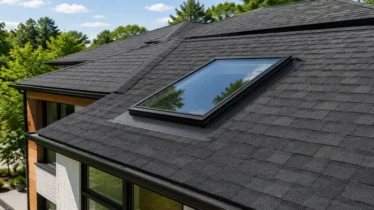
For Waikato homeowners considering a winter daylight skylight Waikato solution, the best time to judge a room is not always when it looks its brightest. It is often when the room is under pressure from shorter days, weaker winter light, closed doors, privacy coverings, shaded windows and the natural slowdown of the afternoon.
The 3pm test is simple: turn off the lights, stand in the room, and ask whether the space still feels usable, natural and comfortable.
If the answer is no, a skylight, tubular skylight or Sky tube may be worth considering. But the test is not about rushing into a product choice. It is about understanding the room’s actual daylight problem before making an enquiry.
This guide explains how Waikato homeowners can use the 3pm winter test to assess dark rooms, compare skylight options, and prepare better information for a quote.
Why 3pm matters in winter
A room can look acceptable at the wrong time of day.
Morning light may make a kitchen feel reasonable. Midday brightness may hide the problem in a hallway. A bathroom may seem fine when the sun briefly reaches the side of the house. But by mid-afternoon in winter, the truth becomes clearer.
At around 3pm, many Waikato homes are dealing with:
- Softer daylight
- Lower sun angles
- Shorter remaining daylight hours
- Rooms beginning to feel cooler
- Artificial lights already in use
- More closed doors and curtains
- Shaded side windows
- Internal spaces losing borrowed light
- Work-from-home fatigue in darker rooms
- Family routines shifting towards late afternoon
This is not the darkest part of the day. That is what makes it useful.
If a room feels flat at 3pm while it is still daytime, it may be relying too heavily on artificial lighting or borrowed light. That can be a sign the room needs better daylight planning.
The 3pm test helps homeowners see the room at a practical stress point.
The test itself
The 3pm winter test does not need special equipment.
Choose a typical winter afternoon. Avoid judging the room only on an unusually bright or unusually stormy day. The goal is to understand the room’s normal winter performance.
Then:
- Turn off the artificial lights.
- Open the room as you would normally use it.
- Leave curtains, blinds or privacy coverings in their normal daytime position.
- Stand in the main use area.
- Look at where the daylight actually lands.
- Notice how the room feels, not just how bright it looks.
- Take photos from several angles.
Ask yourself:
- Does the room feel naturally usable?
- Is the ceiling light needed during the day?
- Does daylight reach the area where the room is actually used?
- Is the darkest section in the middle, corner or back of the room?
- Is privacy limiting window light?
- Is the room dull, stuffy, cold-looking or all three?
- Would overhead daylight solve the right problem?
- Is the issue worse in winter than in summer?
The goal is not to make a final decision immediately.
The goal is to understand what the room is asking for.
What the room may be telling you
A dark room does not always need the same solution.
The 3pm test can help identify the type of problem.
The room is dark everywhere
This may suggest the room lacks useful natural light overall. A fixed skylight, tubular skylight or Sky tube may be worth considering, depending on room size and roof suitability.
One section is dark
This is common in kitchens, hallways and open-plan rooms. Placement may matter more than product size.
The room has daylight, but in the wrong place
A window may light the sink, but not the island. A hallway may be bright at the ends but dark in the middle. A bathroom may have window light near one wall but not near the shower or vanity.
The room feels stuffy as well as dark
This may point towards ventilation as a separate issue. A vented skylight may be worth discussing in some rooms, but extraction, airflow, heating and moisture control may also need review.
The room feels cold because it looks shadowed
Better daylight may make the room feel more pleasant, but it should not be confused with heating or insulation.
The room is mainly a privacy problem
Bathrooms, bedrooms and side-facing rooms may have windows, but privacy coverings reduce the available daylight. Overhead daylight may be worth considering.
Understanding the type of problem helps avoid choosing the wrong product.
Hallways at 3pm
Hallways often perform poorly in the 3pm test.
In many Waikato homes, the hallway relies on borrowed light from bedrooms, living rooms, entrance doors or nearby windows. By mid-afternoon in winter, that borrowed light may not reach far enough.
Signs include:
- The hallway light is on during the day
- The middle section is darker than both ends
- Bedroom doors reduce daylight
- The passage feels narrow or closed in
- The entry no longer feels welcoming
- The hallway feels disconnected from brighter rooms
For hallways, the solution is often not a large skylight.
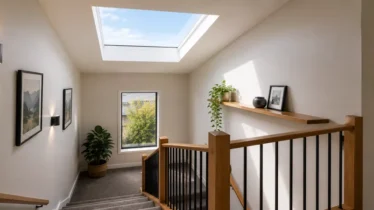
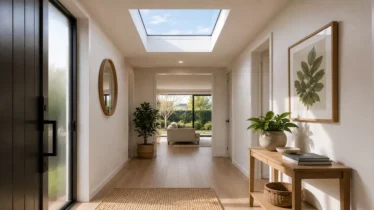
A tubular skylight or Sky tube may be more suitable where the goal is practical daytime brightness through a narrow or internal passage. A fixed skylight may suit a wider entry, stairwell or feature hallway.
The key is placement. A daylight point should be positioned where the hallway actually struggles, not where light is already available.
Kitchens at 3pm
A kitchen can pass the morning test and fail the 3pm test.
This is especially common where the kitchen has a sink window, but the island, bench, back wall or scullery receives weak daylight later in the day.
At 3pm, ask:
- Is the island still naturally usable?
- Does the main preparation bench need lights?
- Does the sink window light reach far enough?
- Is the back of the kitchen dull?
- Does the pantry or scullery feel enclosed?
- Is glare a concern on benchtops or splashbacks?
- Does the kitchen feel darker than the dining or living area?
A fixed skylight may suit kitchens where stronger overhead daylight is needed over the island, bench or deeper part of the room.
A vented skylight may be worth considering if airflow is also part of the concern, but it should not replace suitable cooking extraction.
A tubular skylight or Sky tube may suit pantries, sculleries or compact kitchen support areas where subtle practical daylight is enough.
The best kitchen daylight lands where the kitchen is used.
Bathrooms at 3pm
Bathrooms can feel especially dull in winter.
A bathroom may have a window, but that window may be frosted, shaded, privacy-limited or facing a fence. By 3pm, the room may feel cold-looking and enclosed, even if it is technically still daytime.
During the 3pm test, ask:
- Does the bathroom feel clean and usable without the light on?
- Does the vanity area receive daylight?
- Does the shower feel enclosed?
- Is the window useful, or only there for privacy and minimal light?
- Does the room feel stuffy or damp as well as dark?
- Is condensation or steam a separate issue?
- Would overhead daylight improve privacy compared with relying on the window?
A fixed skylight may suit bathrooms where daylight is the main issue. A tubular skylight or Sky tube may suit compact bathrooms, ensuites or separate toilets. A vented skylight may be worth discussing where airflow is also needed.
But daylight and ventilation should not be confused.
A bathroom skylight should not be treated as a complete moisture solution by itself.
Laundries at 3pm
A laundry may not be the first room homeowners think about, but it often fails the 3pm winter test.
Small laundries, laundry cupboards and garage-side utility rooms can feel dark by mid-afternoon, especially if they sit beside a shaded side path, back entrance or internal access area.
Ask:
- Is the light on for simple laundry tasks?
- Does the room feel dull when sorting washing?
- Is the window small, shaded or blocked?
- Does wet washing make the room feel heavier?
- Is the laundry also a back entrance or garage transition?
- Is the issue daylight, ventilation, moisture or storage?
A tubular skylight or Sky tube may suit compact laundries where practical brightness is the main goal. A fixed skylight may suit a larger laundry or mudroom. A vented skylight may be worth discussing where airflow is part of the problem.
Moisture still needs separate assessment. Dryer ducting, extraction, drying practices and ventilation may all matter.
A laundry skylight should make the room easier to use, not pretend to solve every dampness issue.
Home offices at 3pm
The 3pm test is particularly useful for home offices.
Many home offices are spare rooms, converted bedrooms or small rooms on the shaded side of the house. They may be acceptable in the morning, then feel flat by mid-afternoon.
This is often when work still needs to continue, but the room no longer supports the person using it.
Ask:
- Is the ceiling light on most of the day?
- Does the room feel tired after lunch?
- Is the desk away from the window?
- Does the existing window create glare rather than useful light?
- Is the screen comfortable?
- Are video calls affected by uneven light?
- Could the desk position change?
- Does the room feel like a real office or still like a spare room?
A fixed skylight may suit some home offices where stronger daylight is needed. A tubular skylight or Sky tube may suit compact offices where subtle brightness is enough. A vented skylight may be worth considering if the room also feels stuffy.
Screen glare must be considered carefully.
More light is not always better for a workspace. The right light matters.
Living rooms at 3pm
Living rooms can be harder to judge because they are larger and used in different ways.
A living room may have good window light near one side but still feel dull in the centre or back section. By 3pm in winter, that imbalance can become more obvious.
Ask:
- Is the back of the room dull?
- Does daylight reach the main seating area?
- Is the television or screen affected by glare?
- Is the room deep or shaded?
- Does the living area feel disconnected from the kitchen or dining space?
- Would a skylight improve the room’s use, or only its appearance?
- Would blinds or light control be needed?
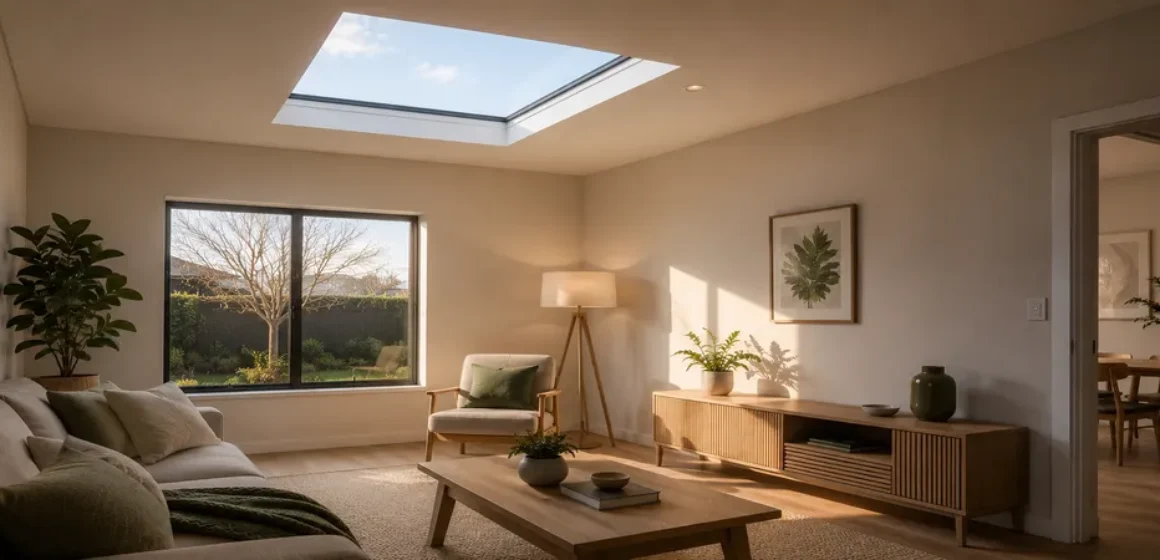
A fixed skylight may suit living rooms where stronger daylight and openness are wanted. A vented skylight may be considered where airflow is also relevant, especially in higher-ceiling spaces. A tubular skylight may suit adjacent dark corners, passage areas or transition spaces rather than the main living zone.
A living room skylight should support comfort.
It should not create glare, harsh contrast or summer discomfort.
Bedrooms at 3pm
Bedrooms are often assessed only for morning and night use, but the 3pm test can still be useful.
A bedroom may be used for rest, reading, working, dressing, children’s play or guest accommodation. In winter, a dark bedroom may feel underused or less inviting.
Ask:
- Does the room feel dull during the day?
- Is privacy limiting window light?
- Is the room south-facing or shaded?
- Is the bedroom also used as a study or nursery?
- Would better daylight improve daytime use?
- Would a skylight affect sleep comfort?
- Would blinds be needed?
- Is heat or glare a concern in summer?
A fixed skylight may suit some bedrooms where daylight is the main goal. A vented skylight may suit a room where airflow is also needed. A tubular skylight or Sky tube may suit walk-in wardrobes, dressing areas or small adjoining spaces.
Bedroom skylights require careful thinking because comfort is more important than brightness.
Separate toilets and wardrobes at 3pm
Some rooms are so small that homeowners accept darkness as normal.
Separate toilets and walk-in wardrobes often fall into this category. They may be used several times a day but rely completely on artificial light.
At 3pm, ask:
- Can the room be used comfortably without the light on?
- Is there any useful natural light?
- Does the space feel like a cupboard?
- Would a subtle ceiling diffuser be enough?
- Is a full skylight unnecessary?
- Does the roof path allow a tubular skylight or Sky tube?
These rooms often do not need a dramatic solution.
A tubular skylight or Sky tube may provide enough daylight to make the space feel more natural and usable.
Ventilation should still be considered separately where needed.
The difference between dark, dull and gloomy
The 3pm test is not only about brightness.
A room can be bright enough to see but still feel dull.
This distinction matters.
A dark room
A dark room lacks enough natural light for daytime use.
A dull room
A dull room has some daylight, but it feels flat, lifeless or uneven.
A gloomy room
A gloomy room may combine low light, poor colour, shaded outlook, clutter, moisture, cold surfaces or a closed-in layout.
A skylight may help some of these issues, but not all of them.
For example, better daylight may improve a dull hallway. But if a laundry feels gloomy because it has poor ventilation, dampness and clutter, daylight may only be part of the answer.
The 3pm test helps clarify what is really happening.
It encourages homeowners to look beyond “the room is dark” and identify the cause.
Artificial light is not the same as natural daylight
Many homeowners keep using artificial lights because it seems like the simplest answer.
It is simple, but it may not change how the room feels.
A hallway lit only by ceiling lights can still feel closed in during the day. A kitchen may be bright enough for tasks but still feel disconnected from the rest of the home. A bathroom light may make the room usable, but not more pleasant. A home office may be lit but still feel flat by mid-afternoon.
Natural daylight changes how a space feels.
It can make colours read more naturally, reduce the sense of enclosure, and help a room feel more connected to the rest of the home during the day.
However, skylights do not remove the need for artificial lighting.
Rooms still need lights for night, early mornings, bad weather and task use.
A good daylight solution works alongside artificial lighting. It does not replace it completely.
Why placement matters more than size
The 3pm test often reveals that the issue is not simply “not enough light”.
It may be that light is landing in the wrong place.
This is why placement matters more than size in many skylight decisions.
A small skylight or tubular skylight in the right position may be more useful than a larger skylight in the wrong position.
Consider:
- A hallway where the middle section is dark
- A kitchen where the island is dull but the sink is bright
- A bathroom where the shower is dark but the window wall is bright
- A laundry where the working bench is shadowed
- A living room where the back area lacks daylight
- A home office where window light creates glare rather than useful brightness
In each case, the daylight source needs to respond to the real problem area.
The goal is not maximum brightness.
The goal is useful daylight.
Roof and ceiling realities
The room may reveal the need, but the roof determines what is possible.
A skylight, tubular skylight or Sky tube must work with the roof and ceiling structure.
Important considerations include:
- Roof type
- Roof pitch
- Roof profile
- Flashing requirements
- Roof condition
- Water flow
- Nearby valleys, ridges or gutters
- Roof access
- Ceiling cavity depth
- Rafters or trusses
- Wiring
- Plumbing
- Ducting
- Insulation
- Existing lights, fans or vents
- Internal finishing requirements
For tubular skylights, the roof-to-ceiling tube path matters. For fixed and vented skylights, framing, flashing and internal finishing matter. For vented skylights, operation and weather exposure also matter.
The 3pm test helps identify the room problem.
A proper assessment helps match that problem to a roof-suitable solution.
When the 3pm test points towards a fixed skylight
A fixed skylight may be worth considering if the test shows that a room needs stronger natural daylight and airflow is not the main issue.
This may apply to:
- Kitchens
- Living rooms
- Dining areas
- Larger bathrooms
- Home offices
- Bedrooms
- Wider hallways or entrances
- Renovated spaces
A fixed skylight may suit rooms where a visible daylight opening would improve the space and where the roof and ceiling layout support it.
However, fixed skylights still need careful planning around size, placement, glare, blinds, roof orientation and internal finishing.
A fixed skylight brings daylight.
It does not provide ventilation.
When the 3pm test points towards a tubular skylight or Sky tube
A tubular skylight or Sky tube may be worth considering if the test shows that a compact or internal space needs practical daylight.
This may apply to:
- Hallways
- Separate toilets
- Walk-in wardrobes
- Laundries
- Pantries
- Sculleries
- Compact bathrooms
- Internal study nooks
- Garage-side utility spaces
These spaces often do not need a full skylight. They need subtle daylight in the right place.
A tubular skylight can be a practical way to improve daytime brightness while keeping the ceiling result more contained.
It still needs assessment around tube path, roof type, roof pitch, bends, obstructions and diffuser placement.
When the 3pm test points towards a vented skylight
A vented skylight may be worth considering if the room feels dark and airflow is also a genuine concern.
This may apply to:
- Bathrooms
- Kitchens
- Upper-level bedrooms
- Loft-style rooms
- Stuffy living spaces
- Rooms where warm air gathers near the ceiling
A vented skylight can support airflow in suitable situations, but it should not be confused with full moisture management.
Bathrooms may still need extractor fans. Kitchens may still need rangehoods. Laundries may still need dryer ducting and ventilation. Dampness may involve heating, insulation, moisture sources and broader airflow issues.
A vented skylight should be chosen because the room genuinely needs it, not because it sounds like the premium option.
When the answer may not be a skylight
The 3pm test may also show that a skylight is not the first answer.
Other solutions may be more important if:
- The room already has good daylight
- Dark paint or finishes are absorbing light
- Artificial lighting is poorly designed
- Furniture or storage blocks existing light
- The main problem is heating
- Moisture or ventilation is the real issue
- The roof above is unsuitable
- The room layout is about to change
- Glare would be difficult to manage
- The room is rarely used during the day
This is not a negative outcome.
It is useful clarity.
A good skylight decision should be based on need, not assumption.
Taking useful photos during the 3pm test
Photos taken during the 3pm test can help when asking for advice.
Take photos that show the room honestly.
Useful photos include:
- A wide photo from the room entrance
- A photo from the opposite side
- A photo of the darkest area
- A photo of the ceiling
- A photo of existing windows or doors
- A photo showing privacy limitations, if relevant
- A photo of nearby hallway or connected spaces
- Roof photos above or near the room, if possible
- A photo showing existing lights, fans or vents
- A photo showing the room as it is normally used
Avoid taking only the most flattering photo.
The point is to show the problem clearly.
A good enquiry does not need professional photography. It needs practical visual information.
Illustrative example only
A Waikato homeowner tests three rooms at 3pm in July.
The hallway needs the light on, especially through the middle section. A tubular skylight or Sky tube may be worth considering because the space needs practical daylight, not a large skylight feature.
The kitchen has reasonable light near the sink, but the island is dull. A fixed skylight may be worth assessing if roof conditions allow daylight to reach the island without creating glare.
The bathroom feels dark and stuffy after afternoon use. A vented skylight may be discussed, but the extractor fan, moisture levels and ventilation still need separate review.
The same home has three daylight problems.
The correct answer may be three different daylight strategies.
That is the value of the 3pm test. It reveals the room-by-room reality.
What to send when asking for advice
After completing the 3pm test, prepare a clear enquiry.
Send:
- Photos of the room at 3pm with lights off
- Photos from several angles
- A photo of the ceiling
- A photo of the darkest section
- Photos of existing windows or doors
- Roof photos above or near the room, if possible
- The room’s approximate size
- The roof type, if known
- The time of day the room feels darkest
- Whether the issue is worse in winter
- Whether the room feels dark, stuffy, damp or cold-looking
- Whether privacy is a concern
- Whether glare is already an issue
- Whether renovation work is planned
- Whether you are considering a fixed, vented, tubular skylight or Sky tube
This information helps Skylights NZ understand whether the room needs daylight, airflow, better placement or a different approach.
The clearer the problem, the better the recommendation.
The best result from the 3pm test
The 3pm test is not about proving that every dark room needs a skylight.
It is about making a better decision.
A good result may be:
- Identifying the right room to prioritise
- Understanding whether the issue is daylight or ventilation
- Realising that placement matters more than size
- Choosing a tubular skylight for a compact space
- Considering a fixed skylight for a larger room
- Discussing a vented skylight where airflow matters
- Deciding to improve artificial lighting first
- Preparing better photos for an enquiry
- Avoiding a product that does not suit the room
The test helps move the homeowner from frustration to clarity.
That is where better skylight planning starts.
Planning your next step
If a Waikato room feels dull, flat or overly dependent on artificial lighting at 3pm in winter, it may be worth exploring whether overhead daylight could help.
A fixed skylight may suit larger rooms where stronger natural light is wanted. A tubular skylight or Sky tube may suit hallways, toilets, wardrobes, laundries, pantries and compact internal spaces. A vented skylight may suit some rooms where airflow is also part of the concern.
Skylights NZ can help you review which option may suit your room, roof type, ceiling layout and desired outcome.
To start planning your options, use the Skylights NZ enquiry form:
https://inquiry.skylights.co.nz/inquiry
You may also find these useful:
- Skylight installation services
- Request a skylight quote
- Skylight options for NZ homes
- Why Waikato Homes Feel Darker in Winter, and When a Skylight Can Help
- Dark Hamilton Hallways: Why Winter Shows the Problem Clearly
- Kitchen Skylights in Hamilton Homes: Where Daylight Should Actually Land
- Fixed or Vented Skylight for a Waikato Home: How to Choose Room by Room
- Tubular Skylights for Waikato Hallways, Toilets and Walk-in Wardrobes
FAQs
What is the 3pm winter test for skylights?
The 3pm winter test is a simple way to assess how a room performs during a weaker daylight period. Turn off the lights at around 3pm in winter and check whether the room still feels usable, natural and comfortable. It can help identify whether a skylight, tubular skylight or Sky tube may be worth considering.
Why does my Waikato room feel darker in the afternoon?
A Waikato room may feel darker in the afternoon because winter daylight is softer, the sun sits lower, borrowed light fades, doors and curtains may be closed, and shaded windows may no longer provide useful brightness. Internal rooms often show the problem most clearly.
Does a dark room always need a skylight?
No. A dark room does not always need a skylight. The issue may be poor artificial lighting, dark finishes, blocked windows, ventilation, heating, layout or roof constraints. A skylight may help when the room genuinely lacks useful daylight and the roof and ceiling layout are suitable.
What type of skylight is best after the 3pm test?
It depends on the room. A fixed skylight may suit larger rooms needing stronger daylight. A tubular skylight or Sky tube may suit compact internal spaces such as hallways, toilets and wardrobes. A vented skylight may suit some rooms where airflow is also needed.
Can the 3pm test help with skylight placement?
Yes. The 3pm test can show where the room is actually darkest. This helps with placement because daylight should land where the room needs it most, not simply where there is free ceiling space.
What photos should I take before asking for a skylight quote?
Take photos at 3pm with the lights off, including wide room views, the ceiling, the darkest area, existing windows or doors, and the roof above or near the room if possible. Include the room size, roof type if known, and whether the issue is daylight, airflow, privacy or moisture.