Alpine design advantage: why skylights work so well in Wanaka’s mountain climate
Wanaka’s magic is in its clarity—big skies, crisp air, and long summer evenings. That same clarity, however, brings intense solar gain by day and noticeable temperature drops at night. Homes need daylight that feels generous, not glaring; warm in winter, not stifling in summer.
Well-specified skylights are uniquely suited to this alpine push-and-pull, delivering balanced light and controllable comfort.
What makes alpine light different? (plain-English explainer)
Clear air = stronger sun: With fewer particulates, sunlight arrives more directly, so interiors can overheat or suffer from harsh contrast.
Long summer days: Extended daylight in December–February increases cumulative heat gain.
Rapid evening cool-downs: Night-time temperature drops are common, so ventilation and insulation both matter.
Analogy: Think of glazing like a high-performance pair of sunglasses for your home—letting in the view and the brightness, while filtering and balancing the harsh bits.
The alpine advantage: how good skylight design solves real problems
1) Comfort without glare
- Diffusers (opal or prismatic) scatter direct rays into a soft glow.
- Shaft geometry (angle, depth, finish) sends light deeper while keeping it out of your eyes.
2) Summer control, winter warmth
- Low-E glazing reflects unwanted heat in summer and helps retain warmth in winter.
- SHGC (solar heat gain coefficient) in simple terms: lower numbers = less summer heat through the glass. Pick a balanced SHGC for Wanaka—low enough for summer control, not so low that winter feels dim.
3) Natural ventilation that actually works
- Vented skylights exploit the stack effect: hot air rises and escapes high up, pulling in cooler air from lower openings.
- Solar or automated opening ensures airflow during peak afternoon heat or while you’re out.
4) Strong weather performance
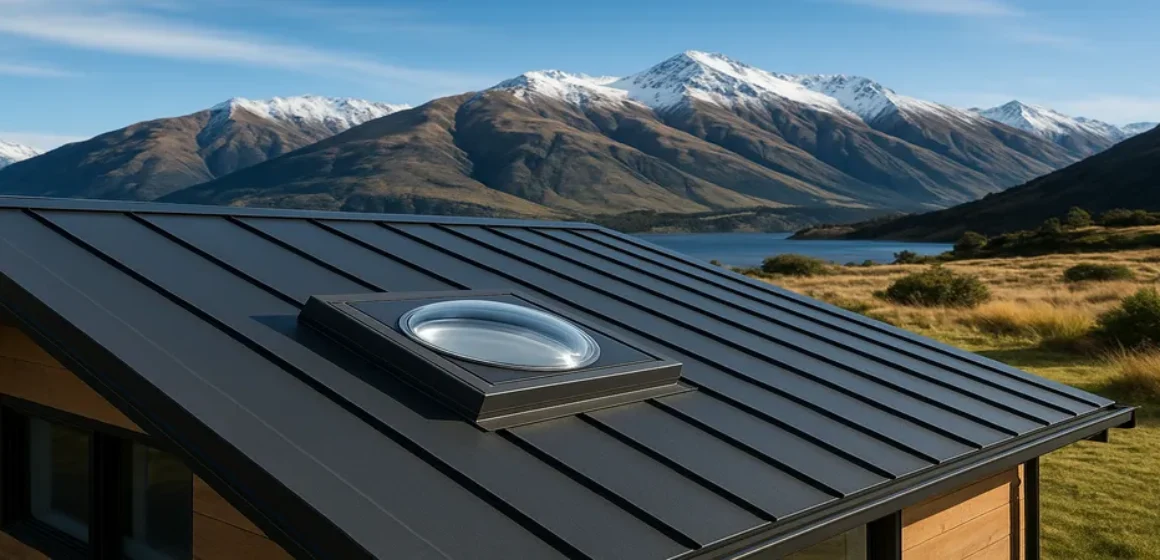
- Proper flashings matched to your roof profile (e.g., corrugated/Coloursteel) prevent leaks and protect under stormy conditions that can sweep through the basin.
Choosing by room: a practical, alpine-aware matrix
Space | Alpine challenge | Recommended approach | Why it works |
Kitchens | Afternoon heat + cooking humidity | Vented skylight with diffuser | Lets heat/steam out; keeps light comfortable |
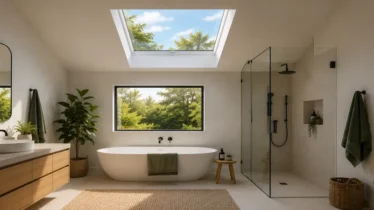
Bathrooms | Condensation + privacy | Vented skylight with opal diffuser | Natural extraction + soft light |
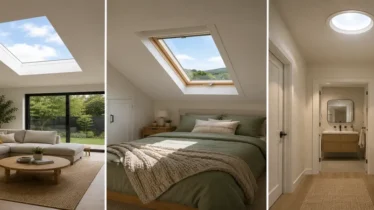
Living rooms | Glare on screens | Fixed skylight with Low-E glazing + tuned shaft | Bright, even light without hot spots |
Hallways/Lofts | Dark cores, low airflow | Tubular skylight (diffused) | High output, minimal heat, compact shaft |
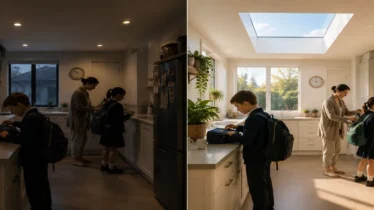
Illustrative example only: A Beacon Point renovation used two vented skylights in a combined kitchen–living space. Afternoon temperatures dropped, glare disappeared from benchtops, and evening cooldowns felt faster thanks to controlled airflow.
Roof forms in Wanaka: getting the details right
- Low-pitch modern roofs: Consider flat/low-profile units with correct upstand and membrane details.
- Corrugated/Coloursteel: Use profile-specific flashings to maintain weather tightness.
- High, vaulted spaces: A deeper, angled shaft can distribute light evenly while hiding the brightest angles.
Installation timing and build sequence
Spring is ideal: predictable weather windows, safer roof temperatures, and install calendars before the summer rush. If you’re mid-renovation, sequence skylight works before final linings so shafts and insulation details are executed cleanly.
Homeowner takeaways
- Specify for Wanaka, not “generic NZ”. Prioritise Low-E glazing, balanced SHGC, and quality diffusers.
- Vent where heat rises. A vented skylight is your passive cooling release valve.
- Design the shaft. Angle, depth, and finish are as important as the glass.
- Match flashings to the roof. Profile-correct flashings = long-term peace of mind.
- Plan in spring. Beat the summer backlog and be ready for holiday season.
Final thoughts
Alpine conditions reward thoughtful design. The right skylight converts Wanaka’s strong sun into calm, usable light—cooler in summer, brighter in winter, and beautifully even all year. If you’d like tailored advice for your home and roof type, share a few details and we’ll guide you:
Submit your enquiry →