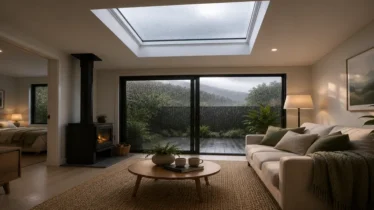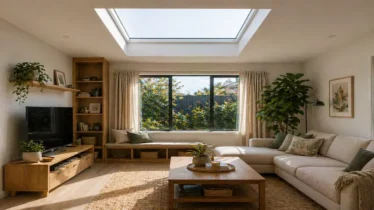
Circular skylights and energy comfort: light, heat and ventilation in NZ homes
1. The real question behind “will it make the room too hot?”
When people ask about circular skylights heat gain NZ, the question is rarely just technical.
It usually sounds more like:
- “Will this make the room too hot in summer?”
- “Will all my heat escape through the roof in winter?”
- “What happens with steam in our bathroom or cooking smells in the kitchen?”
These are comfort questions. They are about how a space feels on:
- a still January afternoon
- a frosty July morning
- a busy evening with showers running and pots on the stove.
This article looks at circular skylights through that lens. We will cover:
- how light and warmth move through domes and shafts in simple terms
- what changes between summer and winter
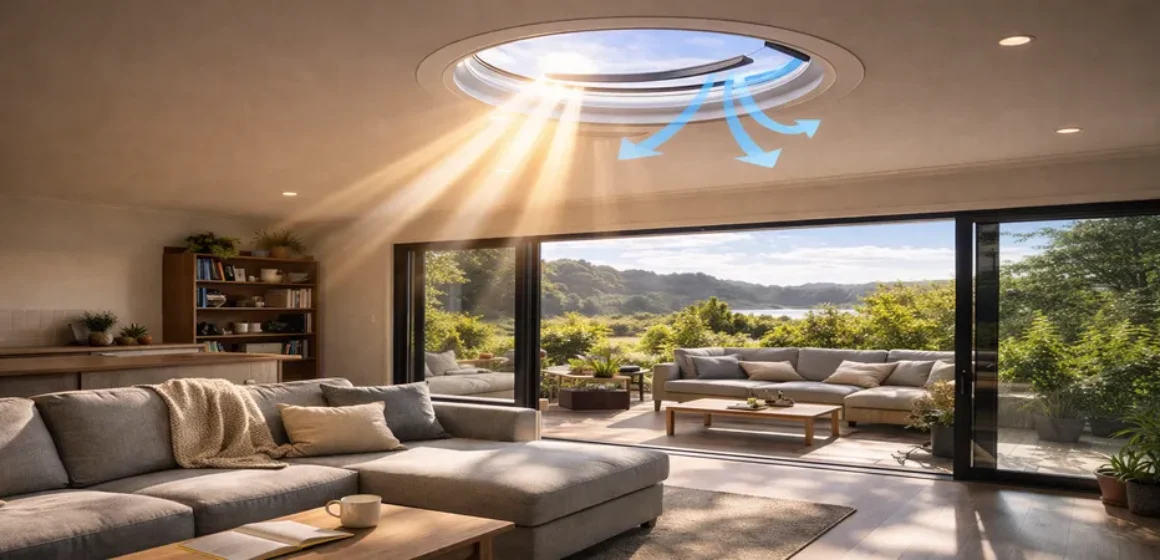
- when vented circular skylights are worth serious consideration
- how different NZ regions change the conversation.
All examples are Illustrative Only, drawn from common patterns rather than any specific project.
2. How light and warmth move through a circular skylight – the simple version
Imagine a circular skylight as a controlled opening between sky and room, with three main parts:
- The dome – where light enters.
- The shaft or throat – where light and air move through the roof space.
- The ceiling opening – where light lands in your room.
Light first, then temperature
The primary job of a circular skylight is to bring in natural light. As that happens:
- some warmth comes with the light, especially on sunny days
- some heat can also flow out at night if the opening is not well insulated
- the amount of change depends on materials, design and local climate.
You do not need to know exact performance numbers to make good decisions. It is enough to understand that comfort depends on balance:
- light level vs direct sun
- insulation vs ventilation
- how the room is used through the year.
3. Summer comfort – managing heat gain and glare
Summer is when concerns about circular skylights heat gain NZ are most common. The good news is that thoughtful design can keep spaces bright without feeling overheated.
Orientation and roof plane
If your skylight sits on a roof plane that receives strong sun for much of the day:
- the room below may warm faster
- light can feel more intense at certain times
- glare becomes a consideration over seating areas and screens.
In some cases, a slightly different location on the same roof, or a shift in diameter, can help balance brightness and warmth.
Dome type and shaft design
Two everyday choices shape summer comfort:
- dome clarity – clear domes tend to give more direct light; diffused options can soften contrast
- shaft shape – a flared or thoughtfully shaped shaft can spread light more evenly, reducing “hot spots”.
Illustrative Example Only: In a north-facing Auckland kitchen, a circular skylight with a diffusing layer and a gently flared shaft provides broad, usable light without a harsh circle of heat on the benchtop.
Room use and layering
For rooms used in the hottest parts of the day, consider:
- how often windows or doors are also open
- whether existing shading (eaves, trees, blinds) already helps
- whether a smaller dome or different position could deliver enough light without tipping the room into discomfort.
4. Winter comfort – keeping warmth where you need it
In winter, the concern often flips to heat loss.
The role of the shaft and ceiling junction
Well-planned circular skylights consider:
- how the shaft is insulated
- how the ceiling opening is sealed and lined
- how the skylight sits within the home’s broader thermal envelope.
A thoughtful design can:
- reduce unwanted heat loss
- limit cold air movement around the opening
- help the room feel more even in temperature.
Room type matters
The impact of a skylight on winter comfort is experienced differently in:
- a seldom-used hallway
- an open-plan living area
- a bedroom used morning and night.
For key living areas, many homeowners are happy to balance minor changes in thermal performance against the benefit of strong natural light, especially if heating systems are already in place.
Illustrative Example Only: In a Christchurch living room, a well-insulated circular skylight shaft brings winter light into the centre of the space. The homeowners note that the room feels livelier during the day, while their heating settings remain similar.
5. Where vented circular skylights make a real difference
Not every circular skylight needs to open. In some rooms, though, vented options can significantly improve comfort.
Bathrooms and ensuites
Bathrooms generate:
- steam from showers and baths
- short bursts of high humidity
- warm, moist air that tends to rise.
A vented circular skylight at or near the highest point in the room can:
- give steam a clear escape path
- reduce lingering moisture on surfaces
- support mechanical extraction where present.
Kitchens
Kitchens produce moisture and odours from cooking. While rangehoods do most of the work, a vented skylight can:
- help clear residual warm air
- assist with general air movement in open-plan spaces
- support cross-ventilation strategies.
Stair tops and upper landings
Warm air naturally rises. In stair cores and upper landings, a vented circular skylight can:
- act as a useful high-level release point in certain conditions
- be used strategically during shoulder seasons
- participate in whole-of-house ventilation approaches.
Ventilation choices should always be integrated with broader building design. The goal is controlled movement of air, not draughts.
6. Regional comfort stories – how climate changes the conversation
Comfort with circular skylights feels different in various parts of New Zealand.
Warmer, humid north
In regions like Northland and Auckland:
- summer heat and humidity are front of mind
- winter is milder but still benefits from extra daylight.
Here, choices around:
- dome type and shaft design for glare control
- vented options in bathrooms and stair tops
- coordination with shading and ventilation strategies
often matter more than small variations in thermal performance numbers.
Windy, variable Wellington
In Wellington and exposed hill suburbs:
- wind and driven rain are significant factors
- comfort relates as much to sound and air movement as to temperature.
A well-detailed circular skylight can:
- remain stable and quiet in strong winds
- avoid draughts and whistling around the opening
- still provide valuable light on often overcast days.
Colder southern and alpine regions
In Christchurch, Dunedin, Queenstown and surrounding areas:
- winter temperatures drop lower
- clear, cold days can make internal sunlight particularly welcome.
Here, energy comfort discussions often include:
- shaft insulation and condensation management
- how daylight can support a sense of wellbeing on shorter days
- the role of heating systems alongside skylights.
7. Balancing light, heat and air – questions to ask before you decide
You do not need to become an energy specialist to make good choices. Instead, you can ask simple, comfort-led questions.
Before committing to a circular skylight, consider:
- When will we use this room most?
- peak summer days, winter mornings, evenings only, or all of the above.
- What does comfort mean here?
- cooler cooking space, brighter winter lounge, drier bathroom, safer stair.
- How does the climate behave where we live?
- humid and warm, windy and variable, cold and clear, or mixed.
- Do we need this skylight to open?
- particularly in bathrooms, kitchens and stair tops.
- How will this skylight interact with heating and cooling we already have?
- heat pumps, wood burners, underfloor systems, mechanical ventilation.
Sharing even brief answers to these with a skylight professional helps ensure that circular skylights heat gain NZ is treated as a comfort design topic, not a worry.
8. A comfort-first checklist for circular skylights in New Zealand homes
To keep decisions calm and grounded, you can use a simple checklist.
- Light goal
- Are you aiming for gentle, even light or a dramatic feature?
- Summer strategy
- Has orientation, dome type and shaft design been discussed in relation to summer comfort?
- Winter strategy
- Has shaft insulation and sealing at the ceiling been considered, especially in colder regions?
- Ventilation plan
- Do key moisture and heat build-up areas have a clear approach to air movement?
- Regional fit
- Does the design reflect your specific climate rather than a generic assumption?
- Everyday use
- Does the skylight location make sense for how you actually live in the space?
If any of these points feel uncertain, that is often the right time to pause and ask for clarification, not a reason to abandon the idea.
Make an enquiry via Skylights New Zealand
Share a few photos of your room and roof, your region, and a short note about what comfort means to you in that space. A skylight professional can then help you shape a circular skylight plan where light, heat and ventilation are working together.
FAQs – circular skylights, heat and comfort in NZ
Q1. Do circular skylights always make rooms hotter in summer?
Not always. The effect depends on location, design and dome type. Thoughtful placement and shaft design can provide useful light without making a room feel uncomfortably hot.
Q2. Will a circular skylight make my home lose heat in winter?
Any opening in the building envelope needs careful detailing, but a well-designed skylight with an insulated shaft and good sealing can be part of a comfortable winter home.
Q3. Should I choose a vented circular skylight for my bathroom?
Often yes, or at least discuss it. Bathrooms generate moisture that benefits from high-level ventilation alongside extraction fans.
Q4. Are circular skylights suitable for energy-conscious homes?
They can be, when integrated with insulation, glazing choices and ventilation strategies as part of the overall design, rather than as a late addition.
Q5. How can I tell if a skylight design is balanced for comfort?
Look for a conversation that includes room use, climate, summer and winter behaviour, and ventilation – not just size and price.
Q6. Can I add blinds or diffusers later if I find the skylight too bright?
In some cases, yes, though it is generally better to discuss light control at the planning stage so it can be integrated neatly.