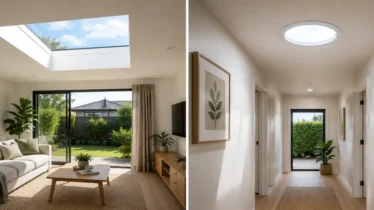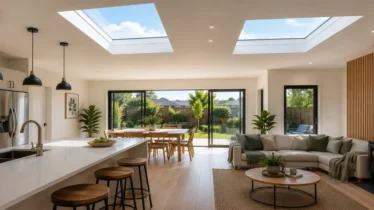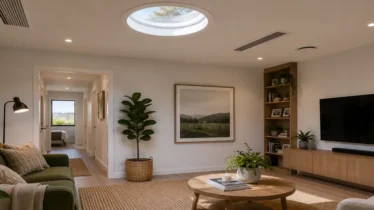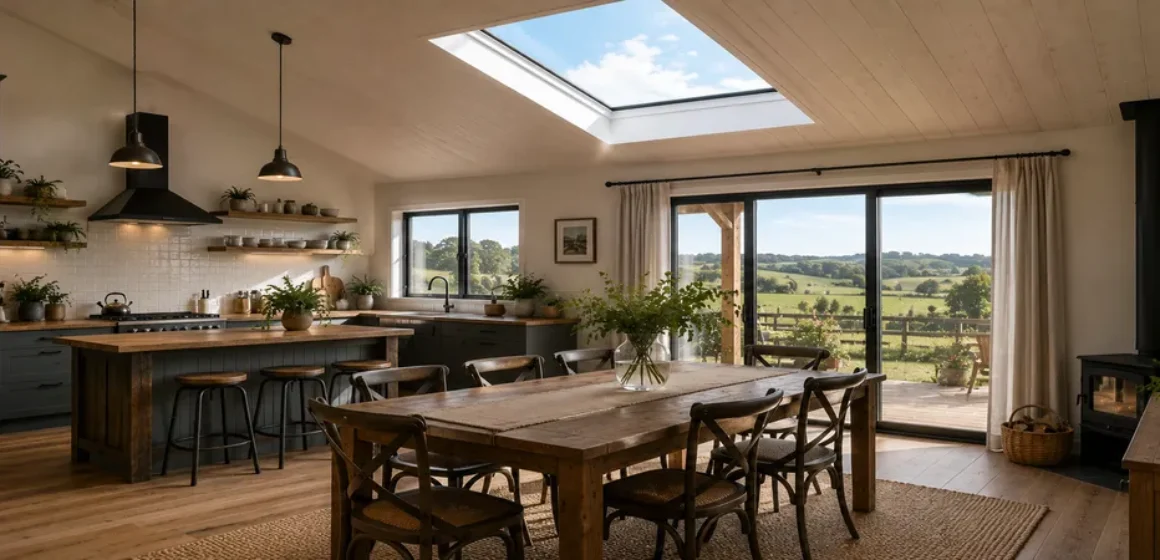
Skylights for Rural Waikato Homes: Farmhouses, Lifestyle Blocks and Dark Interior Rooms
Rural Waikato homes often have different daylight problems from suburban homes.
A farmhouse may have deep verandas, older rooflines, long hallways, lean-to additions, internal laundries, shaded bedrooms or utility rooms that were designed for function rather than natural light. A lifestyle block home may have large open-plan spaces, high ceilings, rural views and plenty of exterior light, but still have dark internal bathrooms, pantries, hallways, wardrobes or garage access zones.
From the outside, a rural home may look bright and open. Inside, certain rooms can still feel flat, enclosed or heavily dependent on artificial lighting.
For homeowners considering a rural home skylight Waikato solution, the goal is not simply to add more glass to the roof. The better question is:
Which room needs better daylight, what type of roof is above it, and what installation conditions need to be considered on a rural site?
A fixed skylight may suit larger living rooms, kitchens, bedrooms or farmhouse entries. A vented skylight may suit some bathrooms, kitchens or upper-level rooms where airflow is also needed. A tubular skylight or Sky tube may suit hallways, walk-in wardrobes, pantries, laundries, separate toilets and internal rooms where practical daylight is the main goal.
This guide explains what rural Waikato homeowners should think about before requesting a skylight quote.
Why rural homes can still have dark rooms
Rural homes are often surrounded by open land, but that does not mean every room receives useful daylight.
A room can feel dark because of the home’s layout, not because the property lacks sunlight.
Common reasons include:
- Deep verandas or covered porches
- Large eaves
- Older farmhouse layouts
- Long internal hallways
- Additions built over time
- Rooms facing shaded sides of the home
- Utility rooms placed away from windows
- Internal bathrooms or ensuites
- Walk-in wardrobes between bedrooms and bathrooms
- Pantries and sculleries behind kitchens
- Laundries near garages or back entries
- Living areas shaded by outdoor covers
- Bedrooms where privacy limits window use
- Dark timber, flooring or older internal finishes
In rural homes, the issue is often contrast.
The outside may feel open and bright, while certain internal rooms feel surprisingly dull. A skylight, tubular skylight or Sky tube may help where the roof and ceiling layout are suitable.
The first step is identifying which room actually needs daylight.
Farmhouse layouts and daylight challenges
Older farmhouses can have excellent character, but their layouts may not suit modern daylight expectations.
Some farmhouses were planned around shelter, practical use, verandas, fireplaces, room separation, utility areas and protection from weather. Natural light in every room was not always the priority.
Common farmhouse daylight issues include:
- Long central hallways
- Bedrooms off darker corridors
- Kitchens at the rear of the home
- Laundries and mudrooms near back doors
- Bathrooms added into internal spaces
- Deep covered entries
- Separate toilets with little or no daylight
- Pantries or storage rooms without windows
- Additions with different rooflines
- Low-pitch lean-to sections
A skylight may be useful in these homes, but the age and structure of the house should be respected.
Older roofs, ceiling cavities, framing, previous repairs, additions and internal finishes may all affect the recommendation.
In a farmhouse, the best skylight outcome is usually practical and sympathetic: better daylight without making the room feel out of character.
Lifestyle block homes and daylight gaps
Lifestyle block homes can be different.
Many have larger open-plan living areas, high ceilings, wide roofs, garaging, sculleries, generous bedrooms and rural views. These homes may receive plenty of daylight in the main living areas, but still have internal rooms that feel dark.
Common lifestyle block daylight gaps include:
- Internal ensuites
- Walk-in wardrobes
- Pantries
- Sculleries
- Long garage-to-house entries
- Laundries
- Separate toilets
- Media rooms
- Hallways between bedroom wings
- Home offices
- Storage rooms
A lifestyle block home may also have roof access, site access and scheduling considerations that differ from a suburban home.
A fixed skylight may suit a large open-plan room or high-ceiling space where stronger daylight is wanted. A tubular skylight or Sky tube may suit compact internal rooms. A vented skylight may be discussed where airflow is genuinely useful.
The product should be matched to the room’s role, not just the property size.
Rural Waikato winter daylight
Winter can make rural internal rooms feel noticeably dull.
During June, July and August, daylight is shorter and weaker. Rural homes may also be closed up more often because of cold, wind, rain or exposed site conditions. Verandas, shelter planting, large eaves and outdoor covers can reduce light entering through windows.
A room may feel worse in winter if:
- It relies on borrowed light
- It sits under a deep veranda
- It faces a shaded side of the home
- It has dark timber or older finishes
- It is used early in the morning or late afternoon
- It connects to a garage, laundry or back entry
- Doors are kept closed for warmth
- Windows are covered for privacy or insulation
The winter test is simple.
Turn the lights off during the day and ask whether the room can be used comfortably. If the answer is no, overhead daylight may be worth considering.
This does not mean every dark room needs a skylight. But it does help identify where the home is underperforming.
Start with the room, not the roof
Rural homes often have complex rooflines.
It can be tempting to begin with the roof and ask, “Where can a skylight go?”
But the better starting point is the room.
Ask:
- Which room feels dark?
- How often is the room used?
- Is the problem worse in winter?
- Is the room used for working, cooking, dressing, bathing, storage or relaxing?
- Does it need daylight only or daylight plus airflow?
- Would a fixed skylight, vented skylight, tubular skylight or Sky tube suit the room?
- Would blinds or light control be needed?
- Is the room part of an older home, addition or renovation?
- What roof area sits above it?
The roof then determines what is practical.
A skylight should not be installed simply because there is space on the roof. It should improve a room that needs daylight.
Good planning connects the room problem with the roof conditions.
Fixed skylights for rural homes
A fixed skylight may suit rural Waikato homes where stronger natural daylight is wanted and airflow is not the main issue.
Fixed skylights may be considered for:
- Farmhouse kitchens
- Living rooms
- Dining areas
- Bedrooms
- Home offices
- Larger bathrooms
- Entries
- Open-plan spaces
- Wide hallways
- Renovated rooms
A fixed skylight can help make a room feel more open and connected to daylight. It may be useful where wall windows are shaded by verandas, where the room is deep, or where privacy limits side-window daylight.
However, fixed skylights need careful planning around:
- Roof type
- Roof pitch
- Flashing
- Internal finishing
- Glare
- Blinds
- Ceiling height
- Room layout
- Access and safety
- Whether the home is older or renovated
A fixed skylight does not open. If airflow is also a concern, ventilation should be considered separately.
Vented skylights for rural homes
A vented skylight may suit some rural homes where daylight and airflow are both useful.
This may apply to:
- Bathrooms
- Kitchens
- Upper-level rooms
- High-ceiling living spaces
- Rooms with limited window ventilation
- Bedrooms that feel stuffy
- Utility rooms where warm air gathers
A vented skylight can support airflow when opened, but it should not be chosen automatically.
Consider:
- Is airflow genuinely needed?
- Is the skylight location practical to operate?
- Would manual, electric or solar operation be more suitable?
- Does the roof pitch suit the product?
- Are blinds or light control needed?
- Is the room already served by extraction or opening windows?
- Is moisture, odour or heat part of the problem?
In bathrooms and laundries, a vented skylight may support airflow, but extraction and moisture control still need separate consideration.
In kitchens, a vented skylight should not replace suitable cooking extraction.
The benefit must match the room problem.
Tubular skylights and Sky tubes for rural homes
A tubular skylight or Sky tube can be a practical daylight solution for many rural homes.
These products are often suited to compact or internal spaces where a full skylight is unnecessary.
They may suit:
- Hallways
- Separate toilets
- Walk-in wardrobes
- Pantries
- Sculleries
- Laundries
- Mudrooms
- Internal bathrooms
- Storage rooms
- Office nooks
- Garage entry zones
A tubular skylight brings daylight from the roof through a reflective tube and delivers it through a ceiling diffuser.
This can be useful in rural homes where certain internal rooms sit beneath roof areas that can provide daylight, but the room does not need a large visible skylight opening.
For a tubular skylight or Sky tube, the quote may consider:
- Roof type
- Roof pitch
- Flashing
- Tube length
- Number of bends
- Diffuser position
- Ceiling cavity obstructions
- Internal finishing
- Whether the room needs ventilation separately
A tubular skylight or Sky tube does not ventilate the room by itself.
If the room is damp, stuffy or affected by odour, that should be discussed separately.
Rural kitchens and sculleries
Rural kitchens are often hardworking spaces.
They may be used for family meals, entertaining, baking, preserving, produce preparation, school lunches, farm routines and daily household traffic. In lifestyle homes, the kitchen may be part of a large open-plan space. In farmhouses, it may sit in an older rear section with shaded windows or additions around it.
A skylight may be worth considering if:
- The kitchen island lacks daylight
- The preparation bench feels dull
- A deep veranda shades the kitchen windows
- The scullery has no natural light
- The pantry is internal
- The dining transition feels flat in winter
- The kitchen is being renovated
A fixed skylight may suit the main kitchen or open-plan area where stronger daylight is wanted. A tubular skylight or Sky tube may suit pantries and sculleries. A vented skylight may be discussed if airflow is also a genuine issue, but rangehood and cooking extraction should be handled separately.
The goal is practical daylight where the kitchen is actually used.
Rural bathrooms and ensuites
Bathrooms and ensuites in rural homes may have privacy, daylight and ventilation challenges.
Older farmhouses may have bathrooms added into internal areas. Lifestyle homes may have ensuites and walk-in wardrobes positioned deeper inside bedroom wings. Some bathrooms may have small windows for privacy but still feel dark.
A skylight may be worth considering if:
- The bathroom has limited natural light
- The shower or vanity feels dull
- Privacy limits window size
- The ensuite is internal
- The room is being renovated
- The homeowner wants daylight without increasing wall-window exposure
A fixed skylight may suit larger bathrooms where daylight is the main issue. A tubular skylight or Sky tube may suit compact ensuites or separate toilets. A vented skylight may be discussed if airflow is also a real need.
Moisture should be assessed separately.
A skylight can improve daylight, but extraction, heating, ventilation and moisture control still matter.
Hallways, entries and mudrooms
Rural homes often have practical transition spaces.
These may include back entries, boot rooms, mudrooms, laundry entries, garage-to-house connections and long hallways. These areas may be used every day, but they can be dark and utilitarian.
A tubular skylight or Sky tube may suit:
- Long internal hallways
- Back entries
- Mudrooms
- Laundry entries
- Garage access areas
- Central corridors
- Separate toilet areas off the hallway
A fixed skylight may suit a larger entry or wide hallway if a stronger daylight feature is wanted.
For rural homes, these spaces often carry a lot of daily traffic. Making them brighter can improve how the home feels in normal use.
The best placement is usually where the room feels dullest, not necessarily where the ceiling is easiest.
Bedrooms and home offices on rural properties
Rural homes often have bedrooms or home offices where daylight expectations vary.
A bedroom may have rural views but still feel dark if the window faces a shaded side, sits under a veranda, or needs curtains for privacy and insulation. A home office may need better winter daylight but must avoid screen glare.
A skylight may be considered if:
- The bedroom feels dull during the day
- The room doubles as a study or office
- Privacy or warmth limits curtain opening
- The office lacks useful natural light
- The desk area is too dark
- The room feels flat in winter
A fixed skylight may suit some bedrooms or offices where stronger daylight is wanted. A tubular skylight or Sky tube may suit smaller rooms, wardrobes or office nooks. A vented skylight may be discussed where airflow is genuinely useful.
For bedrooms, blinds and sleep comfort are important.
For offices, screen glare and desk position should be considered before placement is chosen.
Older roofs and previous additions
Rural homes may have been altered many times.
A farmhouse may have a main roof, side additions, lean-to areas, veranda roofs, garage additions, laundry extensions and repaired sections. Lifestyle homes may have later additions or roof changes.
This matters because different roof sections may have different:
- Roof pitch
- Roof material
- Framing
- Access
- Flashing requirements
- Age
- Condition
- Water flow
- Ceiling cavity depth
A skylight over the main house may be different from a skylight over a lean-to laundry or rear extension.
Before quoting, it helps to know whether the room is part of the original home or a later addition.
Photos of the wider roof area are useful because they show how the roof sections connect.
A rural roof should be assessed as a system, not as isolated pieces.
Roof type and product suitability
Rural Waikato homes may have many roof types.
These may include:
- Corrugated metal roofing
- Long-run metal roofing
- Concrete tiles
- Terracotta tiles
- Older roof profiles
- Low-pitch additions
- Steeper farmhouse roofs
- Lean-to roof sections
- Roofs with large eaves or verandas
- Roofs with existing vents, flues or penetrations
Roof type affects:
- Product suitability
- Flashing
- Installation method
- Access
- Quote complexity
- Whether a fixed, vented or tubular option makes sense
- Whether further assessment is needed
A skylight cannot be chosen from the room alone.
The roof must be suitable for the product and flashing system.
This is especially important in rural homes where roof sections may differ from one part of the house to another.
Access and rural site logistics
Rural sites can have different access considerations from urban homes.
This may not be difficult, but it should be understood early.
Access details may include:
- Long driveways
- Gravel driveways
- Gates
- Stock nearby
- Dogs on site
- Limited turning space
- Wet or muddy access
- Distance from road
- Sloped sections
- Trees close to the house
- Tank water or septic areas to avoid
- Parking for installer vehicles
- Whether someone needs to be home
- Mobile reception limitations
Roof access may also be affected by:
- Home height
- Roof pitch
- Verandas
- Pergolas
- Conservatories
- Solar panels
- Outbuildings close to the home
- Landscaping
- Weather exposure
Providing practical access information helps with quoting and scheduling.
It is better to mention rural access conditions early than have them become a surprise on installation day.
Weather exposure on rural properties
Rural Waikato homes may be more exposed to wind and weather than homes in denser suburban areas.
Some properties sit on open land, ridgelines, lifestyle blocks, farms or areas with fewer surrounding buildings. This can affect how the roof experiences wind-driven rain, sun exposure and debris.
A skylight quote may need to consider:
- Exposed roof areas
- Wind direction
- Roof pitch
- Water flow
- Flashing suitability
- Tree debris
- Moss or lichen
- Access during wet weather
- Whether the roof has existing weathering issues
This does not mean skylights are unsuitable for rural homes.
It means the roof conditions should be understood properly.
Weathertightness and placement are especially important when a home is exposed.
Roof condition should be checked
Before installing a skylight, the condition of the roof should be considered.
This is especially important for older rural homes.
Check whether there are:
- Existing leaks
- Rust or corrosion
- Cracked tiles
- Loose fixings
- Old flashings
- Previous repairs
- Moss or lichen
- Blocked gutters
- Poor drainage
- Areas due for roof maintenance
- Old skylights or penetrations
- Water stains inside the room
If the roof needs repair or replacement soon, it may be better to coordinate skylight work with roofing work.
Installing a skylight into a roof that needs major attention soon may create avoidable double-handling.
A skylight should be installed into a roof that is ready to receive it.
Rural homes with high ceilings or raked ceilings
Some rural homes, especially lifestyle homes, have high ceilings or raked ceilings.
These can create beautiful spaces, but skylight planning needs care.
A high or raked ceiling may affect:
- Skylight placement
- Internal finishing
- Glare
- Access for cleaning
- Access for blinds
- Operation of vented skylights
- Visual balance
- Heat movement
- Whether manual or powered operation is practical
A fixed skylight may suit high living spaces where daylight and openness are wanted. A vented skylight may be worth discussing if warm air gathers near the ceiling and operation is practical. A tubular skylight may suit adjacent internal rooms.
High ceilings can make skylights visually effective, but they also make access and light control more important.
These details should be discussed before quoting.
Rural homes with deep verandas and eaves
Deep verandas and eaves are common in rural homes.
They can provide shade, weather protection and character. But they can also reduce daylight entering through windows, especially in winter.
Rooms behind deep verandas may feel darker even when they have windows.
A skylight may help where:
- A veranda shades the kitchen
- A bedroom feels dark despite windows
- A living room lacks useful light near the centre
- A hallway receives little borrowed light
- A bathroom or laundry sits behind a covered area
- The room relies on lights during the day
Overhead daylight can sometimes help compensate for side windows that are shaded by roof overhangs.
However, the skylight location must still work with the roof structure and water flow.
Deep eaves may explain the daylight problem, but the roof still determines what can be installed.
Skylights for rural renovations
Many rural homes are renovated in stages.
A farmhouse may get a new kitchen one year, a bathroom later, then a laundry or bedroom update. A lifestyle home may add a scullery, extend an open-plan living area or convert a garage space.
Skylights should be discussed early in rural renovation projects because they may affect:
- Roof work
- Ceiling work
- Electrical layout
- Ducting
- Cabinetry
- Plastering
- Painting
- Access equipment
- Internal finishing
- Product selection
- Scheduling
If roof repairs, painting or replacement are already planned, that may be a good time to consider skylights.
If the ceiling is being opened, it may be easier to coordinate internal finishing.
A skylight added after the renovation is complete may still be possible, but placement and finishing options may be more limited.
Daylight should be part of the renovation plan, not a late correction.
Replacing old rural skylights
Some rural homes already have older skylights, domes or roof windows.
Replacement may be needed if the existing skylight is:
- Leaking
- Cracked
- Yellowed
- Cloudy
- Brittle
- Poorly flashed
- Dated
- No longer opening properly
- Surrounded by ceiling stains
- No longer providing useful daylight
In rural homes, older skylights may also sit in older roof sections or previous additions.
Replacement should consider:
- Existing skylight size
- Roof condition
- Flashing condition
- Internal ceiling damage
- Whether the old location still makes sense
- Whether a like-for-like replacement is appropriate
- Whether a fixed, vented or tubular option would work better
A replacement can be an opportunity to improve the room, not just swap one old unit for another.
If the old skylight never worked well, the new recommendation should not blindly copy it.
Maintenance considerations for rural skylights
Rural properties may have more environmental factors affecting roof maintenance.
These can include:
- Trees
- Leaves
- Dust
- Wind exposure
- Moss or lichen
- Bird activity
- Farm dust
- Debris from nearby shelterbelts
- Longer intervals between roof checks
- Harder roof access
Skylight placement should consider whether the roof area can be maintained.
This is especially important near valleys, gutters, low-pitch sections or tree-covered areas.
A skylight should not be placed where debris is likely to collect and be ignored.
Maintenance does not need to be complicated, but it should be realistic.
A good recommendation thinks beyond installation day.
What affects the quote for a rural Waikato skylight?
A rural skylight quote may be affected by:
- Product type
- Skylight size
- Fixed, vented or tubular option
- Roof type
- Roof pitch
- Flashing requirements
- Roof condition
- Internal ceiling height
- Ceiling cavity obstructions
- Tube length or bends for tubular skylights
- Internal finishing
- Number of skylights
- Whether the job is a new installation or replacement
- Whether electrical work is needed
- Whether blinds or controls are included
- Whether scaffolding or edge protection is required
- Site access
- Travel and scheduling
- Whether the home is a farmhouse, lifestyle block or rural property
- Whether renovation or roof work is planned
A quote should make assumptions and exclusions clear.
Rural homes can be straightforward, but they can also have unique access, roof and scheduling factors.
Good information upfront helps produce a better recommendation.
What photos help with a rural skylight quote?
Useful photos include:
- Photos of the room from several angles
- A photo of the ceiling
- A photo of the darkest area
- Photos of existing windows, doors or verandas
- Roof photos above or near the room
- Wider roof photos showing roof shape and access
- Photos of roof type and profile
- Photos of valleys, ridges, gutters, vents or solar panels
- Photos of any existing skylight, if replacing
- Photos of any ceiling stains or water damage
- Photos showing access around the property
- Photos of long driveways or difficult access, if relevant
Do not climb onto the roof just to take photos.
Safe ground-level photos, driveway photos, photos from an upper window, or photos from another safe vantage point are enough to start the discussion.
For rural homes, wider photos are especially useful because they show roof layout and site access.
What details should rural homeowners include?
Alongside photos, include:
- Waikato location
- Nearest town or area
- Whether the property is rural, farmhouse or lifestyle block
- Room type
- Approximate room size
- Roof type, if known
- Whether the roof is older or recently repaired
- Whether the room needs daylight only or airflow as well
- Whether the skylight is new or replacing an old one
- Whether there are existing leaks or roof concerns
- Whether the home is single-storey or two-storey
- Whether there are verandas, pergolas or solar panels
- Whether access is straightforward or difficult
- Whether renovation work is planned
- Whether glare, privacy or blinds are concerns
- Whether you are considering fixed, vented, tubular skylight or Sky tube options
You do not need perfect technical details.
Clear photos and practical context are enough to start.
Common mistakes with rural home skylights
Assuming an open rural property means every room is bright
Internal layout, verandas and room position still affect daylight.
Choosing a skylight without considering roof age
Older rural roofs may need repair or review before installation.
Ignoring additions and mixed rooflines
Different parts of the home may have different roof conditions.
Treating access as obvious
Long driveways, gates, stock, dogs and rural site conditions can affect planning.
Choosing a fixed skylight when a tubular skylight would suit better
Compact internal rooms often need practical daylight rather than a large roof opening.
Choosing a vented skylight without a genuine airflow need
Ventilation should solve a real problem, not just sound like a premium option.
Forgetting maintenance
Debris, moss, trees and roof access should be considered.
Not sending wider roof and site photos
Rural homes benefit from wider context photos, not only close-ups.
Avoiding these mistakes helps create a clearer recommendation and smoother project.
When a skylight may not be the first answer
A skylight may not be the right first step in every rural home.
Other issues may need attention first if:
- The roof is in poor condition
- The roof is due for replacement
- Existing leaks need diagnosis
- The room mainly needs better artificial lighting
- The room is mostly used at night
- Ventilation or moisture is the main issue
- Access needs significant planning
- The preferred location is unsuitable
- Glare or heat control would be difficult
- Renovation plans are not yet settled
- A shaded window or veranda issue may be solved another way
This does not mean a skylight is unsuitable forever.
It means the right order matters.
A skylight is valuable when it solves the right room problem and suits the roof and site conditions.
Illustrative example only
A rural Waikato homeowner has an older farmhouse with a long central hallway, a dark laundry near the back entrance and a bathroom added into an internal part of the home. The property has a metal roof with a few older roof penetrations and a deep veranda along one side.
The homeowner asks whether skylights would help.
A tubular skylight or Sky tube may suit the hallway and laundry if the roof-to-ceiling path is practical and the roof flashings can be matched properly. The bathroom may suit a fixed, vented or tubular option depending on whether the main issue is daylight, airflow or both. The deep veranda may explain why some rooms feel darker, but roof pitch, roof condition and water flow still need assessment.
In another lifestyle block home, the main open-plan living area may already be bright, but the scullery, walk-in wardrobe and garage entry may need practical daylight.
Both are rural homes.
The right solution depends on the specific room, roof and property conditions.
The best outcome for a rural Waikato skylight
The best rural skylight outcome is practical, durable and well matched to the home.
A good result may mean:
- A dark hallway becomes easier to use during the day
- A farmhouse kitchen receives better daylight where it is needed
- A bathroom feels brighter while ventilation is considered separately
- A walk-in wardrobe becomes more practical
- A laundry or mudroom feels less enclosed
- A lifestyle home’s internal rooms feel better connected
- The product suits the roof type and pitch
- Rural access and scheduling are planned
- Internal finishing is clear
- Maintenance and roof condition are considered
A rural home does not need skylights everywhere.
It needs daylight in the rooms where it will genuinely improve daily use.
Planning your next step
If you are considering a skylight for a rural Waikato home, farmhouse or lifestyle block, start by taking clear photos of the room, ceiling, roof area and wider property access if safe to do so.
Include your nearest town or area, roof type if known, whether the room needs daylight only or airflow as well, and whether you are considering a fixed skylight, vented skylight, tubular skylight or Sky tube.
Skylights NZ can help review which option may suit your rural home, roof type, room layout and desired outcome.
To start planning your options, use the Skylights NZ enquiry form:
https://inquiry.skylights.co.nz/inquiry
You may also find these useful:
- Skylight installation services
- Request a skylight quote
- Skylight options for NZ homes
- Skylight Installation Cost in Waikato: What Affects the Final Quote?
- Getting a Skylight Quote in Waikato: What Photos and Details Help Us Recommend the Right Option
- Skylights for Low-Pitch Roofs in Waikato Homes: What Needs Careful Assessment
- Planning Skylights During a Waikato Renovation: Why Timing Matters
FAQs
Are skylights suitable for rural Waikato homes?
Skylights may be suitable for many rural Waikato homes if the roof type, roof pitch, roof condition, flashing requirements, access and room layout are appropriate. Farmhouses, lifestyle blocks and rural homes should be assessed based on the specific room and roof.
What type of skylight is best for a farmhouse?
The best option depends on the room. A fixed skylight may suit kitchens, living rooms, bedrooms and larger spaces. A vented skylight may suit rooms where airflow is genuinely needed. A tubular skylight or Sky tube may suit hallways, toilets, wardrobes, pantries and laundries.
Can a skylight help rooms shaded by verandas or large eaves?
A skylight may help some rooms shaded by verandas or large eaves by bringing daylight from above. The roof structure, pitch, flashing and room layout still need assessment before confirming suitability.
Do rural properties affect skylight installation cost?
They can. Rural location, travel, site access, roof access, roof type, roof condition, safety requirements, internal finishing and product choice can all affect the quote. Clear photos and access details help with quoting.
Can old rural skylights be replaced?
Yes, old rural skylights may be replaceable, but the existing unit, roof opening, flashing, roof condition and internal ceiling condition all need assessment. Some homes may suit a like-for-like replacement, while others may benefit from an upgrade.
What should I send for a rural home skylight quote?
Send photos of the room, ceiling, darkest area, roof above or near the room, wider roof layout and property access. Include your nearest Waikato town or area, room size, roof type if known, whether the job is new or replacement, and whether daylight, airflow, privacy or glare are concerns.