The ‘thermal envelope’ explained using one NZ room
On a clear winter morning in New Zealand, you can feel the thermal envelope without ever using the term.
You walk into one room and it holds warmth. Another room feels cooler, even though the heat pump has been on the same amount of time.
Nothing dramatic is happening. The house is simply doing what houses do: either holding comfort, or leaking it.
That is the thermal envelope.
It is one of the most useful ideas in the modern building conversation, and one of the most misunderstood. Especially when skylights are involved.
So instead of explaining it with diagrams and acronyms, let’s explain it using one ordinary NZ room — the way a homeowner actually experiences it.
The thermal envelope, in plain English
Think of your home like a chilly bin.
A good chilly bin doesn’t create cold. It holds it.
A good thermal envelope doesn’t create warmth. It holds it.
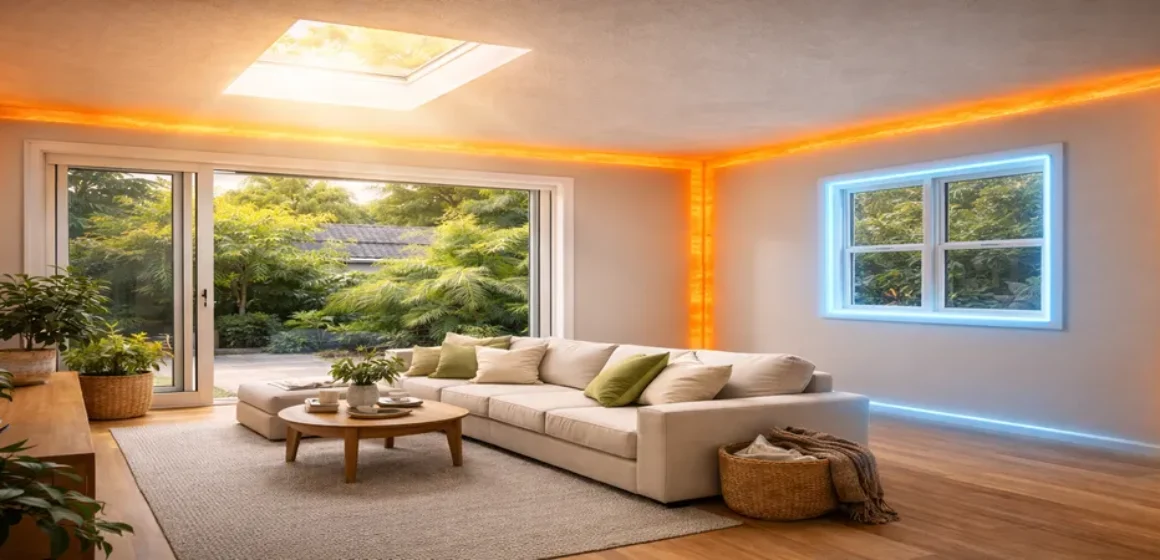
The thermal envelope is simply the boundary between:
- the inside comfort you pay for (warmth in winter, coolness in summer), and
- the outside conditions you cannot control.
That boundary includes:
- ceiling and roof insulation
- walls and floors
- windows and doors
- and skylights or roof windows
When a skylight is added, you are not “breaking” the envelope. You are adding a new part to it — a roof-level window.
The question becomes: will that new part behave comfortably in your room, across NZ seasons?
One room, one example: a living room in real NZ winter
Picture a standard living room.
- You sit there in the evenings.
- The heat pump runs for an hour.
- The room becomes comfortable.
Now imagine two versions of that same room.
Version A: the room that holds comfort
You notice:
- the warmth stays stable after the heat pump cycles off
- you are not constantly reaching for a throw
- the room feels even, not “warm near the heater, cool everywhere else”
Version B: the room that leaks comfort
You notice:
- the heater works harder for the same comfort
- the room cools quickly once the heater cycles
- you feel cold spots near glazing
That difference is the thermal envelope doing its job well, or not.
Where skylights fit into that picture
Skylights are part of the envelope because they are glazing.
Glazing behaves differently from insulation.
Insulation slows heat movement very effectively. Glazing can still perform well, but it must be specified and installed correctly.
This is not an argument against skylights. It is a reminder that:
A skylight is not only a source of light. It is a part of your home’s comfort boundary.
That is why two homes can install skylights and have completely different experiences.
What changes when roof glazing is added (the four things you’ll feel)
1) Light enters deeper into the home
This is the obvious benefit. Light from above reaches central zones that side windows cannot.
2) The ceiling-level temperature story becomes more important
Warm air rises.
In rooms with skylights, warm air collects near the ceiling. If the skylight area and room airflow are not planned well, you can end up with:
- heat lingering at ceiling level in summer
- or a room that feels less stable in winter
A vented solution can sometimes help in rooms that trap warm air.
3) Comfort depends more on “quality of specification” than size
A smaller skylight, well specified, can feel better than a larger skylight chosen for impact.
4) The room’s behaviour becomes more seasonal
In winter, you want warmth to stay. In summer, you want heat to clear.
Roof glazing needs to support both.
The homeowner’s “envelope check”: four prompts that keep it practical
You do not need to be an H1 expert. You just need to think like a comfort expert.
Prompt 1: Where does the room lose comfort now?
- near windows?
- through the ceiling?
- through draughty doors?
A skylight will not fix those. It should not make them worse either.
Prompt 2: What is the room like at 3pm in summer?
If it already runs warm, skylight planning must consider summer comfort.
Prompt 3: Do you want direct sun or calm daylight?
Calm daylight is often the goal for living areas.
Prompt 4: Where does warm air go?
If the room has limited airflow, plan ventilation pathways. This is where vented skylights can be useful in the right spaces.
The “big misunderstanding”: thinking insulation and glazing are the same
A common mistake is to assume glazing should behave like insulated ceiling.
It cannot. It is a different material doing a different job.
What you want is not for skylights to behave like insulation.
What you want is for skylights to behave like high-performing glazing that supports comfort.
That is why glazing performance, placement, and controls matter.
Illustrative example only: one NZ room, one clear outcome
A homeowner in Wellington had a living room that felt pleasant in winter mornings but became stuffy and warm by late afternoon in summer, especially on still days.
They wanted more daylight because the centre of the room stayed dim.
Instead of chasing a large skylight for brightness alone, the plan focused on the thermal envelope outcomes:
- bring daylight to the centre without creating a summer hotspot
- support stable comfort across seasons
- ensure the room had a realistic pathway for warm air to clear
The result was a room that felt brighter in the day while staying more usable on warm afternoons.
What doesn’t change (even when you hear “thermal envelope”)
This concept can make homeowners feel like everything becomes complicated.
A few reassuring truths remain.
- You can absolutely add skylights and keep comfort strong.
- The right skylight choice is still driven by the room, not a generic rule.
- Most problems come from rushed decisions, not from skylights themselves.
The thermal envelope is not a barrier. It is a guide.
A simple checklist before you add roof glazing
If you are considering a skylight, this checklist keeps the decision grounded.
- What room outcome do I want (light, airflow, comfort)?
- When do we use the room most (morning, afternoon, evening)?
- Does the room run warm in summer?
- Do we want direct sun or even daylight?
- Will we need comfort controls?
- Do we have a realistic airflow pathway for warm air?
A calm next step
The thermal envelope is simply the boundary that protects everyday comfort.
If you want a skylight that improves daylight without making the room harder to live in, share a few photos, your roof type, and when the space feels warm or dim. We can recommend a comfort-first skylight strategy that suits NZ seasons.
Start here: https://inquiry.skylights.co.nz/inquiry