Waikato Laundry Skylights: When a Small Utility Room Needs Better Daylight
The laundry is one of the easiest rooms in the home to ignore.
It is often small, practical and built around function rather than comfort. It may sit beside the garage, near the back door, off a hallway, under a low roof section, or tucked into the shaded side of the house. In many Waikato homes, it is a room people move through quickly, not a room they think about improving.
Then winter arrives.
The laundry feels darker. The floor feels colder. Clothes sorting becomes less pleasant. The ceiling light is used during the day. Wet washing, cleaning products, baskets and storage make the space feel even more crowded. If the room has limited window light or poor airflow, it can start to feel heavier than its size deserves.
For homeowners considering a laundry skylight Waikato solution, the aim is not to turn the laundry into a showpiece.
The better aim is simple:
Make a practical room easier and more pleasant to use during the day.
A fixed skylight may suit some larger laundries or utility rooms. A tubular skylight or Sky tube may be a more practical option for compact laundries, internal utility spaces or laundry cupboards. A vented skylight may be worth considering in some situations, but daylight and ventilation need to be understood separately.
This guide explains when a laundry skylight may help, when a tubular skylight may be more suitable, and what Waikato homeowners should consider before making an enquiry.
Why laundries often feel darker than they should
Laundries are usually designed after the main living spaces have taken priority.
The best light often goes to the kitchen, living room and bedrooms. Bathrooms may get privacy-focused windows. The laundry is often placed wherever it fits into the floor plan.
That can mean:
- A small window
- A shaded side wall
- A location beside the garage
- Limited ceiling space
- A narrow room layout
- Deep cupboards or storage
- A back-door position with poor daylight
- No window at all in some modern layouts
- Borrowed light from a hallway rather than direct daylight
This may be acceptable in summer when the home is brighter overall. In winter, the weakness becomes more obvious.
The room may be used for washing, sorting, drying preparation, cleaning supplies, pet items, muddy sports gear, school uniforms, towels and household storage. If the light is poor, those ordinary tasks feel more tedious.
A laundry does not need dramatic daylight.
It needs enough useful light to feel clean, clear and workable.
The Waikato winter laundry problem
Waikato winters can make small utility rooms feel less inviting.
Shorter days, cooler mornings, foggy or grey conditions, shaded sections and closed-up homes can all reduce the amount of natural light reaching small internal rooms. A laundry that is already on the darker side of the home can feel especially flat through June, July and August.
Common signs include:
- The laundry light is on during the day
- The room feels dull even when the rest of the home is bright
- The back corner is always shadowed
- The laundry feels colder because it looks darker
- The window faces a fence, wall or shaded side path
- Wet washing makes the room feel heavier
- Storage shelves block natural light
- The room feels cramped even when it is tidy
- The space is used quickly rather than comfortably
- The laundry is avoided unless necessary
These are not always signs of a major building issue.
Sometimes the room simply lacks a useful source of daylight.
A skylight, tubular skylight or Sky tube may be worth considering when the laundry is used regularly and the roof or ceiling layout allows it.
Daylight is not the same as ventilation
This point is critical for laundries.
A laundry can feel dark.
A laundry can feel damp or stuffy.
A laundry can feel both.
But daylight and ventilation are different problems.
A fixed skylight can improve natural light, but it does not provide airflow.
A tubular skylight or Sky tube brings daylight into the room, but it does not ventilate the laundry by itself.
A vented skylight may support airflow in suitable situations, but it should not be treated as a complete moisture-management solution.
Laundries can produce moisture through wet washing, drying practices, sinks, washing machines, dryers and poor air movement. If clothes are dried indoors or the room has poor extraction, better daylight alone will not remove the moisture source.
This does not mean daylight is unimportant.
Natural light can make a laundry feel cleaner, more usable and less closed in. It can reduce reliance on artificial lighting during the day in suitable rooms. It can help the room feel less forgotten.
But if the laundry has condensation, musty smells, poor dryer ventilation or ongoing dampness, ventilation and moisture control should also be assessed.
A skylight should solve the right part of the problem.
When a tubular skylight or Sky tube may suit a laundry
For many Waikato laundries, a tubular skylight or Sky tube may be the most practical daylight option.
This is because laundries are often small, narrow or partly internal. They may not need a large visible skylight. They may simply need a steady source of daylight to make the room feel more usable.
A tubular skylight may suit:
- Small laundries
- Internal laundries
- Laundry cupboards
- Utility rooms beside garages
- Laundries off hallways
- Compact back-door spaces
- Laundries with limited wall windows
- Rooms where a full skylight would feel too large
- Spaces where a subtle ceiling diffuser is preferred
A tubular skylight brings daylight from the roof through a reflective tube and delivers it through a ceiling diffuser. This can work well where the goal is practical brightness rather than a major visual feature.
For a laundry, this can be enough.
The room may not need a view of the sky. It may not need a large architectural opening. It may just need to stop feeling like a dim service room.
However, tubular skylights and Sky tubes still require proper assessment. Tube path, roof position, ceiling location, bends, roof type, roof pitch and obstructions can all affect suitability.
When a fixed skylight may be worth considering
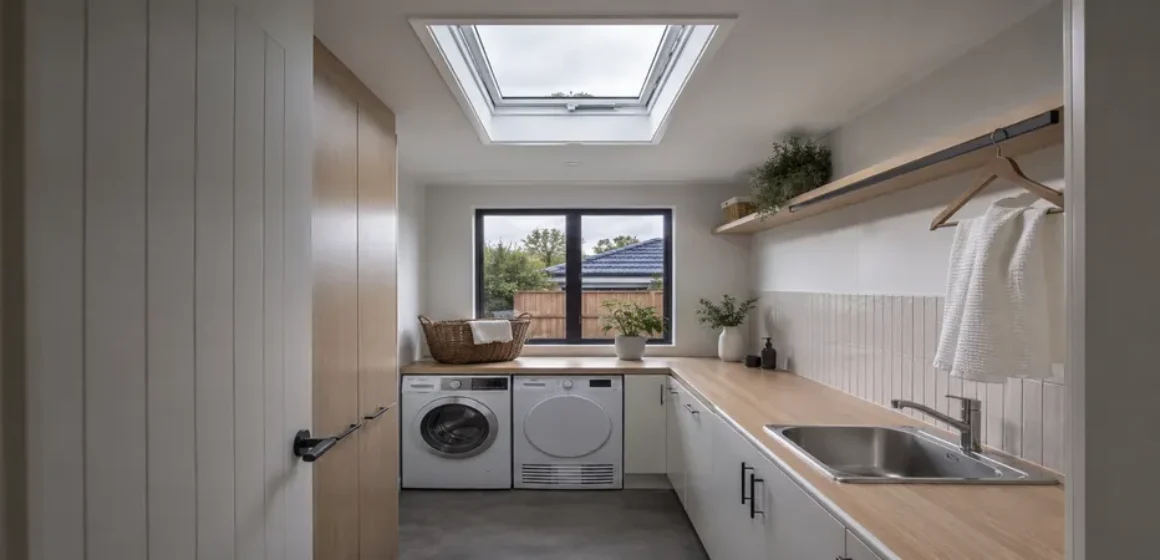
A fixed skylight may suit some laundries, especially where the room is larger, part of a mudroom, or connected to a wider utility area.
It may be worth considering when:
- The laundry has enough ceiling area
- The room is used frequently
- Stronger natural daylight is wanted
- The laundry connects with a back entry or mudroom
- The homeowner wants a more open feeling
- The roof and ceiling layout are suitable
- Ventilation is already handled separately
A fixed skylight can bring more direct overhead daylight into the space. It may suit homes where the laundry has become a more important household zone, not just a place for the washing machine.
This may apply where the laundry includes:
- Storage
- A folding bench
- A sink
- A drying area
- A mudroom bench
- Pet washing or pet storage
- Cleaning supply storage
- Garage access
- Outdoor access
A fixed skylight should still be carefully sized and placed. A laundry is often smaller than a kitchen or bathroom, so a large skylight may feel visually heavy or unnecessary.
The product should fit the room’s purpose.
When a vented skylight may be considered
A vented skylight may be relevant if the laundry needs both daylight and airflow.
It may be worth discussing when:
- The laundry feels stuffy
- Wet washing is often handled in the room
- The room has limited window opening
- Warm air gathers near the ceiling
- The laundry is part of a larger utility or mudroom area
- The roof and ceiling layout are suitable
- The skylight can be operated safely and conveniently
A vented skylight can support airflow in suitable conditions. It may help release warm or stale air when used correctly.
However, it should not be oversold.
A vented skylight does not replace good laundry ventilation, proper dryer ducting, sensible drying practices or moisture control. If the room has ongoing condensation or dampness, those causes should be reviewed separately.
In a laundry, a vented skylight may be part of a broader comfort plan. It should not be the only moisture strategy.
Laundry cupboards and compact utility spaces
Many modern homes have moved away from separate laundries.
Instead, the laundry may be inside a cupboard, hallway recess, garage-side alcove or compact utility nook. These spaces can be highly practical, but they often have little or no natural light.
A tubular skylight or Sky tube may be worth considering if:
- The laundry cupboard is used daily
- The ceiling and roof path are suitable
- The space feels dark even during the day
- Artificial lighting is needed for simple tasks
- The laundry is near a hallway that also lacks light
- The homeowner wants subtle daylight rather than a large skylight
In these spaces, the aim is not to create a bright room. It is to improve visibility and make the area feel less closed in.
A small amount of well-placed daylight can make a compact utility zone feel more intentional.
But ventilation still needs separate consideration. A laundry cupboard with appliances may need airflow planning, especially if heat and moisture are produced.
Laundries beside garages
Many Waikato homes have laundries near or beside internal access garages.
These rooms can feel particularly dark because they often sit away from the main window walls of the home. They may connect to a hallway, garage, back door or storage area rather than a bright living space.
A laundry in this position may feel like a transition zone rather than a proper room.
Common issues include:
- Low natural light
- Poor connection to the rest of the home
- Heavy use for shoes, bags, washing and storage
- Dim access from the garage
- Shadows from shelving or cabinetry
- A practical but unpleasant feeling
A tubular skylight or Sky tube may suit this type of laundry because it can bring daylight from above without relying on an external wall window.
If the laundry is larger or combined with a mudroom, a fixed skylight may also be worth considering.
The key is to assess how the laundry is used.
A utility room used several times a day deserves better than permanent shadow.
Laundries with back-door access
Some laundries act as the back entrance to the home.
They may connect to the clothesline, deck, driveway, garden, garage or outdoor storage. In theory, that sounds useful for daylight. In practice, the room may still feel dark if the back door is solid, the window is small, or the outdoor area is covered or shaded.
This is common where the laundry opens to:
- A covered porch
- A carport
- A side path
- A fence line
- A shaded service area
- A narrow outdoor gap between homes
- A south-facing or shaded wall
A skylight or tubular skylight may help if the existing wall opening does not bring in enough daylight.
This is especially useful where privacy, security or weather means the door and window are not kept open as often in winter.
The room can still function as a back entrance, but with a better daylight source from above.
Laundry skylight placement
Placement should follow the way the laundry is used.
In a laundry, daylight may need to support:
- The washing machine area
- The sink
- A folding bench
- Storage shelves
- A drying rail
- The back-door transition
- The path between garage and house
- A compact laundry cupboard
- The darkest corner of the room
The right placement is not always the centre of the ceiling.
For example, if the folding bench is the main working area, daylight may be most useful nearby. If the room is narrow, a central diffuser may be enough. If the laundry connects to a dark hallway, placement may need to consider both spaces.
Ask:
- Where do tasks happen?
- Where is the darkest section?
- Does storage block light?
- Is the ceiling crowded with lights, vents or access panels?
- Is there roof space above?
- Would one daylight point be enough?
- Should daylight also support the adjacent hallway or entry?
- Is the laundry being renovated?
The goal is useful daylight, not just a brighter ceiling.
Skylight size in a laundry
Laundry skylight size should be handled carefully.
A laundry is often smaller than other rooms, so a large skylight may not be necessary. In some cases, a tubular skylight or compact fixed skylight may provide enough natural light.
Size should consider:
- Room size
- Ceiling height
- Layout
- Storage
- Wall colour
- Flooring
- Window size
- Roof orientation
- Roof pitch
- Desired daylight level
- Whether the room is also a mudroom
- Whether the laundry connects to a hallway or garage
- Whether glare or heat could be an issue
Bigger is not automatically better.
A well-positioned smaller daylight source may suit a laundry better than a larger skylight placed without careful thought.
The right size is the one that improves daily use without overwhelming the room.
Roof and ceiling considerations
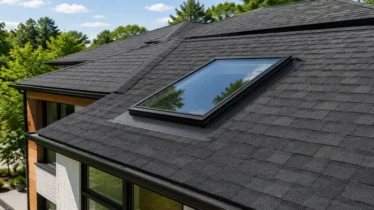
A laundry skylight becomes part of the roof system.
That means the roof and ceiling conditions matter.
Important considerations include:
- Roof type
- Roof pitch
- Roof profile
- Flashing requirements
- Roof age and condition
- Water flow direction
- Nearby valleys, ridges or gutters
- Existing roof penetrations
- Ceiling cavity depth
- Rafters or trusses
- Wiring
- Plumbing
- Dryer venting
- Insulation
- Existing lights or fans
- Access for installation
For tubular skylights and Sky tubes, the tube path matters. A shorter and straighter tube path is often simpler. If bends are needed, that should be considered during assessment.
For fixed or vented skylights, framing, flashing and internal finishing require careful planning.
This is why photos of both the laundry and roof can make an enquiry much more useful.
The room shows the problem. The roof helps shape the answer.
Laundry renovations: the best time to consider daylight
If the laundry is being renovated, daylight should be considered early.
Many homeowners focus first on cabinetry, appliances, benchtops, tapware and storage. Those details matter, but daylight can change how the whole room feels.
Early planning can help with:
- Skylight location
- Cabinetry layout
- Folding bench position
- Sink position
- Dryer ducting
- Ventilation
- Ceiling lights
- Electrical work
- Internal lining
- Roof access
- Painting and finishing
- Connection to hallway or garage spaces
If skylight planning is left too late, the best ceiling position may already be taken by cabinets, lights, fans, access panels or services.
For Waikato homeowners planning a laundry upgrade before spring, winter is a useful time to assess how the room performs at its darkest.
The drying clothes issue
Many homeowners associate laundries with dampness because wet clothes are handled there.
This needs careful thinking.
A skylight can bring daylight into the laundry. A vented skylight may support airflow in suitable situations. But a skylight should not be understood as a complete drying or moisture solution.
If the laundry is used for indoor drying, consider:
- Whether the room has enough ventilation
- Whether the dryer is properly vented
- Whether moisture is building up on windows or walls
- Whether clothes are drying slowly
- Whether the room is heated
- Whether there is extraction or airflow
- Whether the home has wider condensation issues
Daylight may make the room feel better, but moisture needs its own strategy.
A laundry skylight may improve the usability of the room. It should not be promoted as a guaranteed way to dry clothes faster or remove dampness.
This distinction keeps the advice honest and practical.
Artificial lighting still matters
Even with a skylight, a laundry still needs good artificial lighting.
A skylight supports daytime use. It does not help at night, early morning, or during very low-light conditions. A laundry used before work, after school or in the evening still needs suitable lighting.
A good laundry setup may include:
- Natural daylight for daytime use
- Ceiling lighting for night use
- Task lighting over benches, if needed
- Ventilation or extraction
- Dryer ducting where relevant
- Practical storage
- Durable finishes
- Sensible heating or airflow consideration
The skylight should work with the room, not replace every other improvement.
This is especially important in a utility space where function still matters most.
Common mistakes with laundry skylights
Laundry skylight planning can go wrong when the room is treated as too simple.
Common mistakes include:
Choosing a large skylight for a small room
A compact laundry may only need a tubular skylight or smaller daylight source.
Ignoring ventilation
Daylight does not remove moisture by itself.
Placing daylight away from the working area
The skylight should help the sink, machines, bench, storage or darkest section.
Forgetting dryer ducting and services
Laundry ceilings and roof spaces may include vents, wiring, plumbing or ducts.
Treating a laundry cupboard like a full room
Compact laundry spaces need a different approach.
Waiting until after renovation planning
Skylight planning should happen before cabinetry, lighting and ceiling plans are finalised.
Expecting a skylight to solve all dampness
Moisture, condensation and drying issues need broader review.
A good laundry skylight decision respects the room’s practical role.
When a laundry skylight may not be the first answer
A laundry skylight may not be the best first step if:
- The room already has enough daylight
- The main problem is poor artificial lighting
- The issue is moisture rather than darkness
- Dryer ventilation is inadequate
- The room has an unresolved leak
- The ceiling is too crowded with services
- The roof above is unsuitable
- The laundry layout is about to change
- Storage is blocking existing light
- Better ventilation should be addressed first
In some laundries, a skylight may still be useful later. But the first priority may be extraction, dryer ducting, heating, layout changes, storage improvements or better artificial lighting.
The right solution depends on the cause of the problem.
The winter laundry test
Winter is a good time to assess whether a laundry needs better daylight.
Turn the light off during the day and look at the room honestly.
Ask:
- Does the laundry feel dull during daylight hours?
- Is the room darker than nearby spaces?
- Is the window too small, shaded or privacy-limited?
- Does the laundry feel heavier in winter?
- Does wet washing make the room feel more closed in?
- Is the ceiling light used for simple daytime tasks?
- Does the room connect to a dark hallway or garage entry?
- Is the issue daylight, ventilation, moisture, layout or all of these?
- Is renovation planned soon?
- Is there roof space above the room?
These questions help determine whether a skylight, tubular skylight or Sky tube may be worth considering.
They also help clarify whether the laundry needs daylight only, or a broader improvement plan.
Illustrative example only
A Waikato homeowner has a small laundry beside the internal access garage. The room has a narrow window facing a shaded side path, but it does not bring much useful daylight into the room. In winter, the laundry light is used during the day, and the space feels dull when sorting washing or using the sink.
The homeowner asks whether a skylight would help.
If the laundry is compact and mainly needs practical brightness, a tubular skylight or Sky tube may be a suitable option to consider. If the laundry is larger or part of a mudroom, a fixed skylight may also be worth assessing. If the room feels stuffy or moisture is a concern, ventilation and dryer ducting should be reviewed separately.
The issue is not simply that the room is small.
The issue is that a room used every day should not feel like an afterthought.
What to send when asking for a laundry skylight quote
Good information helps shape a better recommendation.
For a laundry skylight enquiry, send:
- Photos of the laundry from several angles
- A photo of the ceiling
- A photo of the darkest part of the room
- A photo of any existing window or back door
- A photo showing the washing machine, dryer, sink and bench areas
- A photo of the roof above or near the laundry, if possible
- The approximate room size
- Whether the laundry is separate, internal or inside a cupboard
- Whether the laundry connects to a garage, hallway or back entrance
- Whether the home has a metal roof, tile roof or another roof type
- Whether moisture, condensation or drying clothes are a concern
- Whether there is dryer ducting or extraction
- Whether the laundry is being renovated
- Whether you prefer a fixed, vented or tubular option
- The time of day the laundry feels darkest
These details help determine whether a fixed skylight, vented skylight, tubular skylight or Sky tube may suit the room.
They also help avoid generic advice.
The best laundry skylight outcome
The best result is not a laundry that feels dramatic.
It is a laundry that feels easier to use.
A good outcome may mean:
- The laundry feels less gloomy during the day
- Washing and sorting are easier in natural light
- The room feels cleaner and more intentional
- The back entrance or garage transition feels better
- A compact utility space feels less closed in
- Artificial lighting is needed less during daylight hours
- Ventilation needs are considered separately and honestly
- The product suits the room and roof together
A laundry may be a utility room, but it is still part of the home.
If it is used every day, it deserves practical daylight planning.
Planning your next step
If your Waikato laundry feels dark, closed in or overly dependent on artificial lighting during the day, it may be worth considering whether overhead daylight could help.
A tubular skylight or Sky tube may suit compact laundries, laundry cupboards, garage-side utility spaces and back-door zones where subtle practical daylight is enough. A fixed skylight may suit larger laundries or mudroom-style spaces where stronger daylight is wanted. A vented skylight may be worth discussing where airflow is also part of the concern, but moisture control, dryer ducting and ventilation should still be reviewed separately.
Skylights NZ can help you review which option may suit your laundry, roof type, ceiling layout and desired outcome.
To start planning your options, use the Skylights NZ enquiry form:
https://inquiry.skylights.co.nz/inquiry
You may also find these useful:
- Skylight installation services
- Request a skylight quote
- Skylight options for NZ homes
- Why Waikato Homes Feel Darker in Winter, and When a Skylight Can Help
- Dark Hamilton Hallways: Why Winter Shows the Problem Clearly
- Bathroom Skylights in Waikato: Daylight, Privacy and Ventilation Explained
- Kitchen Skylights in Hamilton Homes: Where Daylight Should Actually Land
FAQs
Is a skylight a good idea for a laundry in Waikato?
A skylight may be a good idea for a Waikato laundry if the room lacks useful natural daylight and has a suitable roof and ceiling layout. Many smaller laundries may suit a tubular skylight or Sky tube rather than a large fixed skylight.
What type of skylight is best for a small laundry?
A tubular skylight or Sky tube can suit a small laundry, internal laundry or laundry cupboard where practical daylight is needed without a large visible skylight. A fixed skylight may suit larger laundries or mudroom-style spaces.
Can a laundry skylight help with dampness?
A skylight can improve daylight, and a vented skylight may support airflow in suitable situations. However, dampness, condensation and slow drying may also involve ventilation, dryer ducting, heating and moisture control. A skylight should not be treated as a complete dampness solution.
Is a vented skylight useful in a laundry?
A vented skylight may be useful in some laundries where airflow is also part of the problem. Suitability depends on roof conditions, placement, operation method and the room’s moisture needs. It should be considered alongside proper ventilation and dryer ducting.
Can a tubular skylight work in a laundry cupboard?
A tubular skylight or Sky tube may work in some laundry cupboards or compact utility spaces if the roof and ceiling path are suitable. Ventilation still needs separate assessment, especially where appliances produce heat or moisture.
What should I send for a laundry skylight quote?
Send photos of the laundry, ceiling, darkest area, appliances, existing window or back door, and roof above the room if possible. Include the room size, roof type, whether the laundry is internal or separate, and whether moisture or ventilation is a concern.