Best Rooms for Skylights in Waikato Homes: A Practical Homeowner Guide
Not every room needs a skylight.
Some rooms already have enough natural light. Some mainly need better artificial lighting. Some need ventilation more than daylight. Some are used mostly at night. Others have roof or ceiling conditions that need careful assessment before a skylight can be recommended.
But in many Waikato homes, there are rooms that consistently feel darker than they should.
A hallway needs the light on during the day. A bathroom feels private but enclosed. A kitchen island feels dull in winter. A laundry feels like a utility leftover. A bedroom doubles as a home office but lacks useful daytime light. A walk-in wardrobe feels closed in. A garage conversion still feels like a former garage. An open-plan room is bright at one end and flat at the other.
For homeowners asking about the best rooms for skylights in Waikato, the answer depends on how the room is used, how much daylight it receives now, what roof sits above it, and whether the goal is daylight only or daylight plus airflow.
This guide compares common rooms in Waikato homes and explains when a fixed skylight, vented skylight, tubular skylight or Sky tube may make sense.
Start with the problem room
The best skylight decision starts with one question:
Which room is not working properly during the day?
A skylight should solve a real room problem. It should not be added simply because there is empty ceiling space or because another room in the house has one.
A room may be worth assessing if:
- It needs artificial lighting during the day
- It feels worse in winter
- It has no useful window
- Privacy limits window use
- It sits in the centre of the home
- A veranda, eave or covered patio blocks side light
- The room is used often but feels dull
- Renovation work is planned
- The room has changed use over time
- The existing skylight is old, leaking or underperforming
Once the problem room is clear, the product decision becomes easier.
A hallway may suit a tubular skylight or Sky tube. A living room may need a fixed skylight. A bathroom may need daylight and ventilation considered separately. A bedroom may need blinds and light control. A kitchen may need daylight over the working zone rather than the centre of the ceiling.
The room should guide the recommendation.
The three broad skylight options
Before comparing rooms, it helps to understand the main skylight types.
Fixed skylights
A fixed skylight brings natural light into the room but does not open. It may suit kitchens, living rooms, bedrooms, dining areas, home offices, entries and larger bathrooms where daylight is the main goal.
Vented skylights
A vented skylight opens to support airflow as well as daylight. It may suit some bathrooms, kitchens, high-ceiling rooms, upper-level rooms or stuffier spaces. It should be chosen because airflow is genuinely needed, not simply because it sounds like the premium option.
Tubular skylights and Sky tubes
A tubular skylight or Sky tube brings daylight from the roof through a reflective tube and delivers it through a ceiling diffuser. These often suit hallways, separate toilets, walk-in wardrobes, laundries, pantries, sculleries and compact internal rooms.
A tubular skylight or Sky tube does not ventilate the room by itself.
Choosing the right option depends on the room, roof, ceiling and desired outcome.
Hallways: often one of the best rooms for a skylight
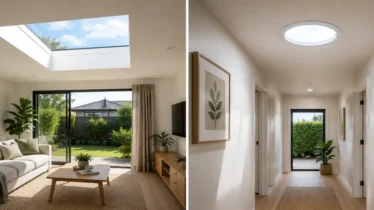
Hallways are one of the strongest candidates for skylights in Waikato homes.
Many hallways sit in the centre of the floor plan and rely on borrowed light from bedrooms, living rooms or entries. In winter, that borrowed light often becomes weaker. Bedroom doors may stay closed. The hallway light may be used during the day.
A hallway may suit a skylight if:
- The hallway is internal
- The middle section feels dark
- The light is used during the day
- The hallway connects bedrooms, bathrooms or laundry areas
- The home has no useful hallway window
- The ceiling and roof path are suitable
For many hallways, a tubular skylight or Sky tube may be the most practical option. It can provide soft daytime brightness without needing a large visible skylight opening.
A fixed skylight may suit a wider hallway, entry or stairwell where a stronger daylight feature is wanted.
For long hallways, one daylight point may not be enough. Placement should focus on where the hallway actually feels darkest.
Bathrooms and ensuites: good candidates when privacy limits windows
Bathrooms and ensuites are common skylight candidates because they often need privacy.
A bathroom may have a small frosted window, no useful window, or a window that cannot be enlarged without privacy concerns. This can leave the room feeling enclosed, especially in winter.
A bathroom may suit a skylight if:
- The room feels dark during the day
- The shower or vanity lacks daylight
- Privacy limits window options
- The bathroom is internal
- The ensuite has no useful daylight
- Renovation work is planned
- Ventilation and moisture are also being reviewed
A fixed skylight may suit larger bathrooms where daylight is the main issue. A tubular skylight or Sky tube may suit compact bathrooms, ensuites and separate toilets. A vented skylight may be discussed where airflow is also a real need.
However, daylight and ventilation should not be confused.
A skylight can improve brightness. A vented skylight may support airflow. But extraction, heating and moisture control may still need proper planning.
Separate toilets: small rooms that can benefit from daylight
Separate toilets are small, but they are often used frequently.
Many have no useful window or rely on a tiny privacy window. The light may be switched on every time, even during the day. The room can feel like a cupboard rather than a proper part of the home.
A separate toilet may suit a skylight if:
- It has no useful natural light
- It feels closed in
- It sits off a dark hallway
- Privacy limits wall-window daylight
- The ceiling and roof path are suitable
- The homeowner wants practical daytime brightness
A tubular skylight or Sky tube is often more suitable than a full fixed skylight for this kind of compact room.
Ventilation should still be considered separately. A tubular skylight improves daylight, but it does not provide odour control or airflow by itself.
For small internal toilets, the best result is usually subtle practical daylight rather than a dramatic skylight feature.
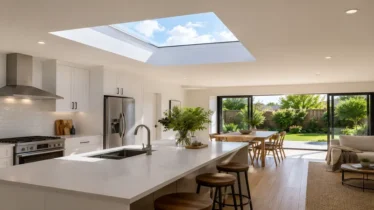
Kitchens: strong candidates when daylight misses the working zone
Kitchens are often good skylight candidates, but placement matters.
The goal should not be to put a skylight anywhere in the kitchen ceiling. The goal should be to bring daylight where the kitchen is actually used.
A kitchen may suit a skylight if:
- The island feels dull
- The main preparation bench lacks daylight
- The sink window does not light the rest of the kitchen
- The kitchen sits away from exterior windows
- A veranda, eave or covered patio reduces side light
- The kitchen is being renovated
- The pantry or scullery behind the kitchen is dark
A fixed skylight may suit a kitchen where stronger overhead daylight is wanted. A tubular skylight or Sky tube may suit a pantry or scullery. A vented skylight may be discussed if airflow is genuinely needed, but cooking extraction should still be handled separately.
Kitchen skylight planning should consider:
- Island position
- Benchtop glare
- Pendant lights
- Downlights
- Rangehood ducting
- Cabinetry
- Roof pitch
- Internal finishing
- Blinds or light control, where relevant
A good kitchen skylight supports the working zone, not just the ceiling.
Pantries and sculleries: often better suited to tubular skylights
Pantries and sculleries are hardworking support spaces.
They may be hidden behind the main kitchen, tucked along an internal wall, or located where no window is available. These rooms often need practical daylight rather than a large feature skylight.
A pantry or scullery may suit a skylight if:
- The room has no useful daylight
- Shelves are hard to see
- The scullery bench feels dull
- The pantry light is used during the day
- The room is part of a kitchen renovation
- The ceiling and roof path are suitable
A tubular skylight or Sky tube may be ideal for many pantries and compact sculleries because it provides soft practical daylight through a diffuser.
A fixed skylight may suit a larger scullery where stronger daylight is needed over a bench, sink or preparation area.
If the scullery includes a sink, dishwasher or appliances, airflow and moisture should be assessed separately.
Living rooms: useful when the room feels flat or uneven
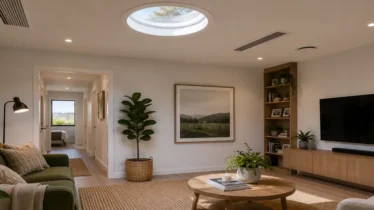
Living rooms can benefit from skylights, but they need careful planning.
A living room may already have windows or sliding doors, but still feel dull in the centre or rear section. A covered outdoor area, deep eave, orientation, neighbouring building or tree shading may reduce side light.
A living room may suit a skylight if:
- The room feels flat in winter
- The seating area lacks natural light
- The room is deeper than the window light can reach
- The living area connects to a covered patio
- The central ceiling feels dull
- The room is being renovated
- The homeowner wants a stronger daylight effect
A fixed skylight may suit a living room where better overhead daylight is wanted. A vented skylight may be discussed if airflow is also useful. A tubular skylight or Sky tube may suit adjoining hallways, entries or compact dark corners.
Living rooms need glare planning.
Before choosing placement, consider the television, seating, reflective floors, windows, blinds and summer brightness.
The best living room skylight improves comfort without making the room harder to use.
Open-plan rooms: good candidates when daylight is uneven
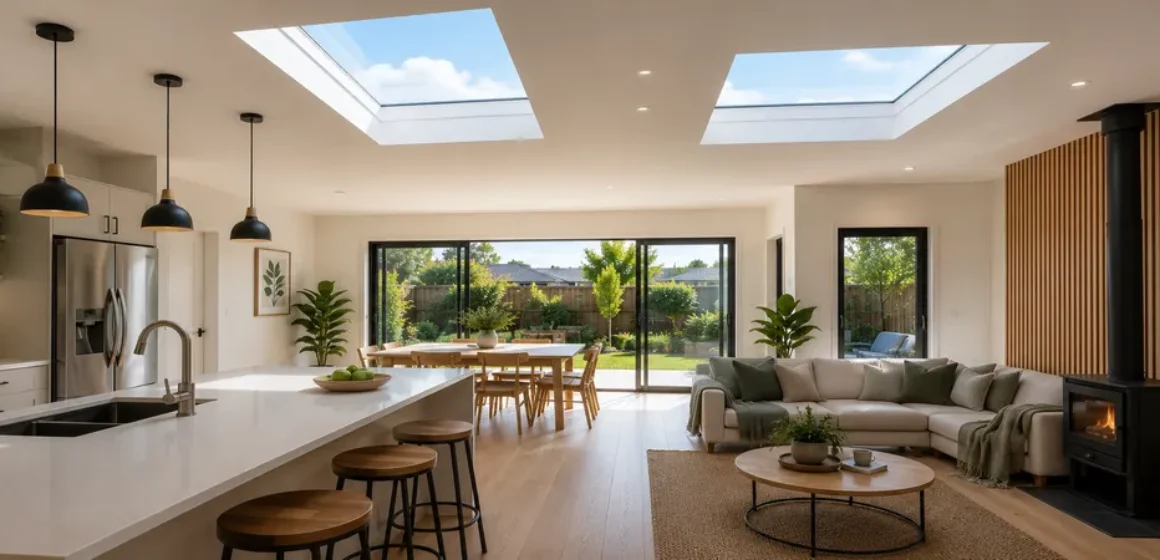
Open-plan kitchens, dining and living spaces can look bright at first, but many have uneven daylight.
One area may be bright while another feels dull. The kitchen island may need lights on, the dining area may feel flat, or the living zone may sit too far from the main windows.
An open-plan room may suit a skylight if:
- The centre of the room feels dark
- The kitchen and living zones are unevenly lit
- The island or dining area lacks daylight
- A covered deck reduces window light
- The room is being renovated
- The homeowner wants a more balanced daylight feel
A fixed skylight may suit the main open-plan area. A tubular skylight or Sky tube may suit the pantry, scullery, hallway or internal spaces connected to it. A vented skylight may be discussed if airflow is genuinely part of the issue.
Open-plan skylights need placement discipline.
A skylight over the wrong zone can create glare, imbalance or poor value.
Bedrooms: suitable when daylight and light control are balanced
Bedrooms can benefit from skylights, but they need more caution than hallways or kitchens.
A bedroom is used for sleep, rest, privacy, dressing, reading and sometimes working from home. Daylight is useful, but too much uncontrolled light can become a problem.
A bedroom may suit a skylight if:
- It feels dark during the day
- It is also used as a home office
- Privacy limits window daylight
- The room faces a shaded side of the home
- The bedroom has a connected dark wardrobe
- The homeowner wants better daytime use
- Blinds or light control can be considered
A fixed skylight may suit larger bedrooms. A tubular skylight or Sky tube may suit walk-in wardrobes, small bedrooms or dressing areas. A vented skylight may be discussed if airflow is also a real concern.
For bedrooms, consider:
- Bed position
- Morning light
- Sleep comfort
- Privacy
- Blinds
- Heat and glare
- Whether the room is used during the day
A bedroom skylight should improve daily use without compromising rest.
Home offices: useful when winter daylight is poor
Home offices have become more important in many homes.
A room that was acceptable as a spare bedroom may feel dull when used for work. Poor daylight can make the space feel flat and less comfortable during winter afternoons.
A home office may suit a skylight if:
- It feels dull during work hours
- The desk lacks natural light
- Windows are small or privacy-limited
- The room faces a shaded direction
- The office is used regularly
- The ceiling and roof layout are suitable
A fixed skylight may suit a larger office where stronger daylight is wanted. A tubular skylight or Sky tube may suit compact offices or study nooks. A vented skylight may be discussed if airflow is also useful.
Screen glare is the main concern.
Before choosing placement, consider desk position, monitor direction, video calls, blinds and artificial lighting.
A home office skylight should support work, not create reflection problems.
Laundries: useful where practical daylight is missing
Laundries often sit in darker parts of the home.
They may be near garages, back doors, side access, hallways or internal utility zones. The room may be small, but it may be used every day.
A laundry may suit a skylight if:
- It has no useful daylight
- The room feels like a utility leftover
- The laundry light is used during the day
- The room is being renovated
- The laundry connects to a dark hallway or garage entry
- The ceiling and roof path are suitable
A tubular skylight or Sky tube may suit compact laundries and laundry cupboards. A fixed skylight may suit larger laundries or mudrooms. A vented skylight may be discussed only where airflow is genuinely part of the concern.
Moisture should be assessed separately.
Dryer ducting, wet washing, extraction and ventilation are not solved by daylight alone.
Walk-in wardrobes: good candidates for soft practical daylight
Walk-in wardrobes are often internal and windowless.
They may not need a full skylight, but they can benefit from soft daylight that makes clothing, shelving and storage easier to see.
A walk-in wardrobe may suit a skylight if:
- Clothing colours are hard to see
- The wardrobe light is used during the day
- The space feels enclosed
- It sits between a bedroom and ensuite
- The room is used daily
- The ceiling and roof path are suitable
A tubular skylight or Sky tube is often the most practical option for wardrobes.
A fixed skylight may suit a larger dressing room, but harsh light and privacy should be considered.
If the wardrobe feels stale or moisture-affected because of an adjoining ensuite, ventilation should be assessed separately.
The goal is practical visibility, not excessive brightness.
Stairwells: useful when safety and visibility matter
Stairwells can benefit from skylights when they feel dark, enclosed or visually disconnected from the rest of the home.
Daylight can help improve visibility on steps and landings, but placement needs care. Glare and contrast can be problematic if daylight is too strong in the wrong spot.
A stairwell may suit a skylight if:
- The stairs feel dark during the day
- The landing lacks daylight
- The stairwell sits inside the home
- The space feels enclosed
- The ceiling and roof layout are suitable
- Access and cleaning can be considered
A fixed skylight may suit some stairwells. A tubular skylight or Sky tube may suit smaller stair landings or connected hallways. A vented skylight may be discussed where warm air gathers and operation is practical.
Artificial lighting still matters.
A stairwell needs safe visibility at all times, including evenings and winter mornings.
Garage conversions: skylights can help the new room feel less like a garage
Garage-to-living conversions can struggle with daylight.
The space may have walls, flooring and paint, but still feel like a former garage because windows are limited, ceiling height feels low, or the room is disconnected from the rest of the home.
A garage conversion may suit a skylight if:
- The room lacks useful natural light
- The former garage door area does not provide enough daylight
- Privacy limits wall windows
- The room is being used as a bedroom, office, studio or living space
- The conversion is being planned or renovated
- The roof and ceiling allow a suitable product
A fixed skylight may suit larger converted rooms. A tubular skylight or Sky tube may suit compact internal zones, storage areas or bathroom additions. A vented skylight may be discussed where airflow is also a genuine need.
Garage conversions also require broader planning around insulation, ventilation, moisture, heating and compliance.
A skylight may help daylight, but it is only one part of making the room work properly.
Internal rooms and storage areas
Internal rooms are often strong candidates for tubular skylights or Sky tubes.
These rooms may include:
- Storage rooms
- Linen cupboards
- Utility rooms
- Office nooks
- Internal bathrooms
- Garage entries
- Pantries
- Wardrobes
- Separate toilets
- Laundry cupboards
A skylight may help if the room is used during the day and feels overly dependent on artificial lighting.
For compact rooms, a tubular skylight or Sky tube may provide practical daylight without overcomplicating the ceiling.
However, not every internal room needs a skylight. If the room is rarely used or mostly used at night, better artificial lighting may be more practical.
The best candidate rooms are those used frequently during the day.
Rooms that may not need a skylight
A skylight is not always the first or best answer.
A room may not need a skylight if:
- It already has good natural light
- It is mostly used at night
- Better artificial lighting would solve the issue
- The roof above is unsuitable
- The room is about to be renovated and layout is uncertain
- Ventilation or moisture is the main concern
- Glare would be difficult to manage
- The ceiling cavity is heavily obstructed
- The roof is in poor condition
- The homeowner expects daylight to solve heating or dampness
A good recommendation should be honest enough to say when a skylight may not be the first step.
Sometimes the right answer is lighting. Sometimes it is ventilation. Sometimes it is roof repair first. Sometimes it is waiting until renovation plans are clearer.
The best room for a skylight is one where daylight solves a real problem and the roof can support the installation.
Roof type affects every room decision
The best room from an interior perspective still needs a suitable roof above it.
Waikato homes may have:
- Metal roofs
- Corrugated roofs
- Long-run metal roofs
- Concrete tile roofs
- Terracotta tile roofs
- Low-pitch roof sections
- Older roof profiles
- Additions and extensions
- Roofs with solar panels
- Roofs with existing vents, flues or penetrations
Roof type affects product choice, flashing, placement, installation time and quote accuracy.
A skylight for a hallway under a simple roof may be different from a skylight for a bathroom under a low-pitch extension or a kitchen under a tile roof.
Room suitability and roof suitability must be considered together.
That is why photos of both the room and roof are useful when requesting a quote.
New installation vs replacement
Some homeowners are choosing a skylight for a dark room for the first time. Others already have an old skylight that needs replacement.
These are different conversations.
A new installation may involve:
- Choosing the best product type
- Confirming roof suitability
- Creating a new roof and ceiling opening
- Flashing
- Internal finishing
- Plastering and painting, where required
A replacement may involve:
- Assessing the old skylight
- Checking the existing opening
- Reviewing flashing and roof condition
- Investigating leaks or stains
- Deciding whether like-for-like replacement makes sense
- Considering whether an upgrade would better suit the room
An old skylight should not automatically be replaced with the same product if the room’s needs have changed.
Replacement can be an opportunity to improve the room.
Renovation timing matters
Renovation is one of the best times to think about skylights.
This applies to:
- Kitchen renovations
- Bathroom renovations
- Laundry renovations
- Open-plan living upgrades
- Garage conversions
- Bedroom changes
- Hallway upgrades
- Roof repairs
- Ceiling work
- Painting and plastering
- Electrical and lighting changes
Planning early helps coordinate:
- Skylight placement
- Ceiling lights
- Ducting
- Extractor fans
- Rangehoods
- Cabinetry
- Plastering
- Painting
- Roof access
- Internal finishing
- Blinds or controls
If skylight planning is left until after the renovation is finished, the best location may be harder to achieve and rework may be needed.
Daylight should be part of the room plan, not an afterthought.
Daylight and ventilation are different
This is one of the most important points for homeowners.
A fixed skylight improves daylight but does not open.
A tubular skylight or Sky tube improves daylight but does not ventilate by itself.
A vented skylight may support airflow in suitable rooms, but it does not replace every ventilation requirement.
This matters in:
- Bathrooms
- Laundries
- Kitchens
- Bedrooms
- Garage conversions
- Internal rooms
- Rooms with condensation or musty smells
A dark bathroom may need daylight.
A steamy bathroom may need extraction.
A dark and steamy bathroom may need both daylight and ventilation planning.
The same applies to laundries, kitchens and converted spaces.
A good skylight recommendation should keep daylight, airflow, moisture and odour separate.
Glare and light control
Some rooms need light control more than others.
Blinds or careful placement may be important in:
- Bedrooms
- Nurseries
- Home offices
- Living rooms
- Media rooms
- Open-plan spaces
- Dining areas
- Kitchens with glossy benchtops
- Rooms with screens or polished floors
Hallways, toilets, wardrobes and pantries may not need the same level of light control, especially where a tubular skylight or Sky tube is used.
The stronger the daylight effect, the more important it is to consider glare, blinds and summer comfort.
A skylight should make the room easier to use, not introduce a new problem.
What affects the quote?
The quote can vary depending on the room and roof.
Key factors include:
- Product type
- Skylight size
- Fixed, vented or tubular option
- Roof type
- Roof pitch
- Flashing requirements
- Roof condition
- Internal ceiling structure
- Tube length or bends for tubular skylights
- Internal finishing
- Number of skylights
- New installation or replacement
- Electrical work, if needed
- Blinds or controls, if included
- Plastering and painting
- Scaffolding or access requirements
- Whether renovation work is happening
- Location within Waikato
Two rooms can need the same level of daylight but require different installation work because the roof and ceiling conditions are different.
This is why a proper quote needs photos and context.
A generic price is rarely enough.
What photos help with a quote?
To help Skylights NZ recommend the right option, send:
- Photos of the room from several angles
- A photo of the ceiling
- A photo of the darkest area
- Photos of existing windows and doors
- Roof photos above or near the room, if safe
- Wider roof photos showing roof type and access
- Photos of existing skylights, if replacing
- Photos of ceiling stains or damage, if present
- Photos of nearby vents, solar panels, valleys or gutters
- Photos showing access around the home
Do not climb onto the roof to take photos.
Safe ground-level photos, driveway photos, photos from an upstairs window or photos from another safe vantage point are helpful.
The best quote starts with a clear view of both the room and the roof.
A simple room-by-room priority guide
For many Waikato homes, the strongest skylight candidates are usually:
High priority
- Hallways
- Bathrooms
- Kitchens
- Living rooms
- Open-plan spaces
- Old skylight replacements
- Garage conversions
Good practical candidates
- Separate toilets
- Laundries
- Walk-in wardrobes
- Pantries
- Sculleries
- Stairwells
- Home offices
Case-by-case candidates
- Bedrooms
- Storage rooms
- Dining areas
- Utility rooms
- Mudrooms
- Internal offices
- Rural farmhouse additions
- Low-pitch roof areas
This is not a strict rule.
A small internal toilet may be a better candidate than a large living room if the living room is already bright. A kitchen may not need a skylight if the real problem is poor artificial lighting. A hallway may be the best first project if it affects the daily feel of the whole home.
The best room is the one where daylight will make the most practical difference.
Common mistakes when choosing a skylight room
Choosing the biggest room first
The most used or darkest room may be more important than the largest room.
Ignoring hallways
A dark hallway can affect how the whole home feels.
Treating bathrooms as daylight-only problems
Ventilation, extraction and moisture still matter.
Placing kitchen skylights away from the working zone
Kitchen daylight should support the island, bench or preparation area.
Forgetting glare in living rooms and offices
Screens, polished floors and benchtops need consideration.
Choosing a fixed skylight when a tubular skylight would suit better
Compact spaces often need practical daylight, not a large roof opening.
Choosing a vented skylight without a genuine airflow need
A vented skylight should solve a real room problem.
Ignoring roof suitability
The best room still needs a suitable roof above it.
Avoiding these mistakes leads to better product selection and a clearer quote.
Illustrative example only
A Waikato homeowner has three dark areas: a central hallway, a bathroom and an open-plan living space.
The hallway needs lights on during the day. The bathroom has a small privacy window and feels enclosed. The open-plan room is generally bright but feels dull near the dining area in winter.
The homeowner asks which room should be prioritised.
The hallway may be the strongest first candidate because it affects daily movement through the home and may suit a tubular skylight or Sky tube. The bathroom may also be worth assessing, but ventilation and moisture should be discussed separately. The open-plan room may suit a fixed skylight only if the dull zone is significant enough and glare can be managed.
Another home may have a different answer.
The best room for a skylight depends on daily use, daylight weakness, roof suitability and the desired outcome.
The best skylight outcome
The best skylight outcome is not simply a brighter home.
It is a better-functioning room.
A good result may mean:
- A hallway feels naturally usable during the day
- A bathroom feels brighter without losing privacy
- A kitchen island receives better working light
- A living room feels less flat in winter
- A bedroom works better as a daytime space
- A laundry feels less like a utility leftover
- A wardrobe becomes easier to use
- A garage conversion feels more like part of the home
- The product suits the roof type and pitch
- Ventilation and light control are handled properly
- The quote explains inclusions and exclusions clearly
A skylight should solve the right problem in the right room.
That is what makes it worth doing.
Planning your next step
If you are unsure which room in your Waikato home is best for a skylight, start by identifying the spaces that need artificial lighting during the day or feel noticeably dull in winter.
A fixed skylight may suit larger rooms where stronger daylight is wanted. A vented skylight may suit some rooms where airflow is genuinely needed. A tubular skylight or Sky tube may suit compact internal rooms such as hallways, toilets, wardrobes, pantries, sculleries and laundries.
Skylights NZ can help review which option may suit your room, roof type, ceiling layout and desired outcome.
To start planning your options, use the Skylights NZ enquiry form:
https://inquiry.skylights.co.nz/inquiry
You may also find these useful:
- Skylight installation services
- Request a skylight quote
- Skylight options for NZ homes
- Skylight Installation Cost in Waikato: What Affects the Final Quote?
- Getting a Skylight Quote in Waikato: What Photos and Details Help Us Recommend the Right Option
- Fixed or Vented Skylight for a Waikato Home: How to Choose Room by Room
- Tubular Skylights for Waikato Hallways, Toilets and Walk-in Wardrobes
- Kitchen Skylights in Hamilton Homes: Where Daylight Should Actually Land
- Bathroom Skylights in Waikato: Daylight, Privacy and Ventilation Explained
- Waikato Laundry Skylights: When a Small Utility Room Needs Better Daylight
- Planning Skylights During a Waikato Renovation: Why Timing Matters
FAQs
What are the best rooms for skylights in Waikato homes?
The best rooms are usually those that feel dark during the day and are used regularly. Common candidates include hallways, bathrooms, kitchens, living rooms, open-plan areas, separate toilets, laundries, walk-in wardrobes, pantries, stairwells, home offices and garage conversions.
Are hallways good rooms for skylights?
Yes, hallways are often strong candidates because they commonly sit inside the floor plan and rely on borrowed light. A tubular skylight or Sky tube may suit many hallways where practical daytime brightness is needed.
Are bathrooms good rooms for skylights?
Bathrooms can be good candidates, especially where privacy limits wall-window daylight. A fixed skylight, vented skylight, tubular skylight or Sky tube may be suitable depending on the room. Ventilation and moisture should still be assessed separately.
Should I put a skylight in the kitchen or living room first?
It depends on which room has the stronger daylight problem. A kitchen skylight should support the island or preparation area. A living room skylight should improve comfort without causing glare. The best first room is the one where daylight will make the most practical difference.
Are tubular skylights good for small rooms?
Yes, tubular skylights and Sky tubes can be practical for small or internal rooms such as hallways, toilets, wardrobes, laundries, pantries and storage spaces. They provide daylight through a ceiling diffuser but do not ventilate the room by themselves.
What should I send if I am unsure which room needs a skylight?
Send photos of the rooms that feel darkest, ceiling photos, roof photos if safe, and a short explanation of how each room is used. Include your Waikato location, roof type if known, and whether daylight, airflow, privacy, glare or renovation timing are concerns.