Living Room Skylights in Cambridge Homes: Winter Daylight for Everyday Spaces
The living room is usually where the home is meant to feel most comfortable.
It is where people sit after work, gather with family, watch television, read, host visitors, spend rainy afternoons, and move through the slower parts of winter. It may connect with the kitchen, dining area, hallway, deck or garden. In many Cambridge homes, the living room is the space that carries the feeling of the whole house.
So when the living room feels dull, the home can feel dull with it.
This often becomes clearer in winter. A living room that feels fine in summer may start to feel flat from June onwards. The back of the room may sit in shadow. The main seating area may rely on artificial lighting during the day. The window light may not reach far enough into the room. The space may look colder than it feels. By mid-afternoon, the room may no longer feel as open, warm or inviting as it should.
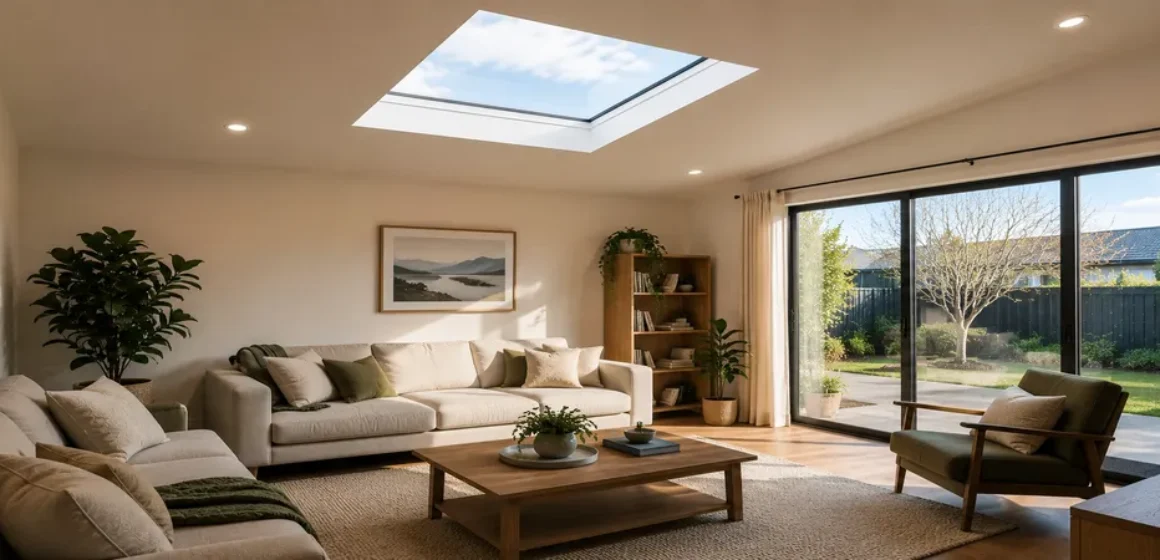
For homeowners considering a living room skylight Cambridge project, the key question is not simply whether a skylight will make the room brighter.
The better question is:
Where does the living room need daylight, and how can that daylight support comfort without creating glare, heat or visual imbalance?
A fixed skylight may suit some Cambridge living rooms where stronger overhead daylight is wanted. A vented skylight may be worth considering where airflow is also part of the issue. A tubular skylight or Sky tube may suit darker adjoining areas, hallway transitions or compact living corners where subtle daylight is enough.
This guide explains how to think clearly about living room skylights in Cambridge homes before making an enquiry.
Why living rooms feel different in winter
A living room can change character across the seasons.
In summer, exterior doors may be open. The garden may reflect more light into the home. Days are longer. The room may feel connected to outdoor spaces. Even if the living room is not especially bright, it may still feel comfortable because the wider home is lighter.
In winter, the room is tested differently.
Doors are closed more often. Curtains may stay drawn for warmth or privacy. The sun sits lower. Shaded sides of the home receive less useful daylight. Outdoor areas may look grey or wet. Rooms with deep floor plans can lose brightness in the centre or rear. Artificial lighting becomes part of the daytime routine.
Common signs include:
- The living room light is on during the day
- The back of the room feels dull
- The main seating area sits away from the window light
- The room looks cooler because it is shadowed
- The television area has uneven light or glare
- The open-plan connection with the kitchen feels unbalanced
- Corners feel heavy or underused
- The living room feels worse after lunch
- The room feels less welcoming in winter than summer
A skylight may be worth considering when the room regularly lacks useful daylight during the day and the roof and ceiling layout can support a suitable option.
But the goal should be comfort, not brightness for its own sake.
Cambridge homes and living room daylight
Cambridge has a mix of older homes, renovated homes, family houses, lifestyle properties, newer builds and townhouses. Living room layouts can vary widely.
Some homes have a separate lounge. Others have open-plan kitchen, dining and living spaces. Some have deep living areas extending away from the main window wall. Others have living rooms shaded by verandas, neighbouring homes, fences, hedges, outdoor structures or mature trees.
A living room may technically have natural light, but still not have useful daylight where it matters.
For example:
- A large front window may brighten one side of the room, while the rear stays dull
- A sliding door may bring daylight to the dining area, but not the seating area
- A covered patio may reduce light into the living space
- A south-facing or shaded living room may feel flat in winter
- A renovated open-plan space may have a kitchen that feels brighter than the lounge
- A room with dark flooring or heavier furnishings may absorb daylight
- A TV wall may need careful planning to avoid glare
This is why living room skylight planning needs to be specific to the room.
A skylight should not simply be placed where the ceiling has space. It should be placed where the daylight improves how the living room is used.
Start with the living room’s role
Before choosing a skylight, define what the living room needs to do.
A living room can be:
- A family gathering space
- A quiet sitting room
- A television room
- A reading space
- A children’s play area
- A guest entertaining area
- Part of an open-plan kitchen and dining zone
- A room connected to outdoor living
- A secondary lounge
- A multi-purpose winter room
Each use affects skylight planning.
A television room needs careful glare control. A reading area may benefit from softer natural light. An open-plan living room needs daylight that works with the kitchen and dining spaces. A family room may need balanced brightness across the main seating and play areas. A formal lounge may need daylight that improves the atmosphere without changing the room’s character too much.
The right skylight should support the room’s daily use.
That means the first step is not product selection.
The first step is understanding what the room feels like now, and what needs to feel better.
Where does the daylight need to land?
This is the most important question for a living room skylight.
Many living rooms are not evenly dark. One side may have plenty of window light, while the centre or rear of the room feels flat. A skylight in the wrong place may brighten an already bright area and leave the real problem unchanged.
Look carefully at:
- The main seating area
- The reading chair or quiet corner
- The television wall
- The walkway between rooms
- The connection to the kitchen or dining area
- The back wall
- The darkest corner
- The ceiling shape
- Existing lighting positions
- Furniture placement
- The room’s orientation
The goal is to place daylight where it improves the living experience.
In some rooms, that may mean daylight over the central seating area. In others, it may mean bringing light to the back half of the room. In open-plan spaces, it may mean helping the living area feel as naturally bright as the kitchen or dining area.
Good placement can make a living room feel more balanced.
Poor placement can create a bright patch without improving the room.
Fixed skylights for Cambridge living rooms
A fixed skylight may suit a living room where the main issue is poor natural daylight and airflow is not the primary concern.
It may be worth considering when:
- The living room feels dull during the day
- The room has a deep floor plan
- Window light does not reach the main seating area
- A shaded outdoor area reduces side light
- The room feels flat in winter
- A stronger sense of openness is wanted
- The ceiling and roof layout are suitable
- Glare and light control can be managed
A fixed skylight can bring overhead daylight into the room and may make the living space feel less enclosed. It can also create a stronger connection to daylight than a tubular skylight or diffuser-style option.
However, fixed skylights need careful planning in living rooms.
The product size, placement, roof orientation, glazing, blind options, ceiling height, furniture layout and screen position all matter.
A fixed skylight improves daylight. It does not ventilate the room.
If airflow is also a concern, a vented skylight may need to be considered separately.
Vented skylights for living rooms
A vented skylight may be worth discussing when a living room needs daylight and airflow.
This can be relevant in rooms where:
- Warm air gathers near the ceiling
- The living room has a raked or higher ceiling
- The room feels stuffy in warmer months
- Windows are not opened often because of weather, privacy or security
- The space connects with a kitchen or dining area
- Natural airflow is part of the desired improvement
A vented skylight can support airflow in suitable conditions by allowing air to escape from a higher point in the room. This may be useful in some living spaces, especially where the room feels closed up or lacks easy cross-flow.
However, a vented skylight should be chosen because the room genuinely needs it.
It may involve more cost, controls and operation planning than a fixed skylight. If the living room mainly needs daylight, a fixed skylight may be enough. If the skylight will be hard to reach or unlikely to be opened, powered or solar operation may need discussion, depending on product suitability.
A vented skylight is not automatically better.
It is better only when the extra function supports the way the room is used.
Where tubular skylights and Sky tubes may fit
A tubular skylight or Sky tube is not usually the first choice for a large living room where a strong daylight feature is wanted.
However, it can still be useful in certain living room situations.
It may suit:
- Dark corners beside a living room
- Internal transitions from hallway to lounge
- Compact secondary living spaces
- Small sitting areas
- Open-plan support zones
- Areas near stairwells or entries
- Rooms where a full skylight would feel too visually strong
A tubular skylight brings daylight from the roof through a reflective tube to a ceiling diffuser. The daylight is usually more contained than a larger fixed skylight.
For a main living room, this may not provide the visual openness some homeowners want. But for darker adjoining spaces, subtle daylight can be very effective.
For example, a Cambridge home may have a bright living area but a dark transition hallway leading into it. A tubular skylight in that hallway may improve how the living space feels as a whole.
The right product depends on the exact daylight problem.
The open-plan living room challenge
Open-plan living rooms need special care.
In a kitchen, dining and living zone, daylight needs to feel balanced. If the skylight only improves one part of the room, the wider space may still feel uneven.
A common issue is that the kitchen receives stronger daylight while the lounge area feels flat. Another is that sliding doors brighten the dining area, but the seating area remains dull. In some homes, the living area is deepest in the floor plan and receives the least direct light.
When planning a skylight for an open-plan Cambridge home, consider:
- Whether the kitchen is already bright
- Whether the lounge is darker than the dining area
- Where people sit most often
- Whether the TV wall could be affected by glare
- Whether the skylight should visually connect the spaces
- Whether the ceiling shape changes between zones
- Whether one skylight is enough
- Whether multiple smaller daylight points may work better
- Whether blinds or light control are needed
The best outcome is not one bright spot.
It is a living space that feels naturally balanced.
TV glare and living room comfort
Glare is one of the most important issues in living room skylight planning.
A skylight can improve daylight, but if it reflects on a television or creates harsh contrast across the room, the result may be frustrating.
Before choosing placement, consider:
- Where the television sits
- Whether the TV wall faces the proposed skylight
- Whether the room is used for daytime television
- Whether the room has large windows already
- Whether the skylight would create reflections on screens
- Whether blinds may be needed
- Whether furniture could be moved
- Whether the room is used for reading, relaxing or entertaining
A skylight should support the living room’s comfort.
It should not make the screen harder to use or create a room that feels too bright in one area and too dark in another.
For television-focused living rooms, daylight control may be just as important as daylight improvement.
Reading areas and quiet corners
Not every living room skylight is about the main seating area.
Some rooms have a reading chair, quiet corner, window seat, play area or side space that feels underused because it lacks daylight.
A skylight may help bring that area back into daily use.
This can be particularly useful where:
- A reading chair sits away from windows
- A play area feels dull in winter
- A corner has become storage because it lacks light
- The back wall feels heavy
- A secondary seating zone is rarely used
- The room is large enough to have multiple daylight needs
In these situations, a skylight does not need to light the whole room equally. It may only need to make one neglected part of the room feel usable again.
This is where placement becomes strategic.
A living room should not have dead zones that are avoided because they feel too dark.
Older Cambridge homes
Older Cambridge homes may have living rooms that were designed around different expectations of daylight.
Some may have separate lounges, deeper rooms, covered porches, smaller windows or layouts where the living room is not strongly connected to the sunniest side of the home.
A skylight may be worth considering where:
- The lounge feels darker than other rooms
- The room has a shaded veranda or porch outside
- The ceiling light is used during the day
- The room feels enclosed in winter
- The homeowner wants better daylight without changing wall windows
- The roof and ceiling layout are suitable
Older homes also need careful assessment.
Roof framing, ceiling materials, wiring, insulation, roof condition and previous renovations may affect what is practical.
A skylight can be a good daylight solution in some older homes, but it should be planned around both the room character and the roof system.
Newer Cambridge homes and deeper layouts
Newer homes can also have living room daylight issues.
Modern layouts often prioritise open-plan living, internal garages, multiple bedrooms, media rooms and compact sections. A living room may have a good outdoor connection but still have a deeper area where daylight fades.
In some newer homes, the issue is not lack of windows. It is uneven daylight.
A skylight may be worth considering where:
- The living area extends away from the window wall
- The room feels flat in the middle
- A media area lacks daylight
- A covered outdoor living area shades the interior
- The lounge feels darker than the kitchen
- Privacy or neighbouring homes limit side light
- The home has a low-pitch or complex roof section that needs proper assessment
Newer homes should not be assumed to be naturally bright in every zone.
The floor plan still matters.
Lifestyle and rural Cambridge properties
Some Cambridge homes sit on larger sections or lifestyle properties.
These homes may have more roof area, but the living room can still have daylight challenges. A deep floor plan, veranda, covered outdoor area, mature trees or room orientation can all affect natural light.
A skylight may suit a lifestyle home living room where:
- The room feels shaded by deep eaves or outdoor cover
- A central seating area lacks daylight
- The living room is large and needs better daylight balance
- A raked ceiling creates an opportunity for overhead light
- The roof layout supports a suitable installation
- The homeowner wants a more natural daytime feel
Larger homes also need careful sizing.
A small skylight may not affect a large room enough. A large skylight in the wrong position may create glare or contrast. Multiple smaller daylight points may sometimes need consideration, depending on the layout.
The room size should guide the daylight strategy.
Living room skylights and blinds
Blinds may be worth considering for some living room skylights.
A skylight can be welcome in winter, but the room still needs to work in summer, during bright afternoons and when screens are used.
Blinds may be useful where:
- The living room has a television
- The skylight may receive strong summer light
- The room is used for daytime relaxing
- Glare could affect seating
- The room has polished floors or reflective surfaces
- The homeowner wants more control over brightness
- The skylight is larger or more exposed
Not every skylight will need a blind, but light control should be part of the conversation.
A winter daylight problem should not be solved in a way that creates summer discomfort.
This is especially important in a living room because the room is used for long periods and different activities.
Artificial lighting still matters
A living room skylight does not replace artificial lighting.
It supports natural daylight during the day. The room will still need lighting for evenings, early mornings, dark weather and specific tasks.
A good living room lighting plan may include:
- Natural daylight from windows and skylights
- Ceiling lighting
- Lamps
- Reading lights
- Dimmable options
- Feature lighting
- Task lighting where needed
- Light control for screens
A skylight should be part of the room’s overall lighting strategy.
It may reduce reliance on artificial lighting during daylight hours in suitable rooms, but it should not be expected to remove the need for good lighting design.
The best living rooms use daylight and artificial light together.
Roof and ceiling considerations
A living room skylight must work with the roof, not just the interior layout.
Important considerations include:
- Roof type
- Roof pitch
- Roof profile
- Flashing requirements
- Roof condition
- Water flow direction
- Nearby valleys, ridges or gutters
- Existing roof penetrations
- Solar panels
- Roof access
- Ceiling cavity depth
- Rafters or trusses
- Wiring
- Plumbing
- Ducting
- Insulation
- Existing lights or vents
- Ceiling height
- Internal finishing requirements
For fixed and vented skylights, the roof opening, framing, flashing and internal lining need proper planning. For tubular skylights and Sky tubes, the roof-to-ceiling tube path matters.
Living rooms may also have more complex ceilings, including raked ceilings, bulkheads, beams or open-plan transitions. These can affect placement and the final appearance.
The roof and ceiling must both support the intended outcome.
Skylight size in a living room
Living room skylight size should be chosen carefully.
A larger room may need more daylight than a hallway or bathroom, but bigger is still not automatically better.
Size should consider:
- Room size
- Ceiling height
- Roof orientation
- Window size
- Furniture layout
- Main seating position
- Television position
- Surface reflectivity
- Existing daylight levels
- Desired daylight effect
- Whether blinds are needed
- Whether the room is open-plan
- Whether one skylight or multiple daylight points may be better
A skylight that is too small may not solve the issue. A skylight that is too large may create glare, heat concerns, visual dominance or contrast.
The right size is the one that improves the living room comfortably.
When a living room skylight may not be the first answer
A skylight may not be the right first step in every living room.
Other improvements may need review first if:
- The room already has good natural light
- The main issue is poor artificial lighting
- Dark furniture or finishes are absorbing light
- Curtains or blinds are blocking most daylight
- Furniture placement is creating the dull zone
- The room is mainly cold rather than dark
- The roof above is unsuitable
- Glare would be difficult to manage
- The room layout is about to change
- The homeowner expects a skylight to solve heating or dampness
Sometimes the answer may be better lighting, lighter finishes, furniture changes, window treatments, heating improvements or renovation planning.
Other times, a skylight may be the most practical way to bring daylight into the room.
A good decision starts with the real cause of the problem.
Common mistakes with living room skylights
Choosing the biggest skylight first
A living room needs balanced daylight, not maximum brightness.
Ignoring the television
Glare and reflections can reduce comfort if placement is not considered.
Lighting the wrong part of the room
The skylight should help the area that actually feels dull.
Forgetting open-plan balance
The living room should work with the kitchen and dining areas, not compete with them.
Treating winter as the only season
The room must also be comfortable in summer.
Ignoring blinds
Light control may be important for some living rooms.
Forgetting artificial lighting
A skylight improves daytime daylight but does not replace evening lighting.
Not checking the roof
Roof type, pitch, flashing and structure affect what is practical.
Avoiding these mistakes can make the final result more comfortable and useful.
The winter living room test
Before asking for a quote, assess the room during winter with the lights off.
A good time is mid-afternoon, when daylight is softer and the living room’s weak spots are easier to see.
Ask:
- Does the living room feel dull during daylight hours?
- Where is the darkest section?
- Does window light reach the main seating area?
- Is the TV affected by glare now?
- Would overhead daylight improve the room or create reflections?
- Is the living room darker than the kitchen or dining area?
- Are curtains, blinds or outdoor covers reducing daylight?
- Does the room feel worse in winter than summer?
- Would a fixed, vented or tubular option suit the problem?
- Is the room likely to need blinds or light control?
These answers help shape a better enquiry.
The goal is to understand the room before choosing the product.
Illustrative example only
A Cambridge homeowner has an open-plan kitchen, dining and living area. The kitchen receives reasonable daylight from a side window and the dining area has doors to the deck. The living area sits further back and feels dull through winter, especially by mid-afternoon. The television wall is opposite the main seating area, and the family uses the room most evenings and weekends.
The homeowner asks whether a living room skylight could help.
A fixed skylight may be worth considering if the main goal is stronger overhead daylight in the duller part of the room. Placement would need to avoid creating glare on the television or harsh contrast across the seating area. Blinds may be worth discussing, depending on roof orientation and summer brightness.
If the darker issue is actually the hallway leading into the living room, a tubular skylight or Sky tube may be more suitable for that transition space. If the living room also feels stuffy, a vented skylight may be discussed, but airflow needs should be considered separately.
The best solution depends on where the daylight needs to land and how the room is used.
What to send when asking for a living room skylight quote
Good photos and context help avoid generic advice.
For a living room skylight enquiry, send:
- Photos of the living room from several angles
- A photo of the ceiling
- A photo of the darkest section
- A photo showing the main windows or doors
- A photo showing the seating area
- A photo showing the television wall, if relevant
- Photos of the kitchen or dining connection, if open-plan
- Roof photos above or near the living room, if possible
- The approximate room size
- Whether the room is separate or open-plan
- The roof type, if known
- The time of day the room feels darkest
- Whether glare is already an issue
- Whether blinds or light control are important
- Whether airflow is also a concern
- Whether renovation, painting or roofing work is planned
These details help determine whether a fixed skylight, vented skylight, tubular skylight or Sky tube may be suitable.
They also help identify where the daylight should land.
The best living room skylight outcome
The best result is not simply a brighter lounge.
It is a living room that feels more comfortable, more natural and more usable during the day.
A good outcome may mean:
- The room feels less flat in winter
- The darker section becomes more usable
- The main seating area receives better daylight
- The open-plan space feels more balanced
- The room relies less on artificial lighting during daytime
- Television glare is avoided or managed
- Blinds or light control are considered where needed
- The skylight suits the ceiling and roof structure
- The room remains comfortable across the seasons
A living room should feel like a place people want to spend time in.
If winter daylight is holding it back, overhead daylight may be worth exploring.
Planning your next step
If your Cambridge living room feels dull, flat or overly dependent on artificial lighting through winter, it may be worth considering whether overhead daylight could help.
A fixed skylight may suit larger living rooms where stronger daylight and openness are wanted. A vented skylight may suit some living rooms where airflow is also part of the concern. A tubular skylight or Sky tube may suit darker adjoining spaces, hallway transitions, compact corners or smaller areas where subtle daylight is enough.
Skylights NZ can help you review which option may suit your living room, roof type, ceiling layout and desired outcome.
To start planning your options, use the Skylights NZ enquiry form:
https://inquiry.skylights.co.nz/inquiry
You may also find these useful:
- Skylight installation services
- Request a skylight quote
- Skylight options for NZ homes
- Why Waikato Homes Feel Darker in Winter, and When a Skylight Can Help
- The 3pm Winter Test: Is Your Waikato Room Asking for Better Daylight?
- Fixed or Vented Skylight for a Waikato Home: How to Choose Room by Room
- Skylights for South-Facing Rooms in Waikato Homes
FAQs
Is a skylight a good idea for a living room in Cambridge?
A skylight may be a good idea for a Cambridge living room if the space lacks useful natural daylight and has a suitable roof and ceiling layout. Placement should consider seating areas, television glare, roof orientation, room size and year-round comfort.
What type of skylight is best for a living room?
A fixed skylight may suit a living room where stronger daylight and openness are wanted. A vented skylight may suit some rooms where airflow is also needed. A tubular skylight or Sky tube may suit darker adjoining areas or compact spaces rather than the main living area.
Where should a living room skylight be placed?
A living room skylight should be placed where daylight will improve the way the room is used. This may be above or near the main seating area, the darker back section, a reading corner or an open-plan transition. Placement should also avoid glare on televisions and screens.
Will a living room skylight cause glare on the TV?
It can if placement, roof orientation and light control are not considered. Television position, seating layout, existing windows, reflective surfaces and possible blinds should all be reviewed before choosing the skylight location.
Do living room skylights need blinds?
Some living room skylights may benefit from blinds, especially where glare, summer brightness, television use or strong roof exposure are concerns. Not every skylight needs a blind, but light control should be discussed early.
What should I send for a living room skylight quote?
Send photos of the living room, ceiling, seating area, television wall, existing windows or doors, darkest section and roof above the room if possible. Include the room size, roof type if known, when the room feels darkest and whether glare or airflow is a concern.